Today's Cryptocurrency Prices by Market Caps
The global cryptocurrency market cap today i $2.35T
Market Cap
$2.35T
24h Trading Volume
$141.09B
BTC Dominance
56.47%
|
#
|
Name
|
Price
|
1h %
|
24h %
|
7d %
|
Market Cap
|
Volume (24h)
|
Chart (7d) |
|---|---|---|---|---|---|---|---|---|
|
|
—
|
|||||||
|
No cryptocurrencies found Try adjusting your search query |
||||||||
Latest Crypto News
View All News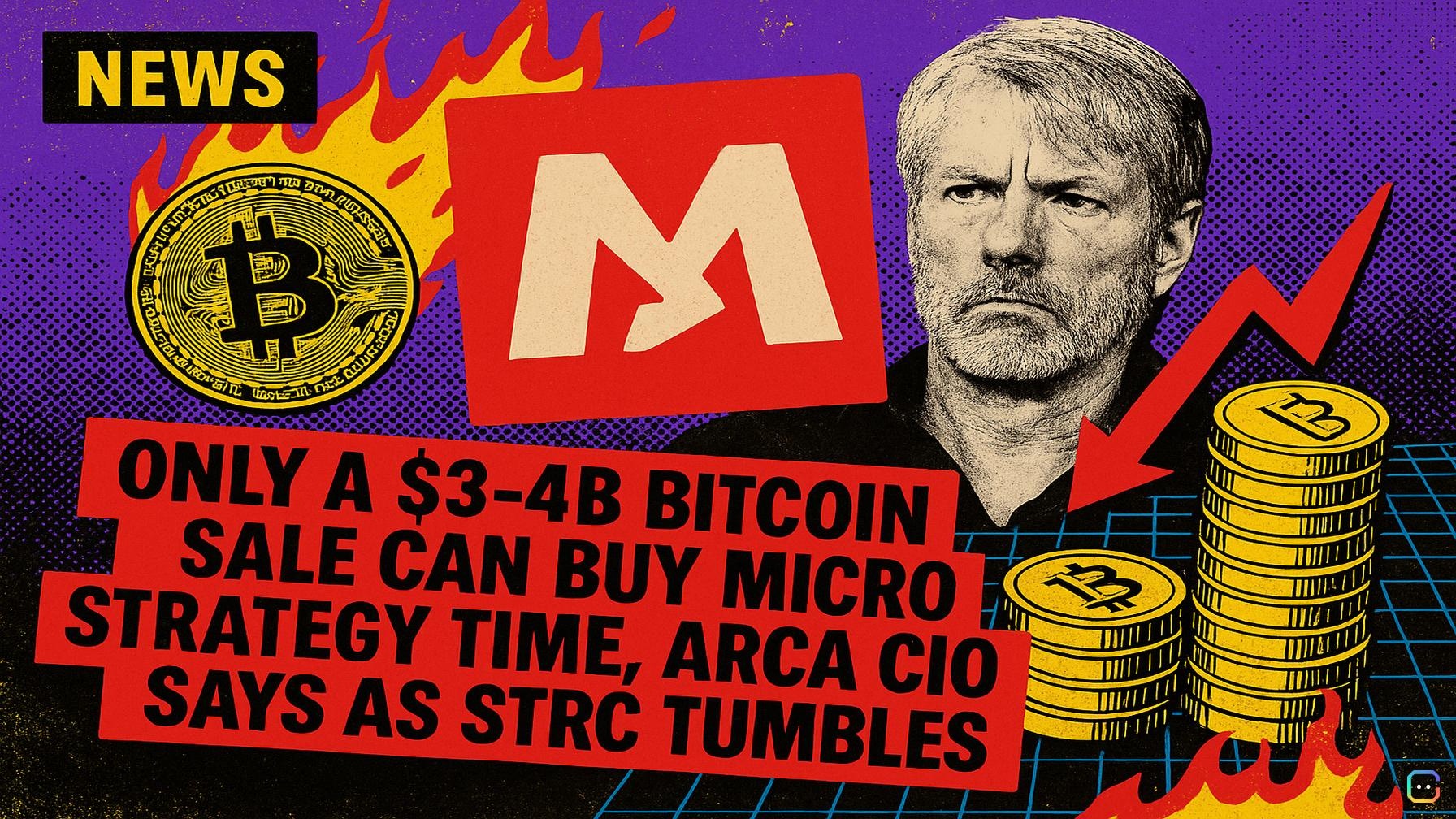
Only a $3–4B Bitcoin Sale Can Buy MicroStrategy Time, Arca CIO Says as STRC Tumbles
MicroStrategy’s preferred stock STRC has slid deep below par, and Arca CIO Jeff Dorman says there’s only one clear way to buy the company time: a large Bitcoin sale. What happened - STRC dropped as much as 17% below its $100 par value, hitting a record low of $82.53 on June 18 before recovering to close at $88.59 — still well under par. - The decline has intensified scrutiny on MicroStrategy’s capital structure and the sustainability of its preferred-stock obligations. Dorman’s take — three possible paths In a June 18 post on X, Dorman laid out what he sees as the realistic options for MicroStrategy (MSTR) and the likelihood of each: 1) Big Bitcoin sale (25% probability) - Dorman’s preferred “fix”: sell $3 billion–$4 billion of BTC. - Pros: would shore up STRC, give the company breathing room and reduce financing stress without changing its long-term Bitcoin strategy. - Cons: would likely pressure BTC’s price short-term, but he argues the time bought would be worth it. 2) Small MSTR stock sales (70% probability — Dorman’s most likely outcome) - Management continues selling modest amounts of MSTR at what he calls non-accretive levels. - Result: BTC holdings largely intact and STRC investors keep some hope, but common shareholders could face further downside as dilution or weak sales dynamics play out. 3) “Nuclear option” — eliminate preferred payments (5% probability) - Cut payments tied to STRC, which Dorman estimates could leave preferred holders recovering just 30–40 cents on the dollar. - Effect: removes about $1.7 billion in annual cash obligations but would likely shut MicroStrategy out of capital markets long term. Broader context and risks - Liquidity concerns: market maker QCP estimated MicroStrategy’s available liquidity could support preferred dividend payments for roughly 7.5 months. If funding channels weaken, BTC sales may become necessary. - Legal and reputational risk: Peter Schiff recently accused co-founder Michael Saylor of misleading investors who bought STRC after it was marketed as a yield product. Schiff suggested retirees and income-focused investors might have grounds for legal action if risks weren’t properly disclosed, and warned the decline could make future fundraising costlier. - Valuation snapshot: Dorman estimates MicroStrategy holds about $35.2 billion in unencumbered Bitcoin collateral versus an equity market cap near $40.4 billion — implying MSTR trades at roughly 1.15x net asset value. He argues MSTR should trade below NAV and warns the stock could slide further unless Bitcoin mounts a strong recovery and the company avoids additional dilution via dividends, sales, or fundraising. Bottom line Dorman frames the situation as the latest chapter in the “MSTR pickle”: either the company dumps a sizable chunk of BTC to stabilize STRC now, or it continues with incremental equity sales and risks prolonged uncertainty and downside for common shareholders. Investors will be watching management’s next moves closely — and how any big BTC sale would ripple through both MicroStrategy’s balance sheet and the broader market. Read more AI-generated news on: undefined/news
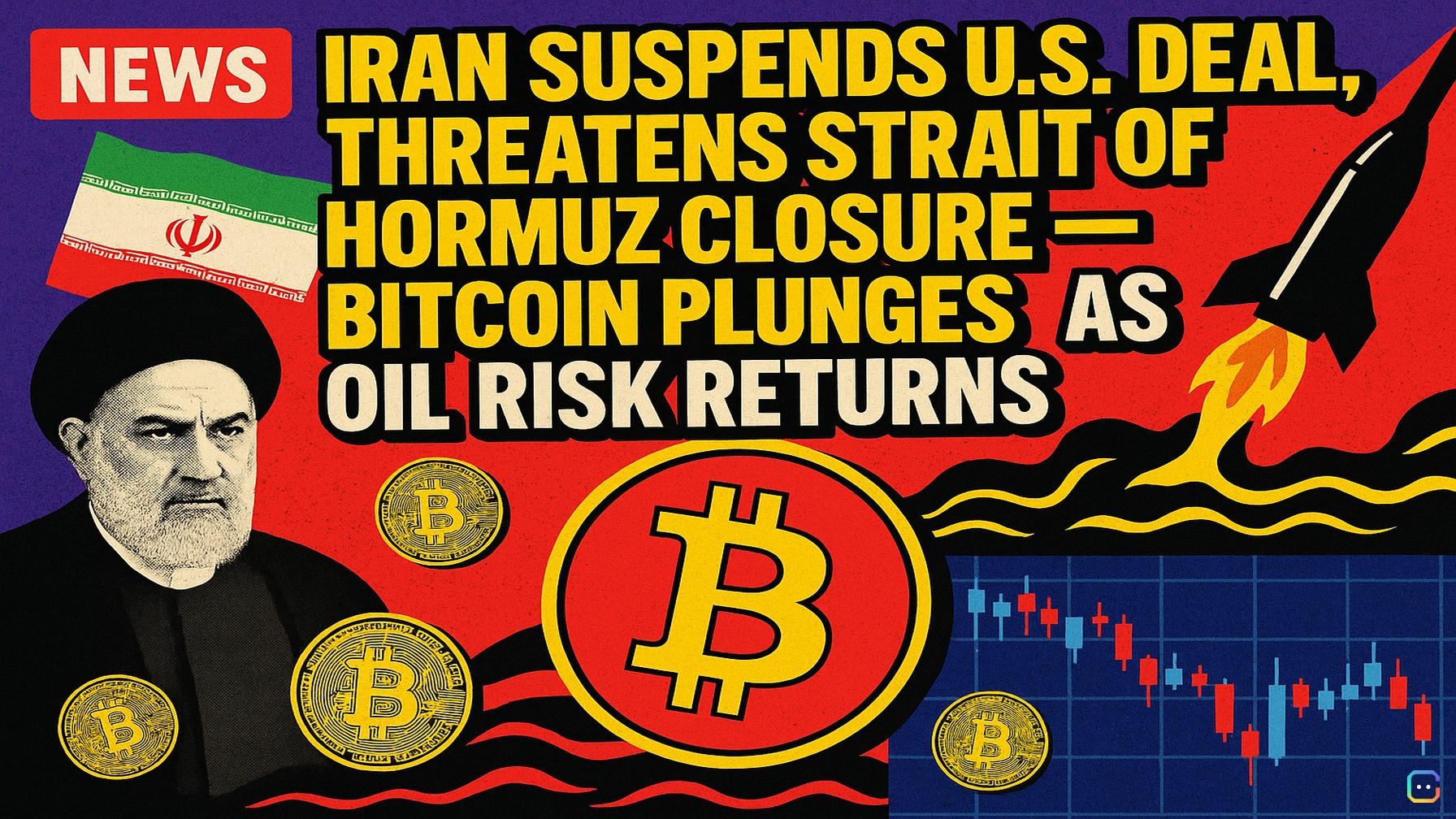
Iran Suspends U.S. Deal, Threatens Strait of Hormuz Closure — Bitcoin Plunges as Oil Risk Returns
Headline: Iran halts newly signed U.S. deal, warns of Hormuz shutdown — crypto markets tumble as oil-risk returns Lede: Iran has abruptly suspended a 60-day negotiation framework with the United States less than 24 hours after electronically signing a memorandum of understanding, saying Israeli strikes in southern Lebanon breached the pact’s first clause. Tehran warned it could cancel talks, re-impose a full Strait of Hormuz blockade and respond with missiles — developments that spurred a sell-off in crypto assets as traders priced in renewed geopolitical and energy-market risk. What happened - The move was first reported by The Hormuz Letter, citing Iranian outlets Fars and Al-Mayadeen. Tehran says Israeli military activity in southern Lebanon violated the MOU’s opening clause, which it interprets as an agreement to halt hostilities and protect Lebanese sovereignty. - Iran accused the United States of failing to ensure compliance and refused to proceed unilaterally until it receives assurances that Israeli operations stop and Washington is meeting its obligations. - Officials warned they would suspend all upcoming negotiations, reimpose the Hormuz blockade and may retaliate with missile strikes if the alleged violations continue. - An Iranian delegation had been preparing to travel to Switzerland for the opening round of talks — a 60-day diplomatic track reportedly intended to involve U.S. Vice President JD Vance and Iranian Parliament Speaker Mohammad Bagher Ghalibaf — before Tehran paused the process. Why it matters for markets - The Strait of Hormuz is a chokepoint for a large share of global seaborne crude exports. Threats to close the passage quickly raise the prospect of tighter oil supplies and a reversal of recent declines in crude prices, which had drifted toward the $75-per-barrel area. - Higher oil prices feed into inflation expectations and complicate central bank policy outlooks — a dynamic that can weigh on risk assets including equities, commodities and crypto. Immediate crypto impact - Digital assets fell as investors reduced exposure to risk amid the geopolitical shock. Bitcoin dropped below $63,000 and briefly traded near $62,000 as markets turned risk-off. - The sell-off produced heavy derivatives activity: CoinGlass data showed roughly $499.34 million in liquidations across crypto markets in the past 24 hours, with long positions accounting for about $402.11 million. More than 125,000 traders were liquidated during the move. - Traders are weighing how a potential energy-price spike could feed into inflation and interest-rate expectations — both key drivers for crypto sentiment and risk pricing. What to watch next - Whether Iran resumes the negotiation track and what guarantees, if any, the U.S. provides regarding Israeli operations. - Any escalation around the Strait of Hormuz and corresponding moves in oil prices. - Continued risk appetite shifts in crypto markets, volume and derivatives flows as news and policy signals evolve. Disclosure: This article is for informational and educational purposes only and does not constitute investment advice. Read more AI-generated news on: undefined/news

SpaceX Eyes $20B Bond Sale — Musk’s Net Worth Dips as Crypto Investors Watch
SpaceX is preparing a blockbuster debt push that could reshuffle attention on Elon Musk’s paper fortune just days after the company’s headline-making public debut. Bloomberg reports the aerospace giant and its banking partners have begun investor outreach for a potential bond offering of as much as $20 billion — a sum that would rank among the largest corporate debt deals in recent years. The proceeds would be used mainly to refinance a bridge loan maturing in September 2027. That bridge loan makes up a large slice of SpaceX’s long-term debt, which stood at roughly $29.1 billion at the end of March. Bank of America, Citigroup, JPMorgan Chase, Goldman Sachs and Morgan Stanley are expected to lead the effort; those same banks helped arrange the bridge financing. While the financing is still in the planning stage, Bloomberg cautions that the final size, structure and timing could shift with market conditions and investor demand. Large refinancing transactions often draw renewed scrutiny of leverage and future funding needs — a focus investors are already weighing as SpaceX moves from private titan to public-market name. The bond talk hit markets fast. On June 18, SpaceX’s SPCX shares fell more than 9%, dropping from a close of $191.82 to an intraday low near $172.11 before recovering to finish around $185. That pullback trimmed roughly $59 billion from Musk’s net worth versus recent highs; Forbes now values him at about $1.2 trillion, down from a near-$1.4 trillion peak after the company’s June 16 trading surge. At one point during that rally, SpaceX’s market value briefly eclipsed many major tech firms and pushed the reported value of Musk’s holdings above Bitcoin’s market capitalization — a notable milestone for crypto watchers. Investor appetite for SpaceX has been intense since the IPO. Retail demand was reportedly strong enough that some individual investors took bank loans to increase their IPO allocations ahead of trading. Beyond rockets, SpaceX’s post-listing buzz has extended into AI: the company has reportedly explored acquiring Anysphere, the team behind the Cursor coding AI. For crypto-focused readers, the story matters on two fronts: it highlights how a single corporate event can move the perceived wealth of one of crypto’s most influential figures, and it underscores how large-scale capital markets moves — like a potential $20 billion bond sale — can refocus investor attention on leverage, liquidity and long-term strategy. The details will matter; for now, markets will be watching whether SpaceX can size and place the deal without further rattling its newly public shares. Read more AI-generated news on: undefined/news

Hagerty Optimistic CLARITY Act Could Pass Before July 4, Crypto Markets on Alert
Sen. Bill Hagerty has reignited hopes that the Senate could finish work on the Digital Asset Market Clarity (CLARITY) Act before the July 4 recess — a timeline some lawmakers say may be optimistic, but one that puts crypto market watchers on alert. Hagerty, a Tennessee Republican, told FOX Business negotiations are still active but expressed optimism the bill could clear Congress before Independence Day. “This will be something more a matter of focus after the 4th of July recess period, but I certainly hope to see it done before,” he said, framing the legislation as a critical step toward giving businesses and investors the regulatory certainty needed to operate in the U.S. digital-asset market. Context and momentum - The push follows the Senate’s recent approval of the GENIUS Act, which created a federal framework for stablecoins — a move Hagerty cited as evidence that clearer rules can both support dollar-backed digital assets and bolster the U.S. dollar through fully reserved stablecoins. - Still, other senators are more cautious about the timeline. Sen. Cynthia Lummis has suggested a floor vote is likelier before the August recess than before July 4. Where the debates stand Insiders say most policy disagreements appear largely resolved. David Nage, managing director and portfolio manager at Arca, told crypto.news that conversations with Senate offices indicate roughly 80–85% alignment between lawmakers and industry on the bill’s substance. That suggests the remaining gaps are smaller and more technical than they once were. Key remaining issues: - Stablecoin yield provisions, once a flashpoint and criticized publicly by banking executives like JPMorgan CEO Jamie Dimon, have seemingly receded as a primary contention. - The current focus has shifted to conflict-of-interest and ethics rules that would limit sitting government officials’ involvement in crypto-related business activities. According to Nage, the debate is increasingly about enforcement mechanisms and implementation rather than whether such restrictions should exist. Timeline outlook Nage’s base case: lawmakers iron out the ethics provisions and reconcile competing drafts in the coming weeks, positioning the CLARITY Act to reach the Senate floor when Congress returns from recess on July 13. Why it matters to markets and institutions Backers argue the CLARITY Act would tackle one of the biggest barriers preventing broader institutional participation: uncertainty over regulatory roles and obligations. The bill is billed to: - Clarify the oversight responsibilities of the Securities and Exchange Commission (SEC) and the Commodity Futures Trading Commission (CFTC) - Establish compliance requirements for digital-asset firms - Introduce new consumer protections and law-enforcement tools, closing regulatory gaps Voices from industry Kristin Smith, president of the Solana Policy Institute, said many asset allocators are cautiously exploring digital assets but are waiting for clear regulatory guardrails before deploying significant capital. She also rejected the notion that the CLARITY Act would weaken oversight, arguing instead that it enhances protections and enforcement capacity. Funding and political stakes Sen. Lummis has disclosed the bill includes $150 million aimed at combating illicit activity involving cryptocurrencies. She has also warned that failing to advance the measure in this legislative window could push meaningful market-structure progress out to as late as 2030, raising the political stakes for lawmakers who want to move quickly. Bottom line With broad agreement on much of the bill’s technical substance and major sticking points narrowed to ethics enforcement and implementation, the CLARITY Act could be poised for floor action soon — but timing remains uncertain. Markets and institutional participants will be watching closely: regulatory clarity could unlock capital flows, while delays risk prolonging a period of regulatory ambiguity for U.S. crypto firms. Read more AI-generated news on: undefined/news

Ethereum Faces 'Slow-Burning' Core-Dev Funding Crisis in Months, Ex-EF Dev Warns
Headline: Ex-Ethereum Foundation contributor warns of a looming core-dev funding crunch within months A former Ethereum Foundation (EF) contributor is sounding the alarm: Ethereum could face a meaningful gap in core development funding within three to nine months. Trent Van Epps — who worked at the EF from May 2021 through April 2026 on core development coordination, Protocol Guild funding and Ethereum’s political economy — says the network may be entering a “slow-burning funding crisis” as two major support pillars wane. Key facts - Van Epps estimates Ethereum’s baseline core-development budget needs roughly $30 million per year to keep client teams, researchers and coordination groups healthy. Those teams are the ones shipping upgrades and keeping consensus clients resilient. - Two pressures are converging: - The Ethereum Foundation’s treasury policy aims to reduce annual spending from roughly 15% of its treasury down to a 5% baseline by 2030, shrinking a major grant source. - The Client Incentive Program (CIP), launched in 2021 to reward and preserve client diversity via validator-based rewards, expired in April 2026 and has no obvious replacement lined up. - Van Epps warns that the sudden loss of steady support risks pushing experienced developers away and could hamper long-horizon work such as Layer 1 scaling and quantum-resistant cryptography research. Why client funding matters Client teams (examples recently funded via EF grants include Geth, Erigon and Lighthouse) are core public goods for Ethereum: multiple independent implementations reduce the chance of catastrophic bugs or coordinated attacks. The CIP’s intent was to make client development financially sustainable; without it, the incentives keeping multiple client teams well-staffed and long-lived are weaker. Where the debate goes next Van Epps’ comments have re-ignited a broader debate about who should fund protocol-maintenance work and how. Vitalik Buterin has long argued the Foundation was not meant to be an “eternal steward,” raising questions about what institutions or funding mechanisms should step in. - Some observers, like Gabriel Shapiro on X, say protocol funding likely requires governance structures Ethereum does not have today. - Van Epps counters that his goal is practical: secure neutral, steady funding for core contributors without handing centralized control to any single actor. Existing and emerging funding paths - Protocol Guild (described by Gitcoin) is one existing vehicle: a collective fund that supports Layer 1 contributors through long-term token vesting and donated assets, while explicitly staying out of protocol-priority setting. - The EF still funded core work in Q1 2026 — grants went to Geth, Erigon, Lighthouse, validator security tools, cryptography research and other infrastructure — but Van Epps argues these efforts don’t replace the need for more durable, predictable funding streams. Technical work continues, but uncertainty grows Developers are already planning substantive work — for example the Glamsterdam upgrade roadmap, which includes changes to Layer 1 scaling, block building and gas pricing. Van Epps’ warning doesn’t imply imminent technical failure, but it does raise a sharper concern: can Ethereum sustainably pay for the maintenance and upgrades that underpin its security and progress without making the Foundation a permanent, central financier? Bottom line Ethereum’s technical roadmap is active, but funding models for the people who build and maintain the protocol are at a crossroads. Unless new, reliable funding sources emerge within the next few months, the ecosystem risks talent attrition and slower progress on long-term research — outcomes that could make major upgrades harder and more expensive to deliver. Read more AI-generated news on: undefined/news

CFTC Permanently Bans Alex Mashinsky From Trading After Celsius Collapse
The U.S. Commodity Futures Trading Commission has put the final regulatory nail in the coffin of one of crypto’s highest‑profile collapses: a federal court consent order permanently bans former Celsius Network CEO Alex Mashinsky from trading in markets overseen by the agency and from registering with the CFTC. What the order does - The consent order resolves the CFTC’s enforcement action first filed in July 2023 and issues a lifetime prohibition on Mashinsky’s participation in commodities, futures and derivatives markets under the agency’s jurisdiction. - The settlement follows an earlier regulatory resolution with Celsius itself, making Mashinsky the last individual defendant in the CFTC matter — the agency’s first case targeting a digital‑asset lending platform. CFTC findings - The regulator said Mashinsky and Celsius misled hundreds of thousands of customers about the safety, returns and legal status of Celsius’s crypto lending business, alleging a “scheme to defraud.” - According to the CFTC, Celsius pooled customer crypto to generate yields used for weekly interest payouts, while increasingly taking uncollateralized loans and risky DeFi positions. The agency says the platform received roughly $20 billion in customer funds over the period covered by the case. - Those business practices, the CFTC contends, contributed to Celsius’s heavy losses, a freeze on withdrawals and the company’s eventual bankruptcy — one of the largest crypto lending failures of 2022. Where Mashinsky stands now - Mashinsky is already serving a 12‑year federal prison sentence after pleading guilty to commodities and securities fraud; in May 2025 a judge ordered the prison term, a $50,000 fine, and forfeiture of more than $48 million tied to the criminal case. - Earlier regulatory actions have also tightened the squeeze: an April 2026 Federal Trade Commission order barred him from promoting or offering services tied to deposits, exchanges, investments or withdrawals, and included a $4.72 billion judgment that remains largely suspended if certain payment and disclosure conditions are met. Ongoing legal and recovery processes - Celsius’s bankruptcy estate has continued to return funds to creditors. As reported in August 2025, the company began a third creditor distribution of $220.6 million, bringing creditor recoveries to about 64.9% of claims. - Mashinsky still faces a civil suit from the Securities and Exchange Commission alleging unregistered securities offerings, false statements and manipulation of the CEL token; the SEC has requested limits on his future activity in crypto asset securities. - Separately, Mashinsky has asked a federal court to vacate his prison sentence, alleging possible manipulation of CEL by former FTX chief Sam Bankman‑Fried and raising issues around his legal defense. Prosecutors have been ordered to respond to that request by mid‑August. Why it matters The CFTC’s consent order closes another chapter in the long legal fallout from Celsius’s collapse and underscores regulators’ willingness to pursue broad enforcement against crypto lending platforms and their executives. While the CFTC ban is final for markets it oversees, other civil and bankruptcy proceedings tied to Celsius and Mashinsky continue to play out. Read more AI-generated news on: undefined/news