Key takeaways
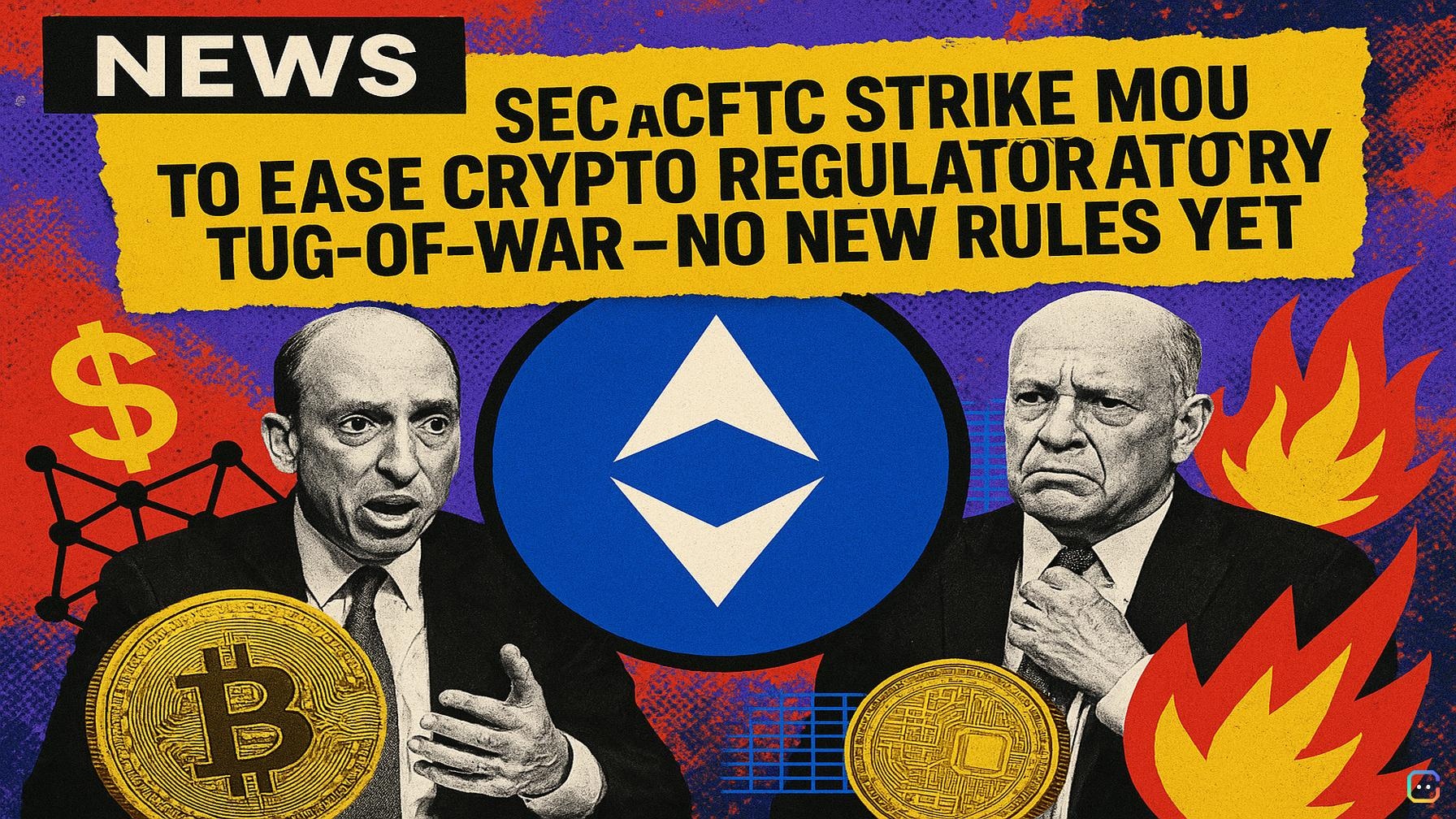
- The SEC and CFTC signed a memorandum of understanding (MOU) to coordinate oversight of digital assets.
- Regulators will work together to clarify whether particular tokens are securities or commodities and to align market supervision.
- The MOU creates a framework for cooperation but does not itself change rules—formal rulemaking and congressional action are still required.
What happened
The U.S. Securities and Exchange Commission and the Commodity Futures Trading Commission last week formalized a collaboration on crypto by signing an MOU that commits both agencies to a coordinated oversight framework for digital assets. The pact calls for regular joint meetings, supervisory data sharing, and coordinated communications with crypto firms.
Why it matters
The move marks a deliberate attempt to reduce the regulatory fragmentation that has plagued the U.S. crypto market. For years, exchanges, custodians, trading platforms and token issuers have faced conflicting signals about which regulator — the SEC or the CFTC — has authority over a given asset or activity. The agencies’ promise to work together aims to give companies a clearer and more consistent process for getting interpretive answers or exemptive relief.
Clarifying the key question: security or commodity
At the heart of the MOU is a pledge to tackle the industry’s core question: how to classify digital assets. The SEC and CFTC will seek to harmonize definitions through joint interpretations and, where appropriate, rulemaking. As SEC Chair Paul Atkins put it in prepared remarks, “More than aligning our rules, a harmonized framework also demands coordinating our responses to the firms that operate within it, including those that have questions of interpretation or request exemptive relief.”
Operational alignment
The memorandum extends beyond definitions to market mechanics. The agencies agreed to coordinate on supervisory frameworks covering clearing and margin requirements, trade reporting, and oversight of intermediaries. That alignment could ease compliance burdens for entities registered with both agencies and reduce inconsistent standards applied to similar activities.
A sign of deeper coordination
Bloomberg reported the agencies are even discussing more physical consolidation—potentially moving the CFTC into the SEC’s headquarters building—a step that, if taken, would underscore a closer institutional relationship.
What the MOU does not do
The MOU is a coordination framework, not a source of new, binding regulation. Any substantive changes will still require each agency to go through formal rulemaking—proposed rules, public comment, and final adoption. Until those steps happen, the legal uncertainties that have dogged the industry remain.
The political and legislative backdrop
Broader regulatory clarity also depends on Congress. A digital-asset market structure bill in the Senate has stalled; Senate leadership told Punchbowl News it likely won’t be taken up before April. An upcoming two-week Easter recess and competing priorities—like negotiations over Department of Homeland Security funding and other legislative conditions noted by the White House—further compress the calendar for action.
Bottom line
The SEC-CFTC MOU is the clearest institutional move yet toward resolving a long-running jurisdictional fight over crypto. It promises more consistent supervision and shared definitions, which could reduce compliance friction—but it stops short of immediate rule changes. Real clarity for market participants will wait until the agencies translate coordination into formal rulemaking and Congress advances any complementary legislation.
Read more AI-generated news on: undefined/news