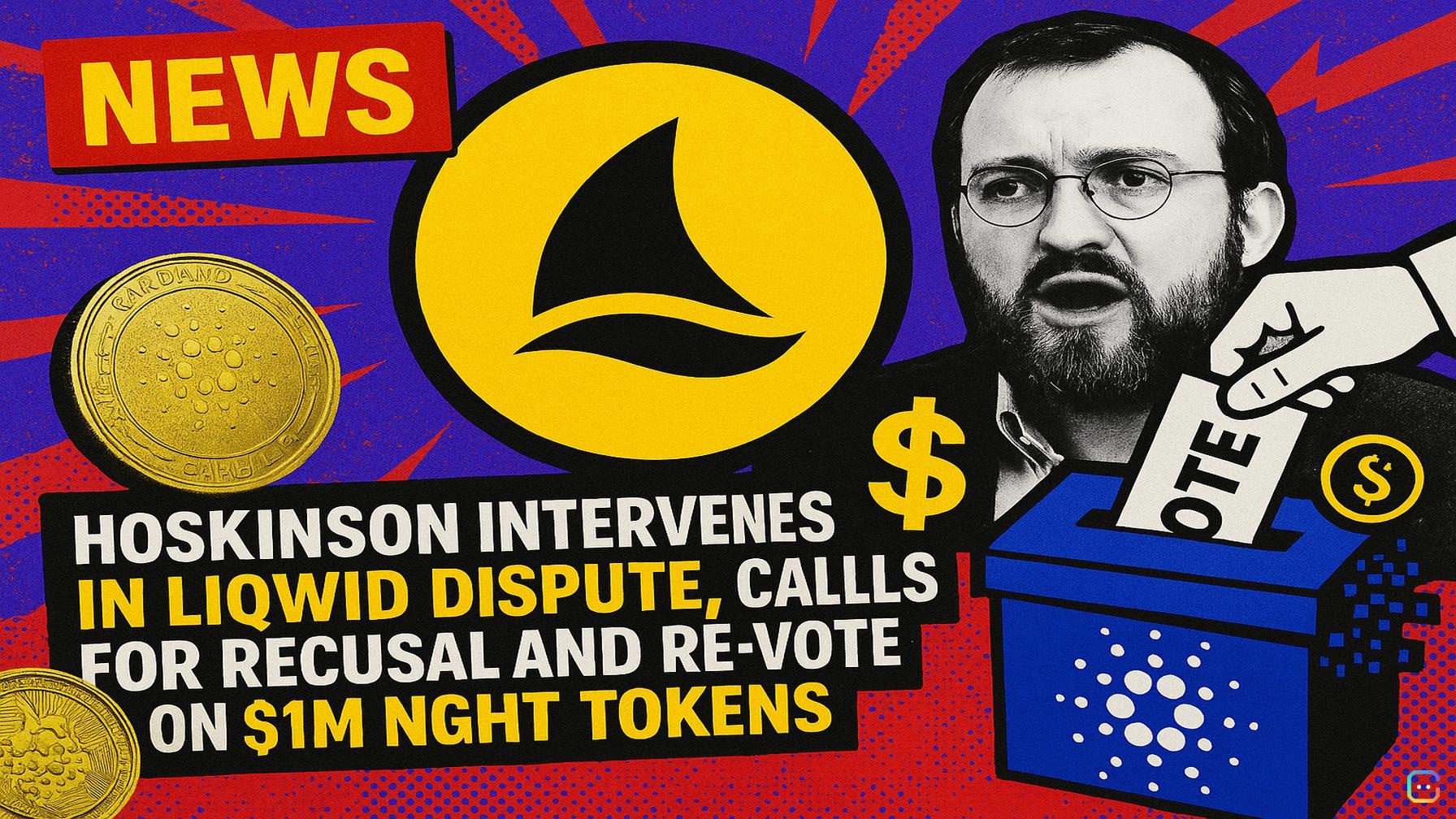
Cardano founder Charles Hoskinson has stepped into a brewing governance fight at Liqwid, urging insiders tied to the protocol to step aside and let token holders decide whether earlier public commitments should be honored.
Why it matters
The dispute is not academic: it centers on roughly 18.81 million NIGHT tokens from Midnight that are linked to Liqwid’s ADA market — a stake worth just under $1 million at current prices. In October, Liqwid representatives said “100% of the assets in the smart contracts” allocated to the protocol would be returned to their “rightful owners.” That promise is now in doubt, and users say the outcome affects real funds, not just governance symbolism.
What Hoskinson said
Speaking from Wyoming in a livestream, Hoskinson — who normally avoids intervening in Cardano’s DeFi layer without a broad community mandate — said the situation had become a serious trust issue. He explained the team ran afoul of the DAO’s own rules: “I guess that team did not have, according to the user agreement of their DAO, legal authorization to do so,” he said, adding that the more troubling element was how the matter was handled afterward.
His solution is straightforward and procedural: rerun the vote on a narrow, clear question and remove any conflict of interest. “If you have to go to the DAO for a vote, two things should be done,” he said. “First and foremost, those who are insiders should recuse themselves if they’re going to be direct beneficiaries of a governance action of this nature. Second, the question should have been, should we honor our marketing commitments, yes or no?”
Legitimacy over procedure
Hoskinson emphasized that DAO legitimacy doesn’t come from the mere existence of a ballot, but from broad participation and confidence that the process isn’t controlled by a small cluster of insiders. “If the belief is that participation is only controlled by a small group of insiders, there’s no path forward for a DAO to have governance legitimacy,” he said.
He recommended that core entities publicly disclose holdings, recuse affiliated accounts from voting, and let token holders decide only whether the October commitments should be honored. If the community votes yes, the protocol should carry out the return; if no, a second debate over alternative allocations could follow.
Consequences and final word
Hoskinson was blunt about his limits: he has no power to reverse on-chain outcomes, no control over assets already in smart contracts, and no formal authority over Cardano. But he warned that perceived or real breaches of trust could hobble Liqwid’s future growth: “If people can’t trust what the core accounts are saying and when votes are taken, it creates a reality where people will just simply move to other options.”
He concluded that the path to restoring credibility remains open — but it runs through disclosure, recusal, and a cleaner vote.
Market snapshot: Cardano traded at $0.29 at press time.
Read more AI-generated news on: undefined/news