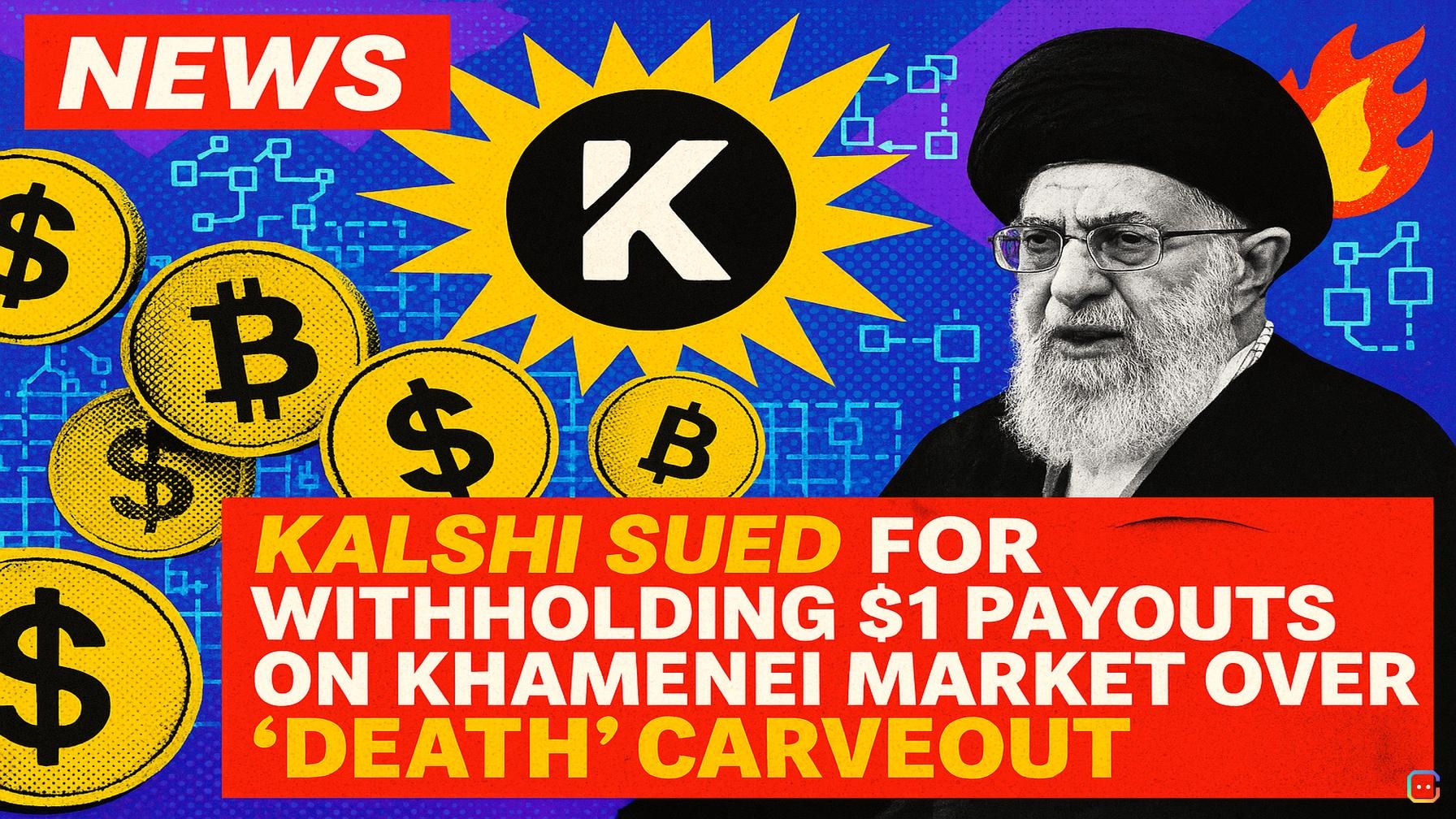
A class-action lawsuit has been filed against prediction markets platform Kalshi after the exchange declined to pay out as some users expected on a market tied to the potential removal of Iran’s Supreme Leader, Ayatollah Ali Khamenei.
What happened
- The suit, filed in the U.S. District Court for the Central District of California, centers on Kalshi’s “Ali Khamenei out as Supreme Leader?” market. Plaintiffs say they purchased “Yes” contracts expecting them to resolve at $1 if Khamenei’s death—reported by multiple outlets on February 28—led to his removal by March 1. Instead of automatic $1 payouts, Kalshi invoked a rules clause (a so-called “death carveout”) that says if an official leaves office solely due to death, the market resolves at the last traded price rather than a guaranteed $1.
- Plaintiffs allege Kalshi “ran a predatory scheme to exploit retail consumers” by creating expectations of a standard payout while relying on the carveout to deny full value. They claim the carveout and other relevant rules were not adequately disclosed at the time trades were placed.
Company response and remediation
- Kalshi CEO Tarek Monsour responded on X (formerly Twitter), explaining that the platform “doesn’t list markets directly tied to death” and that they design rules to “prevent people from profiting from death.” He framed the carveout as an ethical safety measure and said Kalshi did not deviate from its published rules.
- Monsour also acknowledged room for UX improvements to surface rules more clearly. Kalshi says it reimbursed all trading fees and net losses related to the market, and asserted that “no trader lost money.”
- Plaintiffs in the suit reportedly held roughly $259.84 in positions in the market; the market amassed more than $54 million in total trading volume.
Legal claims and relief sought
- The complaint seeks compensatory damages equal to the full value plaintiffs say they were owed on “Yes” contracts, plus punitive damages “sufficient to punish defendants and deter similar conduct.” The plaintiffs contend thousands of correctly predicting consumers received payouts “significantly lower than their respective contract values,” determined unilaterally by Kalshi.
Context and implications
- Kalshi has argued it followed its rules and acted to prevent a “death market” that would let traders profit directly from a person’s death. The dispute raises questions about how well prediction platforms disclose conditional resolution language and how ethical guardrails interact with traders’ expectations.
- Kalshi recently raised funding at an $11 billion valuation as prediction markets gain traction and trading volumes swell—factors that increase scrutiny on policy transparency and platform governance.
The case will likely test the adequacy of disclosure practices for conditional contract terms in prediction markets, and could influence how platforms balance ethical restrictions with clear consumer-facing rule communication.
(Disclaimer: Decrypt’s parent company, Dastan, operates the prediction market platform Myriad.)
Read more AI-generated news on: undefined/news