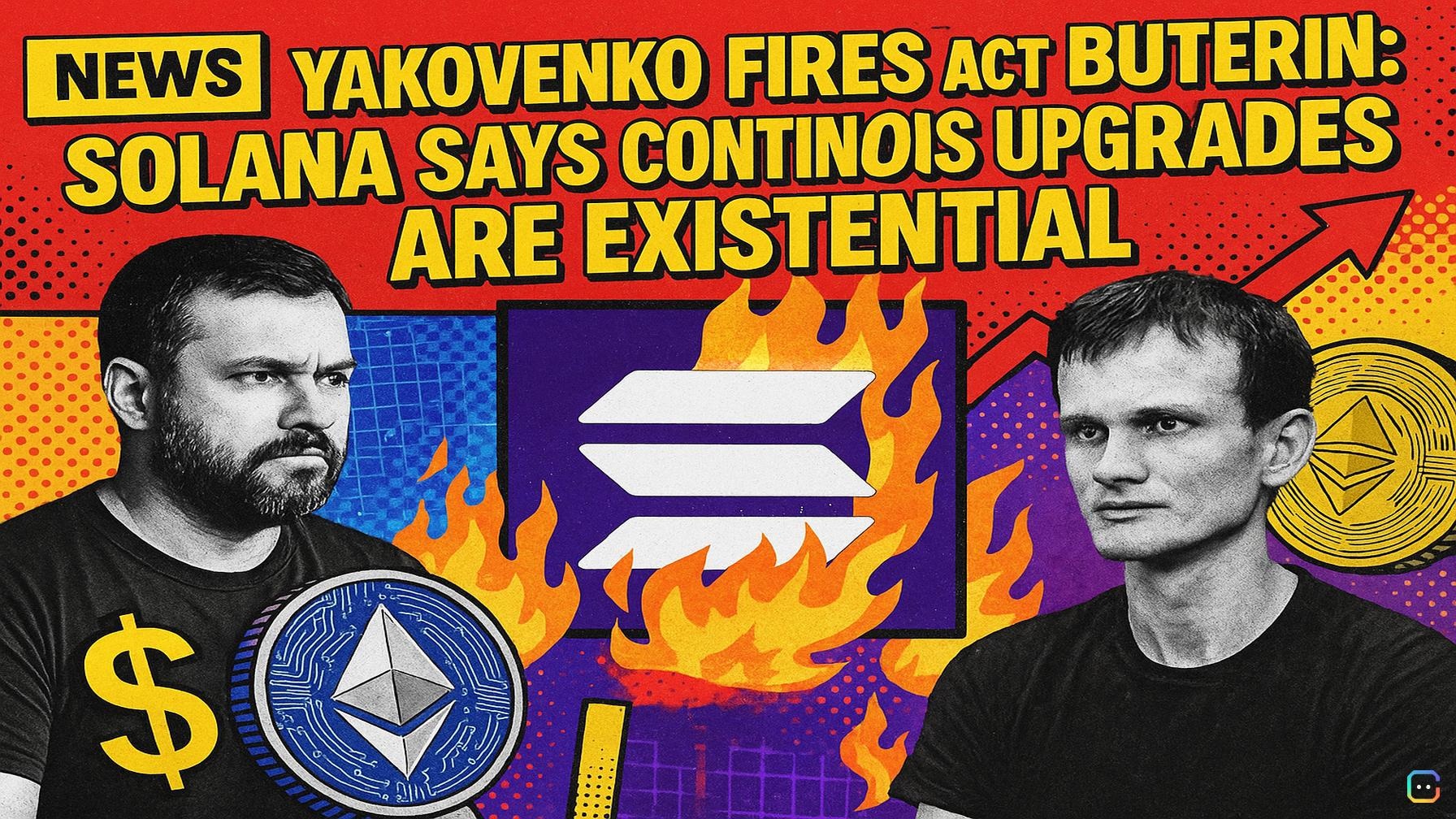
Over the weekend, a philosophical sparring match lit up the crypto community as Solana Labs CEO Anatoly Yakovenko pushed back on Ethereum co‑founder Vitalik Buterin’s recent argument for protocol “ossification” — arguing that for Solana, continual change isn’t optional, it’s existential.
The debate began with Buterin’s Jan. 12 post introducing the “walkaway test.” He framed Ethereum as a base layer that should keep functioning even if the community largely stops making substantive protocol changes. “It must support applications that are more like tools […] than like services that lose all functionality once the vendor loses interest in maintaining them,” Buterin wrote, adding that the protocol should not “strictly depend on any features that are not in the protocol already.” He outlined medium‑term goals—quantum resistance, scalable architecture, long‑lived state design and decentralization safeguards—to make Ethereum robust “for decades” and minimize the need for disruptive upgrades.
Yakovenko answered bluntly that Solana’s survival depends on continuous iteration. “Solana needs to never stop iterating,” he said, arguing that if the protocol ever stops adapting to developers’ and users’ needs, “it will die.” For Yakovenko, the priority of protocol change should be solving concrete developer or user problems — while recognizing that most proposed changes must be declined. Ossification, he warned, isn’t a neutral achievement but a potential trap that could leave a chain irrelevant to those building on it.
Both leaders share skepticism about relying on a single “vendor,” but they reach different operational conclusions. Buterin wants Ethereum’s base layer to be complete enough to remain dependable even if upgrade activity slows dramatically. Yakovenko accepts ongoing upgrades as the norm but stresses they don’t have to come from the same teams: “You should always count on there being a next version of solana, just not necessarily from Anza or Labs or fd,” he wrote, referring to key players in Solana’s development ecosystem. He also pointed to a future where governance and funding mechanisms could directly underwrite development — envisioning “a world where a SIMD vote pays for the GPUs that write the code,” a nod to on‑chain coordination and the rising role of AI‑assisted development.
The exchange highlights a core design trade‑off for layer‑one chains: stability and long‑term reliability versus ongoing adaptability to fast‑moving developer needs. At press time, SOL traded at $133.84.
Read more AI-generated news on: undefined/news