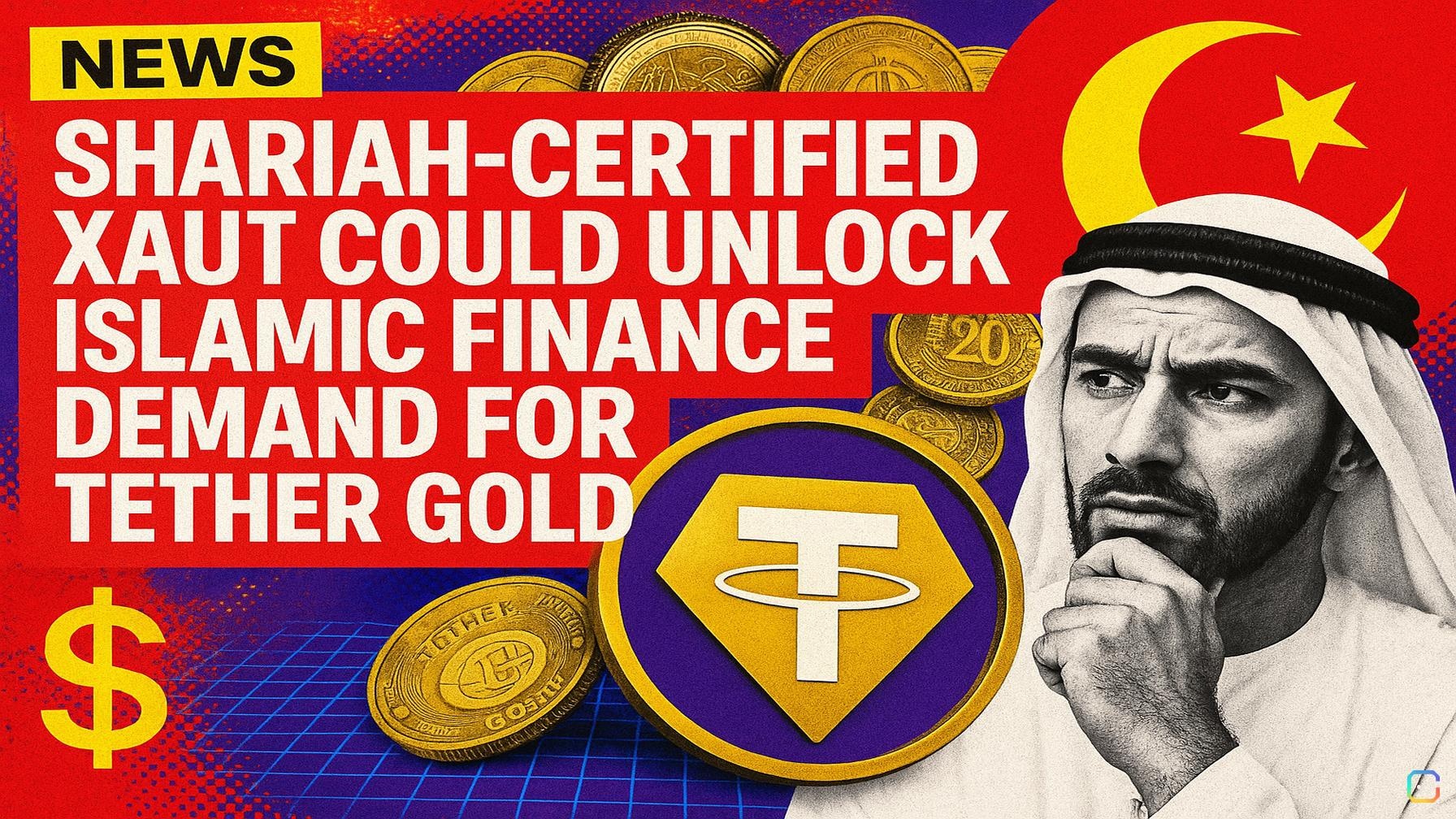
Tether Gold’s XAU₮ has cleared an important regulatory and religious hurdle: the gold-backed token has received Shariah certification, potentially unlocking new demand from Islamic banks, institutions and individual investors.
Tether announced on July 27 that Amanah Advisors — a global Islamic finance advisory firm led by Mufti Faraz Adam — reviewed XAU₮ and found it compliant with key principles of Islamic finance. The assessment examined the token’s ownership model, reserve transparency, physical backing, and whether its structure involved riba (interest), leverage or speculative derivatives. According to the firm, XAU₮ meets the primary Shariah requirements, including demonstrable ownership of an actual asset and the absence of interest.
XAU₮ is issued by TG Commodities, S.A. de C.V.; each full token represents one troy fine ounce of gold from a London Good Delivery bar held in a Swiss vault. That direct link to allocated bullion — rather than a synthetic or purely paper contract — is central to its Shariah alignment and is what could make it suitable for halal financial products.
Practical implications are broad: Shariah approval could enable XAU₮ to be used in halal savings products, institutional gold allocations, takaful (Islamic insurance), trade finance and certain forms of collateralized lending — areas where Islamic law requires identifiable underlying assets and forbids interest or excessive uncertainty. Tether CEO Paolo Ardoino framed the certification as “a bridge between established demand for gold and blockchain-based financial infrastructure,” saying it could expand access to digital gold while respecting Islamic finance principles.
The move builds on other Middle East traction for XAU₮. Abu Dhabi Global Market (ADGM) has recognized the token as an Accepted Spot Commodity, which allows firms within that financial center to support XAU₮ provided they hold the necessary regulatory permissions. That designation doesn’t automatically permit every company in ADGM to offer the token; eligible firms must still obtain specific approvals and permissions. ADGM previously recognized Tether’s USDT as an Accepted Fiat Referenced Token, giving Tether regulatory inroads for both its dollar- and gold-backed offerings in the Abu Dhabi financial hub.
Market demand for tokenized gold appears to be rising: data cited by crypto.news shows Tether Gold’s locked value increased from roughly $826 million to about $2.86 billion over the past year — more than a threefold jump — reflecting stronger investor interest in blockchain-based access to bullion.
A note of caution: Shariah certification is a religious-ethical endorsement, not a change to XAU₮’s legal or regulatory status in jurisdictions such as the United States. U.S. investors should treat the approval as an additional assessment of the asset-backing model, but continue to evaluate custody arrangements, liquidity, redemption terms, counterparty exposure and tax implications.
Tether is also expanding XAU₮’s utility beyond trading and custody. Its partnership with Bitcoin lending firm Ledn is expected to allow eligible holders to use XAU₮ as collateral for loans, bringing tokenized gold into lending and liquidity services while the physical backing remains intact.
Taken together — Shariah certification, ADGM recognition and growing locked value — the developments could accelerate institutional and regional adoption of XAU₮, particularly across the Gulf Cooperation Council, South Asia, Africa and other markets with strong demand for physical gold. Still, wider adoption will depend on local regulations and the permissions held by the financial firms that choose to offer the token.
Read more AI-generated news on: undefined/news