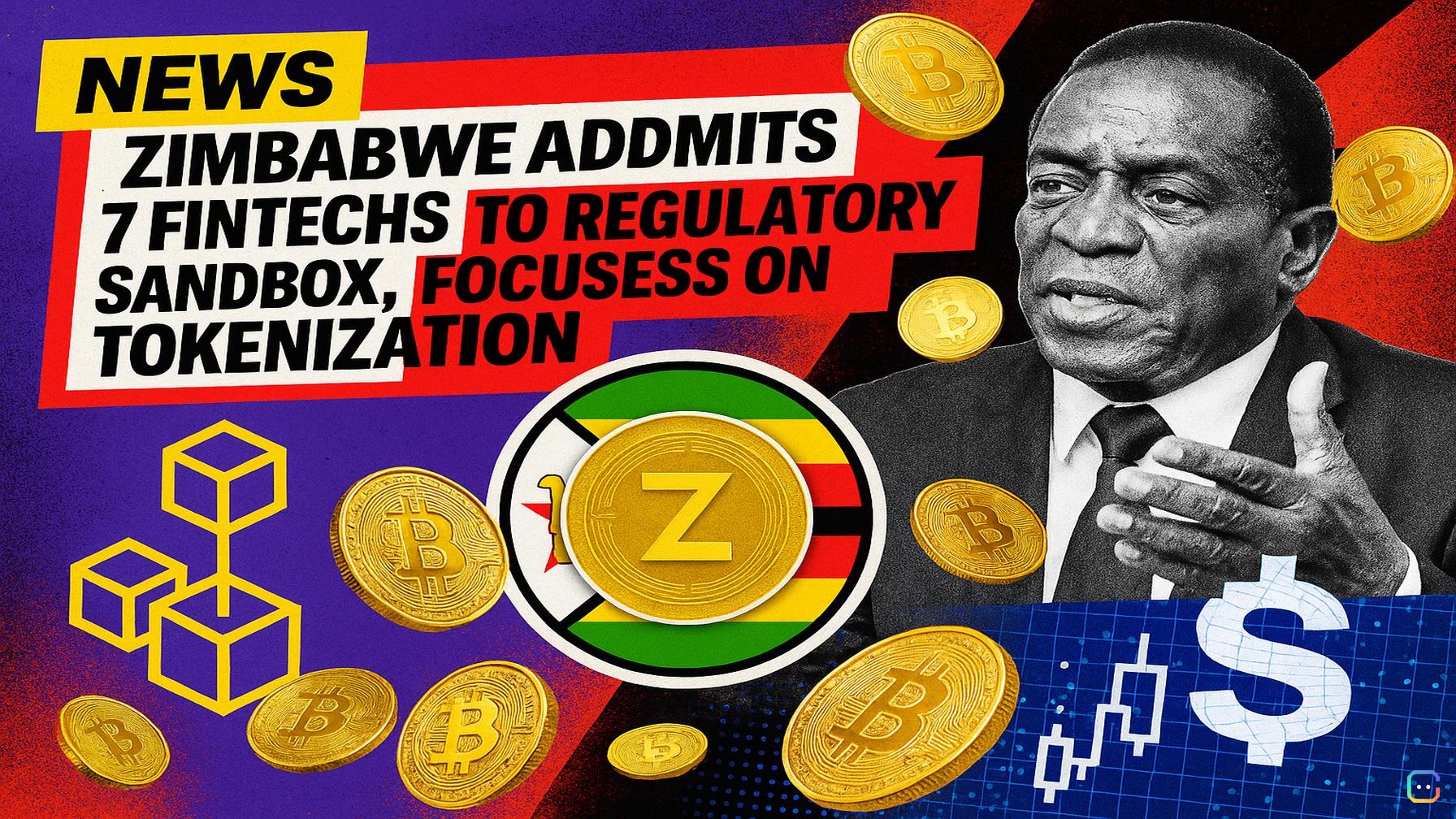
Zimbabwe’s securities regulator has admitted seven fintech ventures into its regulatory sandbox, marking a fresh push into tokenization and other blockchain-enabled capital-market experiments.
On July 24 the Securities and Exchange Commission of Zimbabwe (SECZ) published a consolidated list of sandbox participants: Zimbabwe Entrepreneurship Exchange, Ndarama Standard, Questview Brokers, Crowdaxe Capital, Procode Platforms, Financial Securities Exchange (FINSEC) and Colmin Resources Zimbabwe. The projects will run supervised pilots rather than begin unrestricted commercial operations.
What the projects will test
- Zimbabwe Entrepreneurship Exchange: a blockchain-based capital-raising platform.
- Ndarama Standard: asset tokenization.
- Questview Brokers: synthetic trading.
- Crowdaxe Capital: a web-based crowdfunding marketplace to match businesses with investors.
- Procode Platforms: securities tokenization.
- FINSEC: an asset-tokenization market.
- Colmin Resources Zimbabwe: infrastructure-tokenization use cases.
Tokenization is a central theme — at least four of the seven pilots specifically target asset, securities or infrastructure tokenization — underscoring SECZ’s focus on bringing capital-market products onto distributed-ledger technology.
How the sandbox works
- The SECZ defines the sandbox as a controlled environment for testing eligible fintech with live users and strict operating limits. Projects must follow an approved testing plan that sets customer limits, transaction exposure caps, risk controls, disclosure obligations and procedures for handling losses or complaints.
- Tests must run for a minimum of 12 months; SECZ may grant one extension for up to another 12 months.
- The regulator may relax certain requirements during testing but can also revoke admission if a trial fails, regulatory gaps remain unresolved, an applicant goes into liquidation, or sandbox conditions are breached.
- Passing the sandbox is not an automatic green light for a nationwide launch. After testing, SECZ may issue a licence, issue a conditional no-objection, introduce new product-specific rules or deny permission to operate. Participants must also have exit plans to protect customers if a trial ends without approval.
Regulatory overlap with crypto rules
SECZ emphasized that approval to test tokenization under the securities sandbox is distinct from registration as a virtual asset service provider (VASP). Zimbabwe has separate anti-money-laundering rules and a VASP framework that requires firms handling exchange, transfer, custody or storage of virtual assets to register with the Reserve Bank of Zimbabwe. That means platforms that both tokenize securities and offer custody, exchange or transfer services could fall under dual supervision by SECZ and the central bank’s VASP regime.
Regulator’s goals and next steps
SECZ says the sandbox is meant to generate evidence for future policy while protecting investors and market integrity. The next steps are the start of controlled trials, ongoing regulatory reporting and SECZ’s assessments to determine whether each project meets licensing requirements. The July notice did not include firm commercial launch dates or any verified market reaction.
Context
This sandbox update follows broader crypto-policy activity in Zimbabwe in 2024, including a public consultation on a national crypto framework and earlier state-backed digital initiatives such as a gold-backed token and the ZiG currency. The current sandbox is narrower in scope, concentrating on capital-market products rather than monetary policy experiments.
Read more AI-generated news on: undefined/news