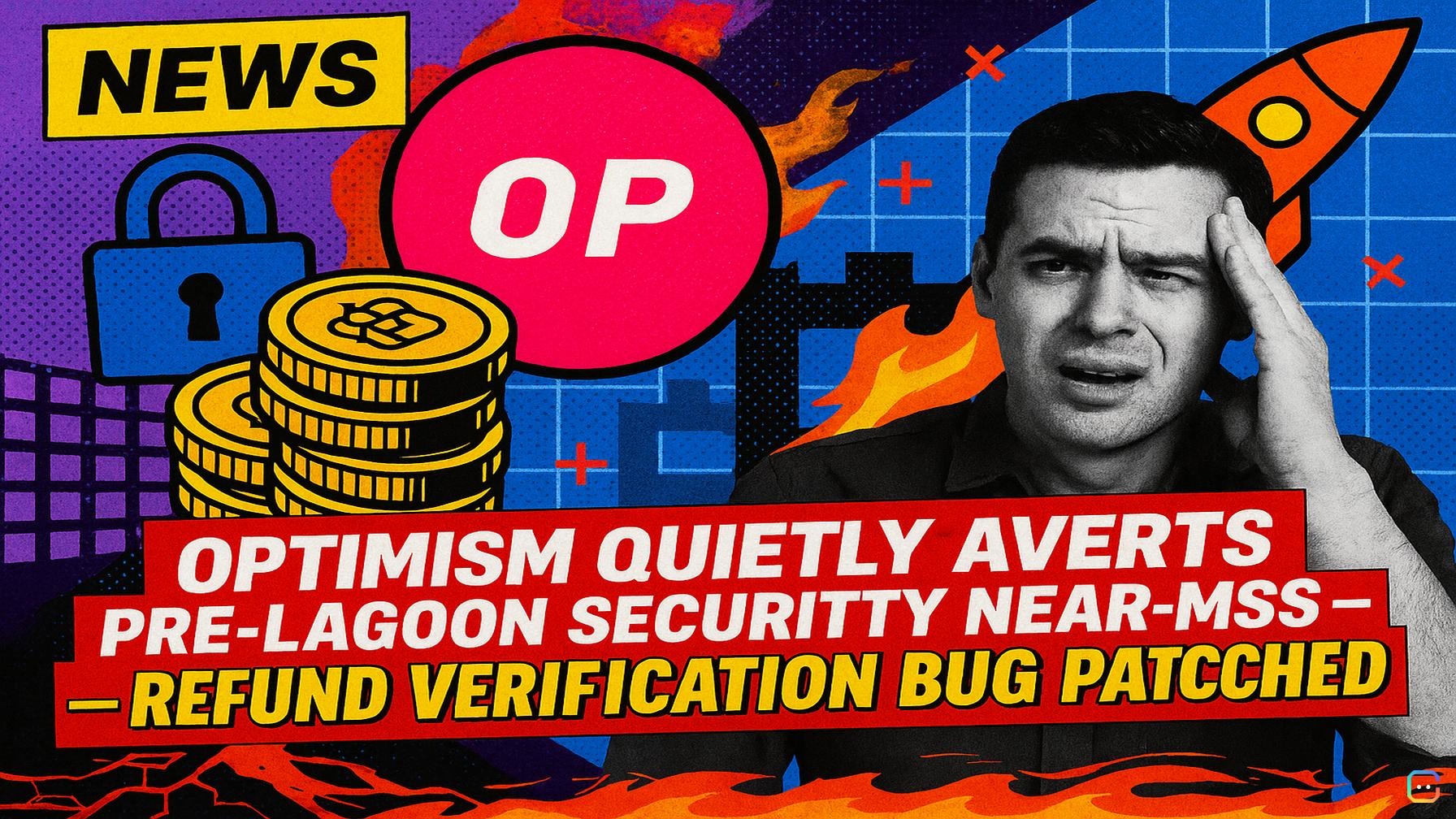
Optimism quietly averted a major security incident in its pre-Lagoon codebase, disclosing a critical vulnerability that was patched before any production exploitation and with no funds lost.
In a post on the Optimism governance forum, the team detailed a flaw in the SDM “verify” path that could have accepted forged refund payloads without recomputing the expected results. In plain terms: the system could have trusted refund data that it had no independent reason to trust, a risky gap in logic that — if left unaddressed — might have allowed attackers to trigger improper refunds or claims.
Why this mattered
- Refund and verification logic are among the most sensitive parts of blockchain infrastructure. Small, unchecked assumptions in cross-system accounting or message verification can translate into large, real-world losses.
- The specific danger here was that a verification path accepted provided data rather than recomputing and confirming the correct result. When a system trusts externally supplied values it can’t independently validate, forged inputs become a potent attack vector.
The good news
Optimism says the bug was fixed before the Lagoon upgrade reached production and that no funds were impacted. That timeline is key: this is a security success story about detection, remediation, and disclosure — not a post-exploit autopsy.
Why the disclosure matters
Publicly disclosing a near-miss is an important sign of healthy security hygiene. Too often the only time crypto security gets broad attention is after a bridge is drained or a protocol is exploited. In contrast, Optimism’s transparency demonstrates a working vulnerability-management lifecycle: identify the issue, patch it, and explain what happened to the community.
Context for Layer 2s
Layer 2 networks like Optimism are more than isolated apps — they’re settlement and execution layers that other protocols rely on. They introduce complex components (sequencers, bridges, fraud proofs, upgrade mechanics, cross-chain messaging), and every added feature is a new potential attack surface. That complexity raises the stakes for rigorous verification and for recomputation checks where possible.
What other teams should take away
- Recompute rather than blindly trust externally supplied verification data.
- Share pre-upgrade findings publicly to help the broader ecosystem spot similar pitfalls.
- Treat refund and accounting paths as high-risk code that merits extra scrutiny.
Framing: measured, not alarmist
The right takeaway is balanced: this was a serious vulnerability in a critical path, but it was identified and remediated before reaching production and before any funds were lost. That distinction prevents unnecessary panic while underscoring the importance of continued vigilance.
Optimism’s pre-Lagoon disclosure is more than a single technical note — it’s a useful data point for security teams across modular and Layer 2 ecosystems. Public near-miss reports like this help improve standards, spread lessons learned, and build trust that teams are actively managing risks as these networks scale.
This report is based on Optimism’s governance forum disclosure. Written by the News Desk; edited by Samuel Rae.
Read more AI-generated news on: undefined/news