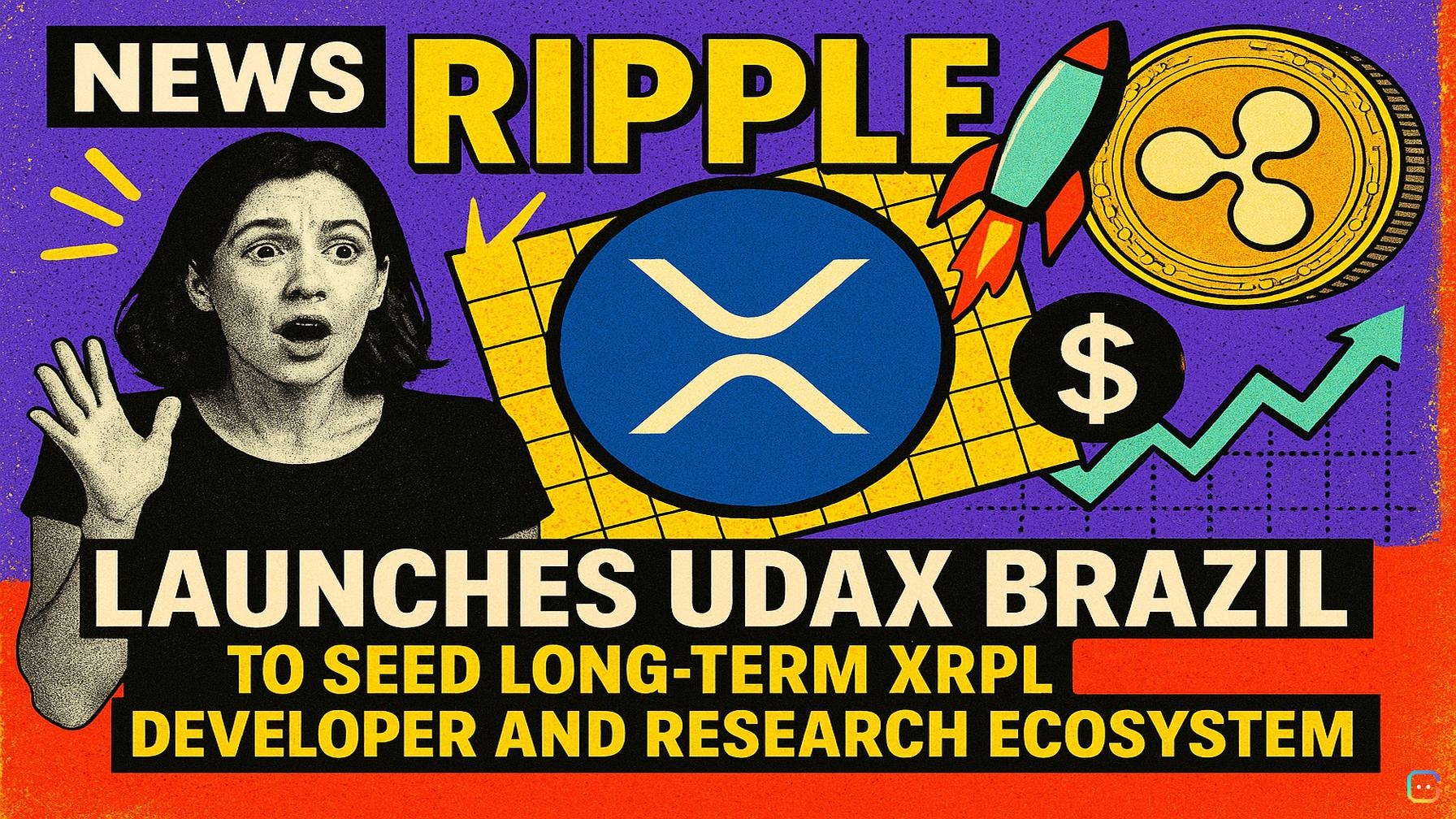
Ripple has kicked off its UDAX accelerator in Brazil, aiming to plug universities, researchers and developers into the XRP Ledger (XRPL) ecosystem. The initiative is focused on funding academic research, awarding grants and jump-starting developer activity around XRPL-based applications — a move designed to grow the network’s builder base rather than to drive immediate XRP market action.
Why Brazil?
- Brazil is a natural target: an active fintech scene, high digital payments adoption and a large, engaged banking sector make it fertile ground for blockchain innovation. Regulators and institutions in the country have shown serious interest in financial technology, which increases the odds that local experiments can turn into real-world payment and settlement use cases.
- Regional fit: Latin American payment needs — remittances, small-business settlement, financial inclusion — can differ from those in the U.S. or Europe. Local developer talent and university research could produce applications tailored to those needs.
What UDAX actually does
- Support for academic research and grants.
- Developer education, tooling and early-stage application support.
- University partnerships and accelerator-style programming to build a pipeline of builders who understand XRPL.
What it isn’t
- A regulatory green light, liquidity boost, or an immediate XRP demand driver. UDAX is ecosystem development: slow-moving, foundational and measured in years rather than days. While the program may eventually increase XRPL usage and attract new token demand, it won’t automatically raise transaction volumes tomorrow.
Why it matters
- Blockchains succeed when people build on them. Technology alone isn’t enough — active developer communities, research outputs and locally relevant apps are what convert platform potential into real-world utility.
- Ripple’s payments-focused positioning and XRPL’s strengths (fast settlement and low fees) give the program a strategic angle: it’s about deepening developer engagement rather than relying purely on enterprise deals.
- In a competitive landscape — Solana, Ethereum L2s, Sui, Aptos, Stellar, and more — developer attention is scarce. A university-and-research-driven approach can create early loyalists and bring fresh projects to XRPL.
Realistic outlook
- Some UDAX-backed projects may never reach commercial scale; others could become critical infrastructure over time. The value of this approach is compounding and long-term: more trained developers, more research, and more experimentation that feed into usable products down the line.
- For XRPL and XRP holders, UDAX strengthens the ecosystem layer. That is important for sustainable growth, even if it doesn’t translate into immediate token activity.
Bottom line
Ripple’s UDAX Brazil launch is a constructive, strategically sensible step toward nurturing a developer and research ecosystem in a key Latin American market. The payoff will likely be gradual, but building a stronger pipeline of XRPL-focused talent and projects matters more for long-term network health than short-lived headlines.
This story is based on Ripple’s UDAX Brazil announcement and primary source disclosures. Written by the News Desk; edited by Samuel Rae.
Read more AI-generated news on: undefined/news