Headline: Twenty One Abandons Strike Merger as Jack Mallers Exits CEO Role — Raphael Zagury Named CEO, Strike to Remain Independent
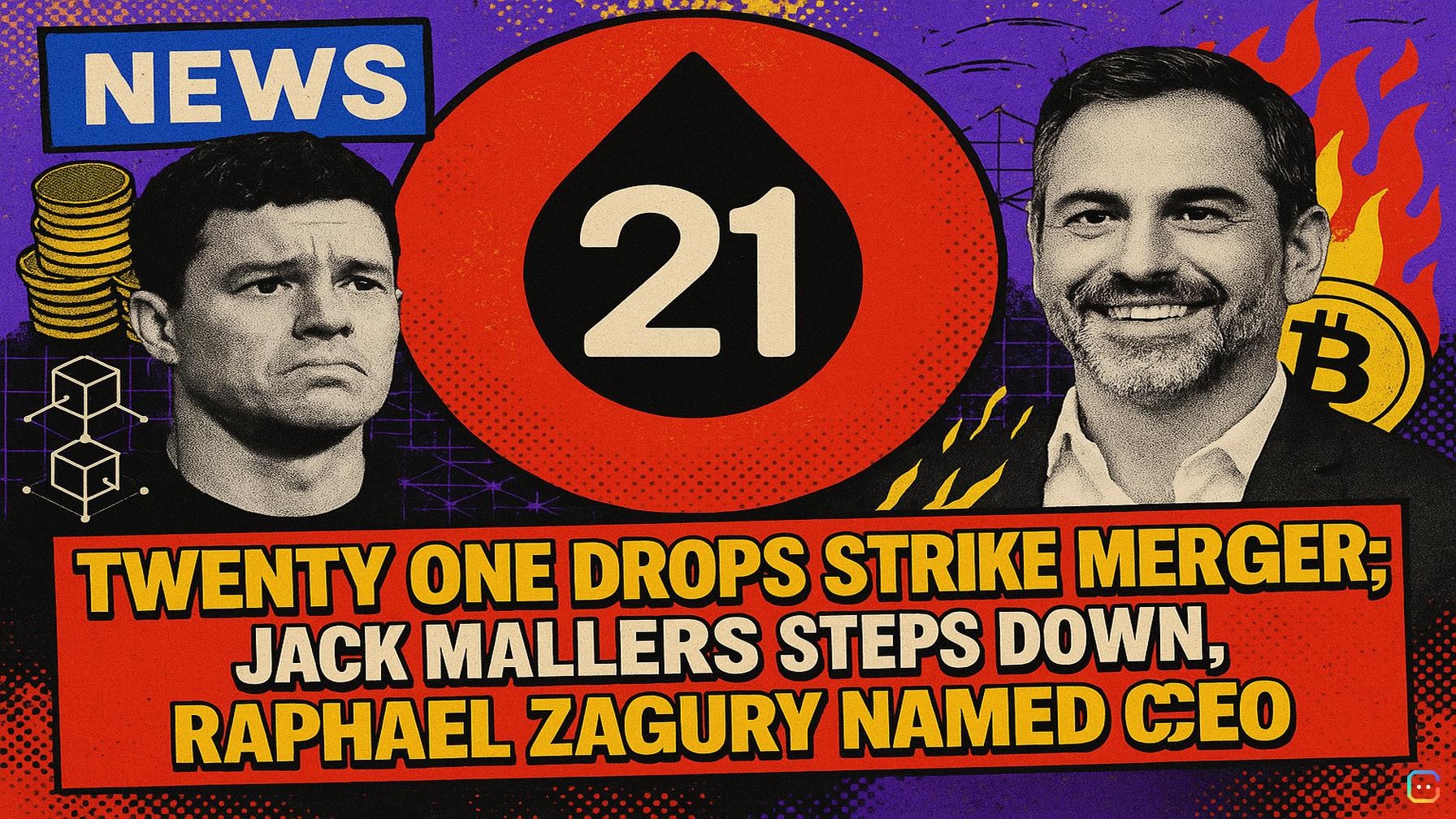
Twenty One Capital has dropped plans to merge with Bitcoin payments firm Strike, ending a central element of a previously proposed three-way combination backed by stablecoin issuer Tether. The company confirmed the shift on July 21 and announced a leadership change: Jack Mallers stepped down as Twenty One’s CEO to concentrate on Strike, and Elektron Energy founder Raphael Zagury assumed the CEO role effective July 20. Strike will continue to operate as an independent company.
What changed
- The original plan, unveiled in April, envisioned a three-way consolidation linking Twenty One’s Bitcoin treasury business, Strike’s financial services platform and Elektron Energy’s mining infrastructure — a structure that Tether pitched as a way to move Twenty One beyond a passive treasury holder into an operating group able to generate recurring revenue from payments, lending and mining.
- Those plans have been pared back: Twenty One said Strike “plans to remain a standalone business and is no longer being considered for a business combination” with the company. A separate potential deal with Elektron Energy remains under preliminary review, but no definitive agreement exists.
Leadership shuffle and key quotes
- Mallers said he had “decided to step down as CEO of Twenty One,” tweeting that the move was difficult but right, and that his “life’s work remains Bitcoin” with Strike. He added, “Serving Bitcoiners has always been the mission, and that doesn’t change. Strike is where I carry it forward.”
- Raphael Zagury, who had been a Twenty One director while founding Elektron Energy, steps in as CEO and signaled a strategic pivot: “My job is to build the operating company around it,” referring to Twenty One’s large Bitcoin balance sheet. He said the company will place greater emphasis on cash flow and capital allocation alongside its Bitcoin holdings.
Context and implications
- The narrower outcome follows a series of ownership and governance moves earlier this year. In May, Tether acquired SoftBank’s entire stake in Twenty One, increasing its control over the Bitcoin treasury company. The company has also faced governance scrutiny: departures from the board left its audit committee below required independence levels and triggered an NYSE compliance notice.
- Market reaction had been positive when the three-way proposal first surfaced, lifting Twenty One shares in after-hours trading. Tether had argued the consolidated group could generate recurring revenues by adding payments, lending and mining to Twenty One’s balance-sheet exposure to Bitcoin.
- With the Strike combination off the table, Twenty One is repositioning itself as a broader Bitcoin-focused operating company. Its updated priorities include acquisitions, capital markets services and a Bitcoin-native lending business designed to let holders access liquidity without selling assets.
What’s next
- Talks with Elektron Energy may continue but remain preliminary and would be subject to related-party transaction reviews and other approvals. Twenty One cautioned there is no guarantee a final deal will be reached.
- Mallers will return his full attention to running Strike as an independent business. Twenty One, under Zagury, will pursue a strategy focused more on operating assets, cash generation and capital allocation around its Bitcoin holdings.
Bottom line: The ambitious three-way consolidation backed by Tether has been scaled back. Strike stays independent under Mallers; Twenty One pivots to an operating-company playbook under Zagury; and any combination with Elektron remains possible but uncertain.
Read more AI-generated news on: undefined/news