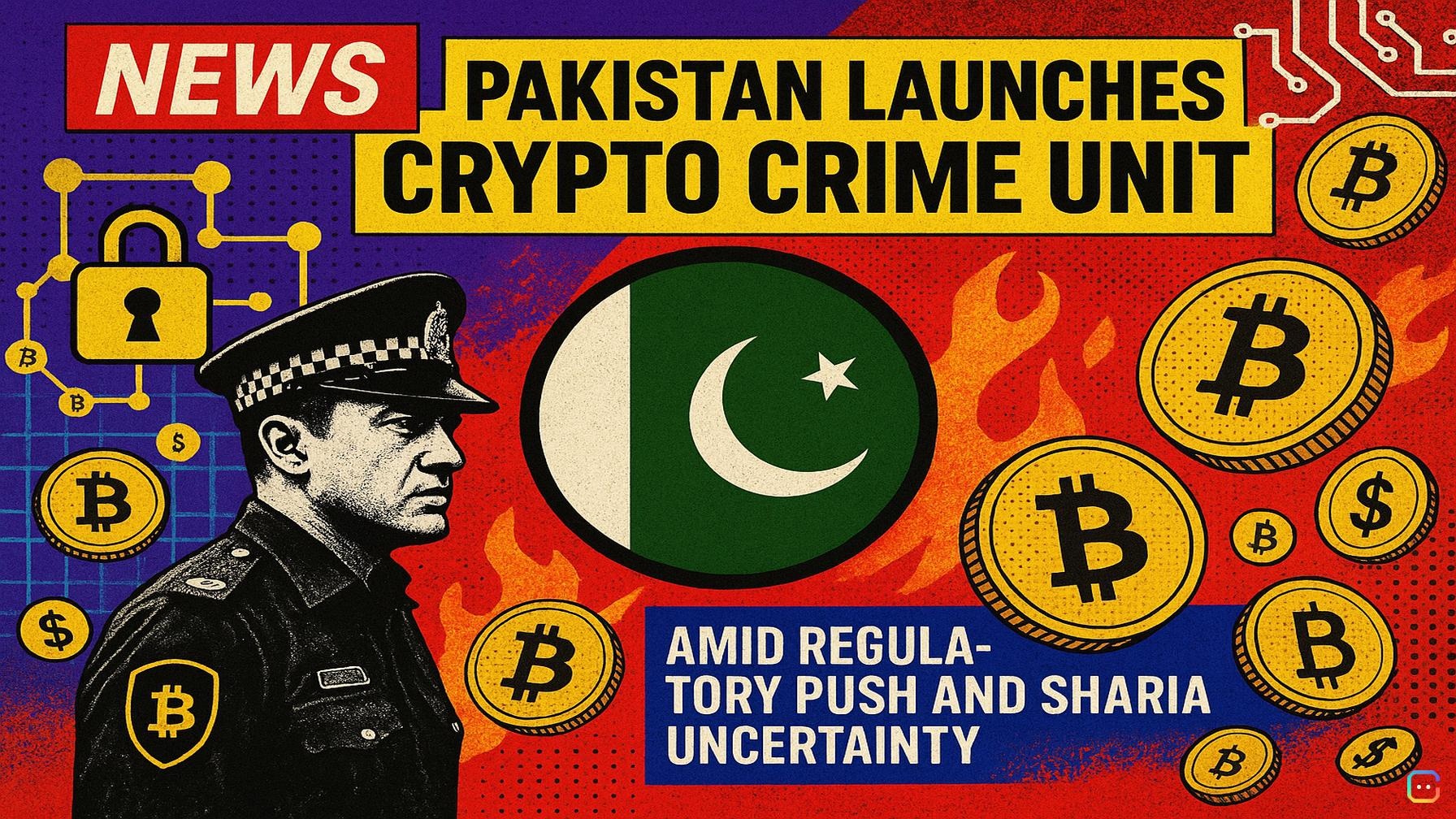
Pakistan’s federal investigators have launched a dedicated crypto crime unit as the country moves to formalize its nascent digital-asset sector — and to clamp down on illicit uses of virtual currencies.
What’s new
- The Federal Investigation Agency (FIA) has created a cryptocurrency investigation unit inside its newly operational National Command and Control Centre (NC3). The unit will focus on money laundering and terrorism financing carried out via virtual assets, FIA Counter-Terrorism Wing Director Dr. Muhammad Athar Waheed told Dawn.
- The unit sits alongside a suite of new NC3 capabilities — anti‑money‑laundering and virtual‑currency desks, an Interpol coordination point, and teams for open‑source intelligence, cyber patrolling and dark‑web probing — designed to centralize the agency’s financial‑crime tools.
How this fits with regulation
- Regulation remains the remit of the Pakistan Virtual Assets Regulatory Authority (PVARA), the government body set up to oversee digital assets. PVARA is advancing exchange licences and exploring tokenization of state assets.
- FIA officials have urged the National Cyber Crime Investigation Agency and the Anti‑Narcotics Force to create comparable crypto units to counter cybercrime and drug‑trade uses of digital currencies. New rules are reportedly being drafted to ensure inquiries conclude within fixed timeframes.
Why it matters
- Pakistan has moved quickly to embrace crypto after lifting an eight‑year banking ban and ranking third in Chainalysis’s 2025 Global Crypto Adoption Index. The country has even explored cross‑border use cases, including a deal with an affiliate of World Liberty Financial — associated with the Trump family’s crypto venture — to pilot a USD‑pegged stablecoin for payments.
- But the policy push has encountered religious and social headwinds. In June, the influential Jamia Darul Uloom Karachi seminary issued a fatwa saying cryptocurrency is not “wealth” under Islamic law and therefore cannot be used as a valid means of payment, casting doubt on government plans.
The religious debate and next steps
- PVARA chairman Bilal bin Saqib has asked the seminary to distinguish between speculative tokens and asset‑backed instruments such as fully reserved stablecoins and blockchain‑recorded sukuk. He told Reuters Pakistan could “lead the world in Shariah‑compliant digital finance” if those distinctions are accepted.
- For now, the FIA’s new unit gives Islamabad an enforcement arm to match its regulatory ambitions — while the question of whether crypto is permissible under Islamic law remains unresolved.
Bottom line
Pakistan is simultaneously building regulatory, technological and enforcement infrastructure for crypto — signaling serious intent to integrate digital assets into the economy — but faces legal, religious and political headwinds that could shape the sector’s ultimate trajectory.
Read more AI-generated news on: undefined/news