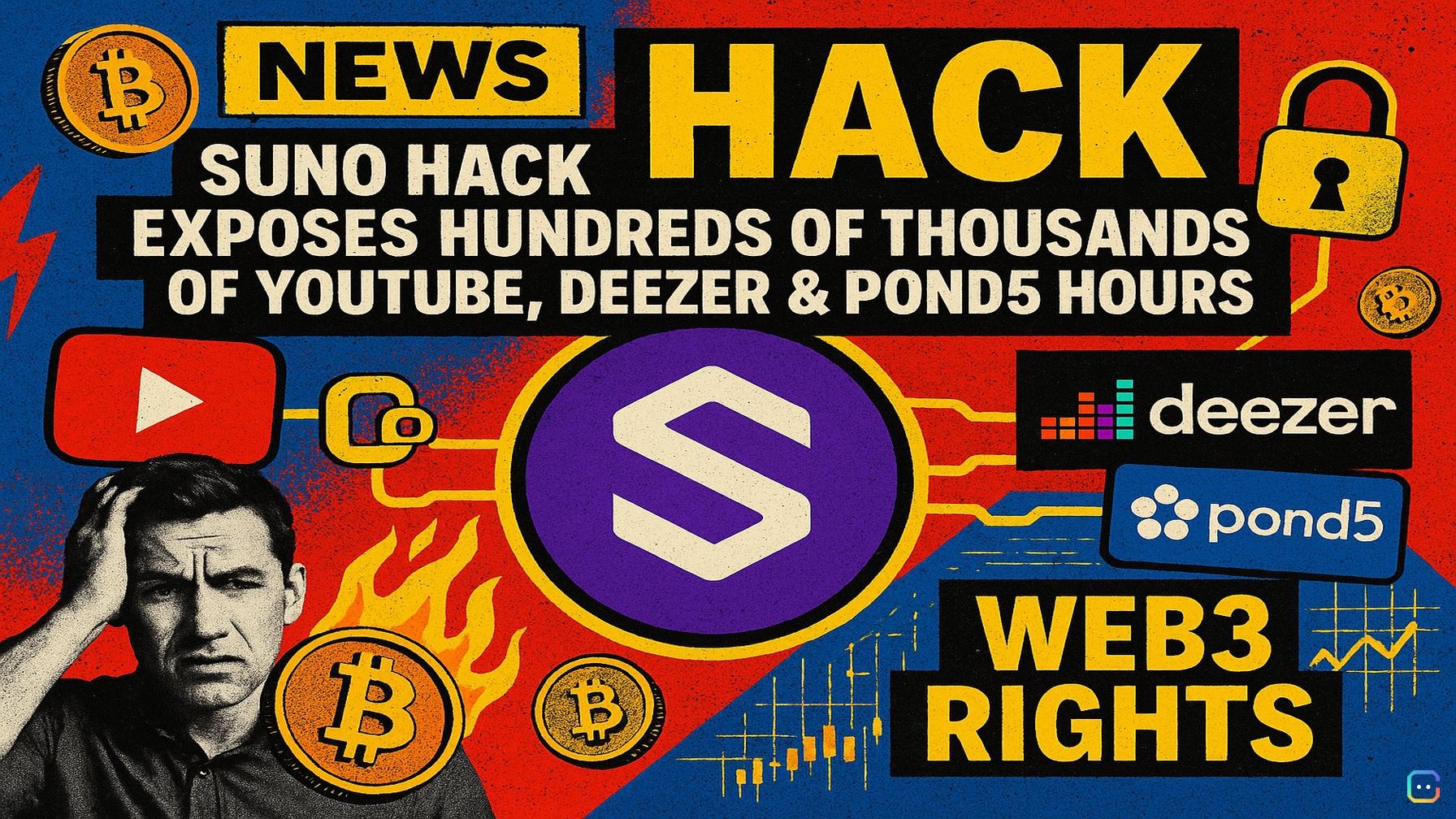
Headline: Hack of AI Music Creator Suno Exposes Hundreds of Thousands of Hours of YouTube, Deezer and Pond5 Audio — Raises New Questions About Training Data and Rights
A recent breach of AI music platform Suno has lifted the veil on exactly what went into its training library — and the haul is huge. Leaked source code and internal logs reviewed by 404 Media show the company scraped hundreds of thousands of hours from public music services and stock libraries, lending new specificity to long-standing industry allegations that AI music models were trained on copyrighted material without licenses.
What was leaked
According to the leaked files (first reported July 16, 2026), the intruder — who says they used a malware strain called the Shai‑Hulud worm — escaped with source code and ingestion logs from 2023–2024 that map Suno’s training pipelines. The breakdown in the files is strikingly granular:
- 113,879 hours of YouTube Music
- 152,162 hours of tagged YouTube tracks
- 62,117 hours from stock music library Pond5
- 12,287 hours from Deezer
- 17,615 hours in a “genius_hq” dataset tied to Genius-identified material
- Plans in code to pull roughly 1 million hours of podcast audio via RSS feeds
One ingestion log recorded 2,013,545 individual YouTube Music clips alone — millions of recordings spanning decades. The hacker also claimed access to customer records (emails, phone numbers and Stripe-related data); Suno disputes that sensitive personal data were exposed and says the breach principally involved legacy source code.
Suno’s timeline and disclosures
Suno says it discovered the incident in November 2025 and described it internally as “limited,” asserting much of what was exposed was outdated code no longer in use and that legal thresholds for individual notification were not met. Users and the public are learning the full specifics now through media coverage of the leaked files.
The company had already given broad public notice of its data approach under California’s AB 2013, stating its training corpus may include music “subject to intellectual property protection” and that it had ingested tens of millions of publicly available music audio files. The hack, however, supplies much more precise evidence than the intentionally high-level disclosures required by AB 2013.
Legal context and industry fallout
The leak corroborates allegations the Recording Industry Association of America (RIAA) has made in court: a 2025 amendment to the RIAA’s 2024 lawsuit accused Suno of directly ripping songs from YouTube — a claim Suno disputes, arguing fair use. The RIAA sought statutory damages of up to $150,000 per infringement. Parallel litigation has already affected other AI music players: Udio settled with Warner Music in November 2025 and is pivoting to a licensed model. Suno remains entangled in an active federal case with Sony and UMG. The company is valued at roughly $5.4 billion and reports about 100 million users.
Why crypto and web3 watchers should care
For crypto and web3 communities, the Suno leak has several implications:
- Provenance and licensing: The episode underscores the importance of auditable metadata and rights provenance — areas where blockchain-based registries and tokenized rights systems have been proposed as solutions.
- Royalty automation: Smart contracts and standardized on‑chain licensing could simplify payouts and reduce disputes if content provenance were reliably recorded at scale.
- Data governance: Decentralized storage and verifiable data attestations might help platforms demonstrate what data they used to train models — potentially reducing legal risk if paired with clear licensing.
- Privacy risk: The hacker’s claims about customer data (even if contested) highlight ongoing intersectional risks between AI platforms and user financial/identity data — a concern for any on‑chain/off‑chain integration.
What’s next
The leaked source code gives courts and the public new evidence to weigh in ongoing litigation over AI training practices and copyright. Regulators and rights holders may push for stricter compliance and transparency, and the episode could accelerate demand for licensed datasets or decentralized rights infrastructure that ties usage more directly to payment and attribution.
404 Media led coverage of the leaked files; the breach was shared widely on social platforms including a July 16 tweet from International Cyber Digest. Suno did not immediately respond to a request for comment from Decrypt.
Bottom line: The Suno leak moves the debate over AI music training from high‑level disclosure to file‑level specificity, with potential ripple effects across licensing, litigation, and the role that web3 tools might play in proving provenance and automating rights management.
Read more AI-generated news on: undefined/news