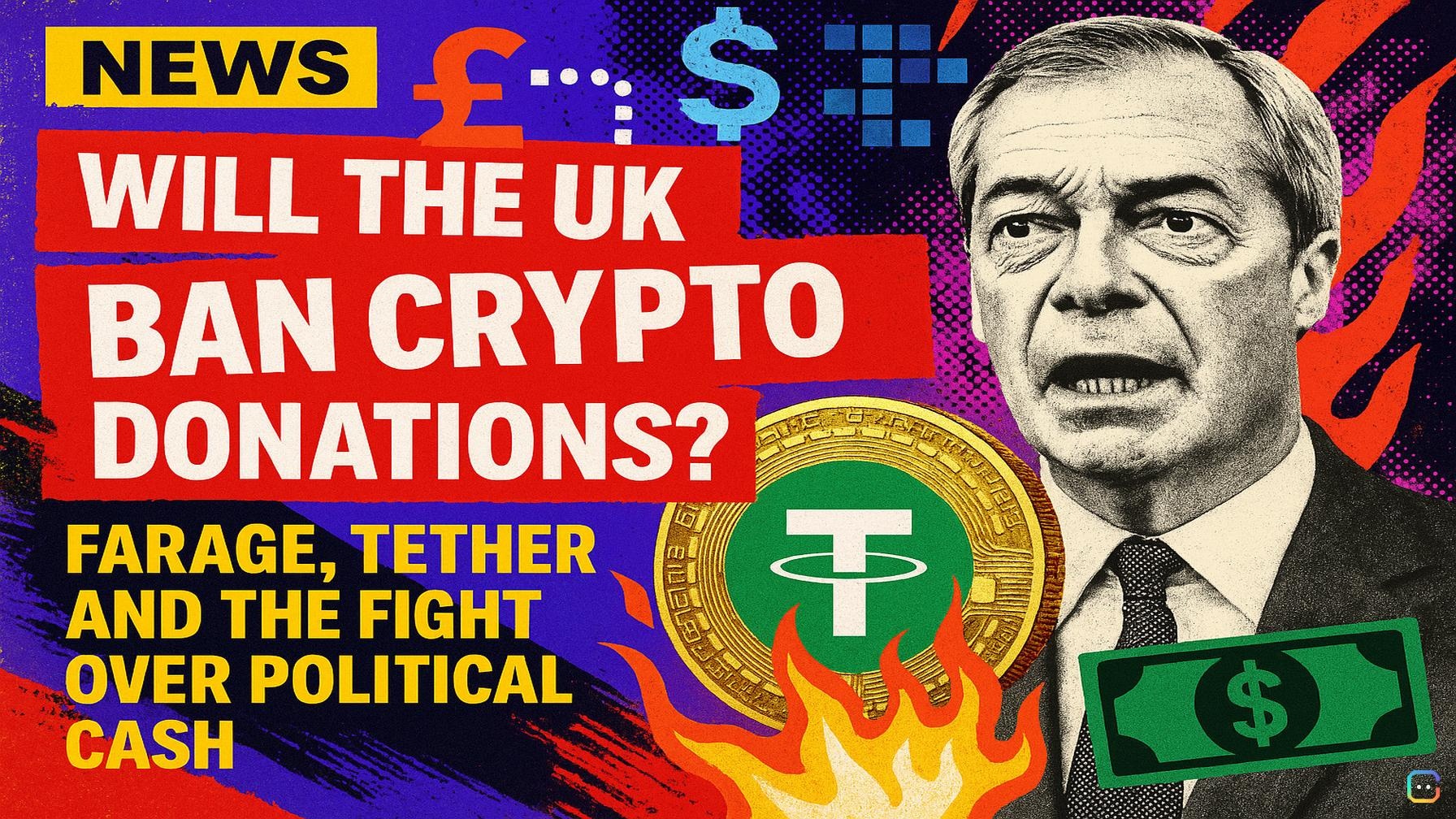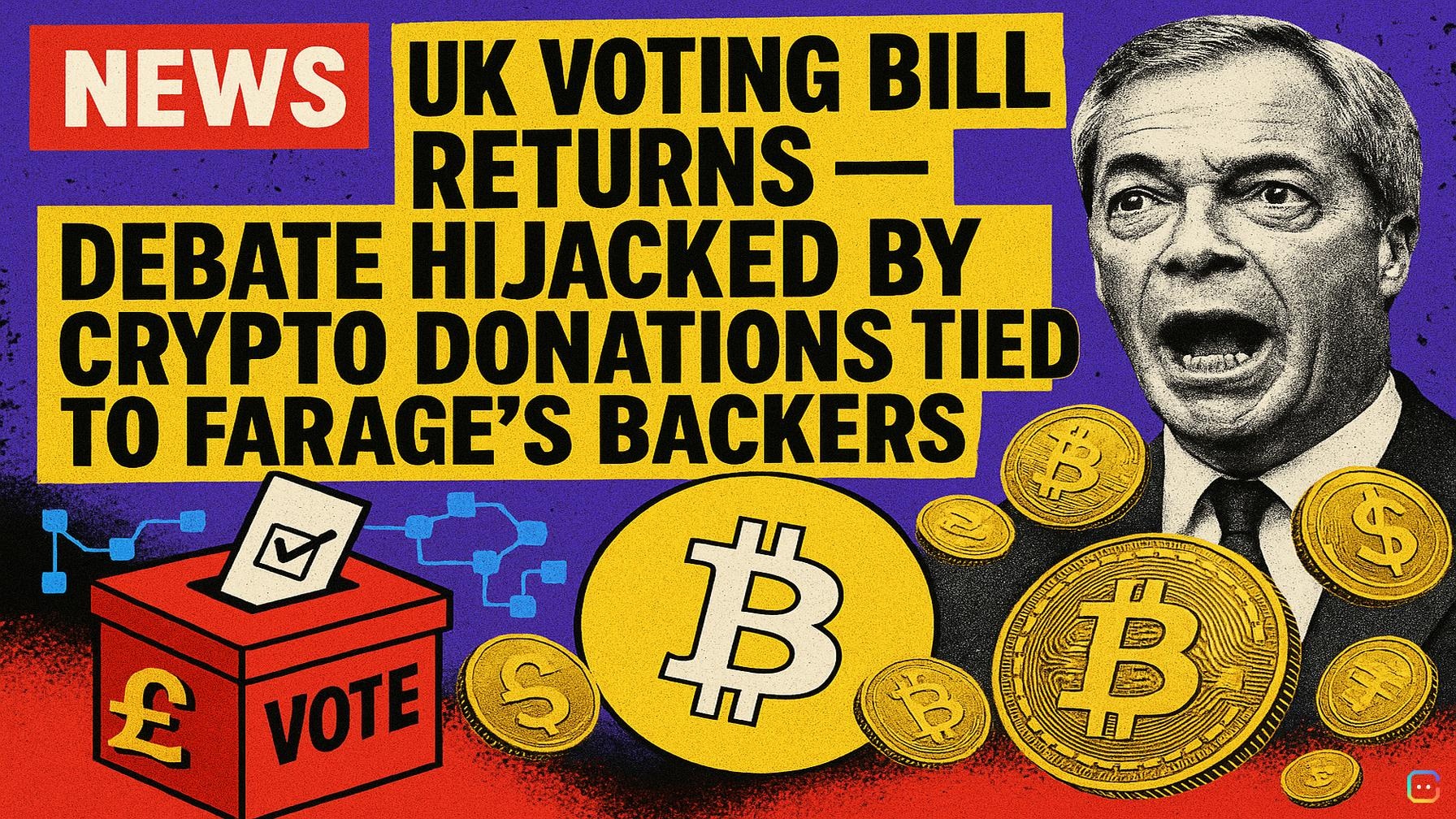
This Tuesday the government’s Representation of the People Bill returns to the Commons for its third reading — a package that on paper contains voter-access reforms such as extending the franchise to 16- and 17‑year‑olds and improvements to registration. In practice, however, the public debate has been hijacked by questions about big-money political giving — and in particular by the ties between Nigel Farage and a cluster of extremely wealthy crypto backers.
That spotlight has fallen partly because of Christopher Harborne, the Thailand-based crypto investor who gave Farage a £5m “personal gift” and has donated more than £22m to Reform UK. It has also been driven by wider worries about cryptocurrency donations. The government has put in place a moratorium — not an outright ban — on political donations in crypto, reflecting Electoral Commission concerns that encrypted digital assets “present particular challenges and risks in meeting electoral law requirements in identifying donors and ensuring they are permissible.”
Key measures and proposed amendments
- New annual £100,000 cap on donations from British citizens living abroad.
- Candidates must declare any donation above £2,230 (but “personal gifts” remain exempt).
- Companies making donations could face tougher scrutiny, with checks proposed that would assess profit as well as revenue to establish whether donors are bona fide.
- New arrivals who acquire eligibility to donate would face a one‑year limit of £100,000.
Labour backbenchers are pushing harder. Stella Creasy wants a universal cap at that level; other MPs have suggested a ceiling of £1m; and Liam Byrne, chair of the Commons business committee, is proposing a permanent ban on crypto donations.
Why crypto is central
The Farage story is emblematic of a much larger nexus: a global class of high‑net‑worth crypto backers and political operators — often aligned with hard‑right causes — who move money across jurisdictions and exert outsized influence. In exclusive circles from London and New York to Montenegro, El Salvador and Hong Kong, the scale of crypto finance can dwarf national political debates.
Oliver Bullough, author of Everybody Loves Our Dollars, highlights one example: Tether, the stablecoin operator in which Harborne owns roughly 12%. Tether, whose tokens are pegged to the dollar to reduce volatility, reportedly made more than $10bn in profit in 2025. Bullough has described it as “the most profitable company per‑employee that there has ever been,” and warned it is operating increasingly like “a private central bank.” As he put it, after utilities like electricity and water, “crypto is just the next one. It’s just money being privatised.”
That perspective helps explain why some politicians fervently court the industry. Farage has praised stablecoins and urged London to embrace them, even suggesting Tether could be valued as high as $500bn. But he is far from the biggest player in the room: last year Donald Trump reportedly raised more than $1.4bn from crypto channels. In the 2024 US cycle the crypto industry spent over $245m, and this year it has poured about $190m into midterm‑related activity — reportedly more than a third of total corporate political spending tracked for those contests.
Crypto insiders and political influence
Closer to home, names like Ben Delo — co‑founder of BitMEX — illustrate how the crypto ecosystem and right‑wing politics intersect. Delo and a co‑founder pleaded guilty in the US in early 2022 to failing to maintain an adequate anti‑money‑laundering programme; he paid a civil penalty and was given probation, and was later pardoned. He has donated millions to Reform UK — a £4m gift earlier this year — and has publicly criticised donation limits as “tinpot,” urging wealthy supporters to “build a war chest.”
Similar voices include people associated with Farage’s circle: George Cottrell, Farage’s de facto chief of staff, has faced fresh allegations about undeclared payments toward Reform’s office costs and was questioned along with his mother by police about donations.
The stakes for the UK
Even if Farage’s immediate political fortunes wobble amid by‑election drama, the broader alignment between the new British right and crypto capital points to the UK the movement would pursue: a vastly smaller state in financial matters, and a reinvention of London as a crypto hub. Critics warn that such a shift could weaken the line between legitimate business and criminal activity, undermining regulatory defences and boosting the influence of unregulated capital. For opponents, the prospect is not a fringe joke but a profound economic and political gamble.
As the Representation of the People Bill returns to the Commons, the debate over crypto donations is therefore more than an argument about one party’s funding. It’s a flashpoint over whether the UK’s political system and financial centre will tighten controls on opaque new money or open the gates wider to an industry that many see as poised to reshape global finance — and politics — in ways that may be difficult to roll back.
John Harris, Guardian columnist
Read more AI-generated news on: undefined/news