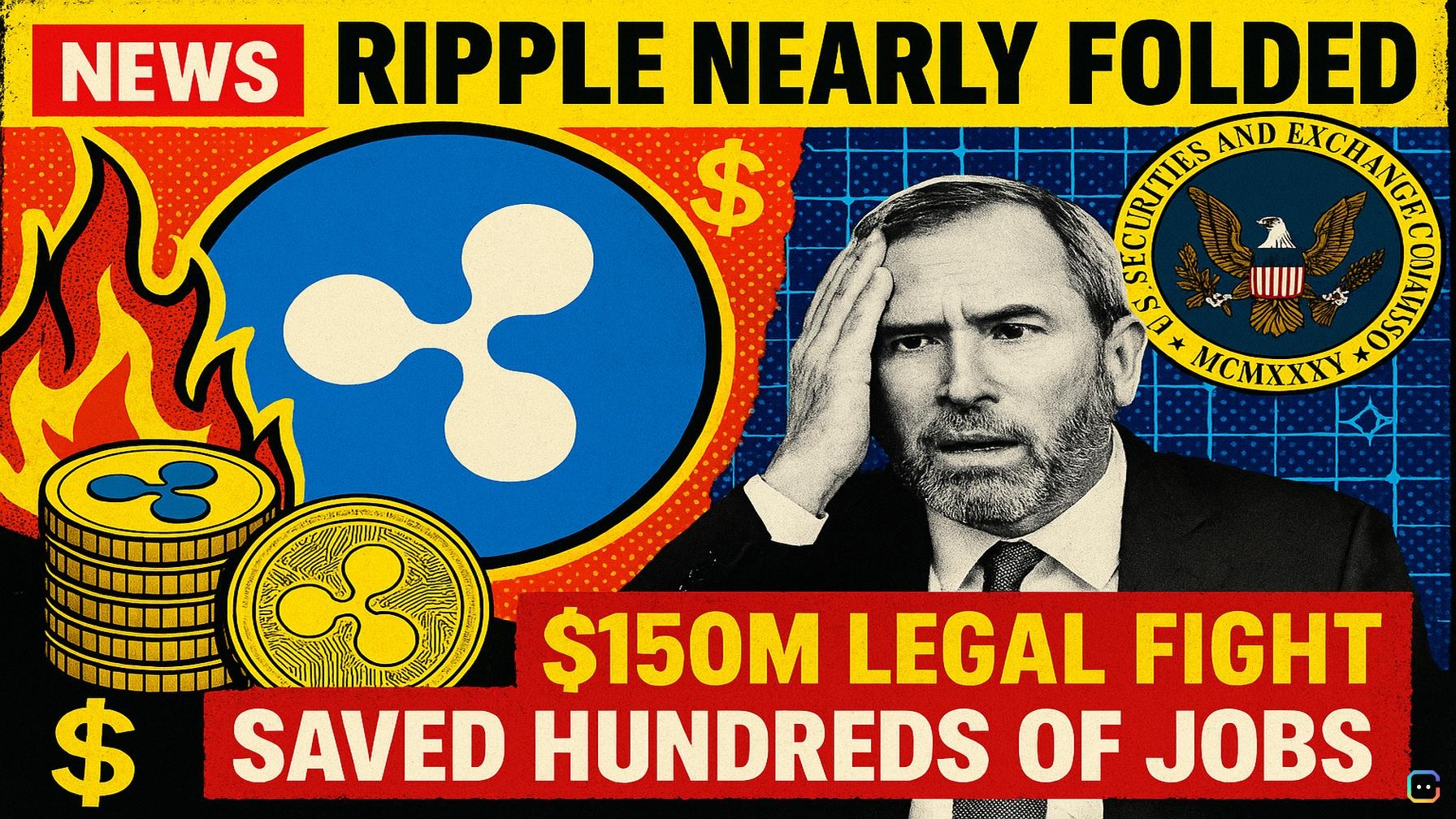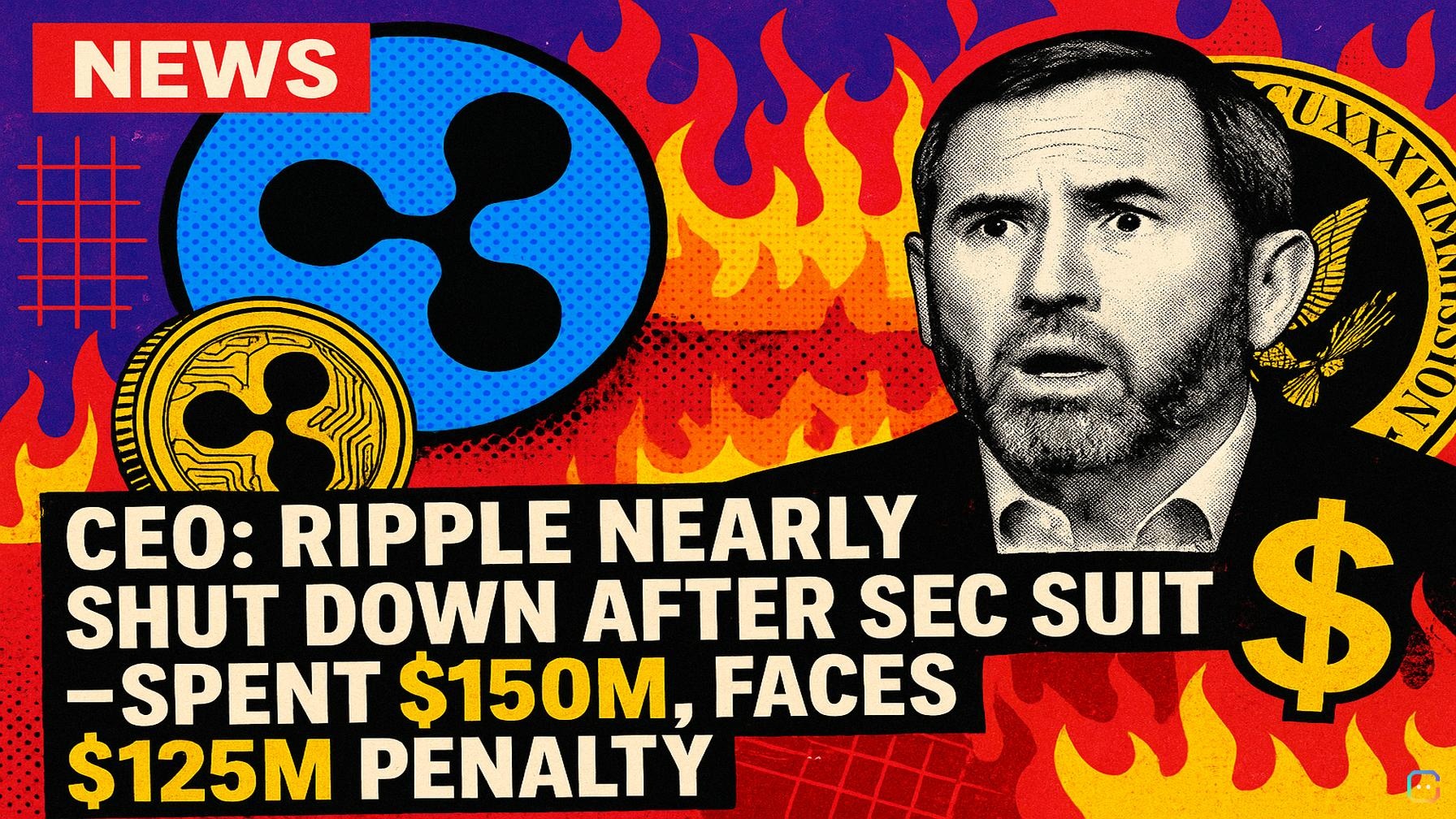
Ripple came within hours of shutting down after the SEC sued it in December 2020, CEO Brad Garlinghouse revealed — a reminder of how close enforcement pressure pushed one of crypto’s biggest companies to the brink.
During a talk at the University of Kansas School of Business, Garlinghouse said he and co‑founder Chris Larsen seriously considered winding the company up, distributing Ripple’s XRP holdings pro rata to shareholders and dissolving the business. He called that option “the easier path” when facing an agency with “infinite power and resources.” The plan was ultimately rejected because it would have eliminated hundreds of jobs; instead, Ripple chose to fight the case despite enormous uncertainty. “I’m glad in retrospect,” Garlinghouse said, “but that was not obvious at the time.” A post from Wu Blockchain on July 12 amplified his remarks.
The stakes were high. The SEC accused Ripple, Garlinghouse and Larsen of conducting unregistered securities sales through XRP, alleging the company raised more than $1.3 billion. Garlinghouse estimated Ripple spent roughly $150 million defending the suit. He also said he had met with SEC officials four times between 2017 and 2019 without an attorney and that the agency never warned him XRP might be considered a security — a point he says influenced Ripple’s decision to contest the case.
A pivotal ruling came in July 2023 from U.S. District Judge Analisa Torres. The court found that programmatic sales of XRP on public exchanges were not securities transactions, but that certain direct institutional sales did violate securities laws. The court imposed a $125 million civil penalty and barred Ripple from repeating unregistered institutional XRP sales.
Ripple and the SEC later tried to negotiate a revised settlement in 2025 that would have reduced the penalty to $50 million and removed the injunction, but Judge Torres rejected the proposal because a final judgment had already been entered. Both parties then dropped appeals and the Second Circuit closed the case on August 22, 2025. Crypto.news noted that the closure of appeals did not erase the original judgment: Ripple still faces the $125 million penalty and the permanent injunction tied to future institutional sales, even as the 2023 ruling clarified that exchange‑based XRP trading does not automatically qualify as securities trading.
Despite the legal maelstrom, Ripple has continued to expand internationally. The company recently secured a full Markets in Crypto‑Assets (MiCA) license in Luxembourg, enabling it to offer regulated crypto services across the European Economic Area — a clearer operating framework than it currently enjoys in the U.S. Meanwhile, U.S. lawmakers continue debating market‑structure rules that would define when digital assets are regulated as securities or commodities.
Garlinghouse’s disclosure underscores how enforcement action shaped Ripple’s strategic path and spending over several years. Rather than dissolve, Ripple preserved its workforce and pushed growth abroad, but the legacy of the litigation — a substantial legal bill and restrictions on institutional XRP sales — remains. The case also left broader questions about federal regulation of digital assets unresolved, keeping regulatory clarity in the U.S. tied to pending legislation.
Read more AI-generated news on: undefined/news