Pakistan’s top virtual-assets regulator has called for sustained dialogue after a prominent scholar declared payments with certain cryptocurrencies unacceptable under Islamic law.
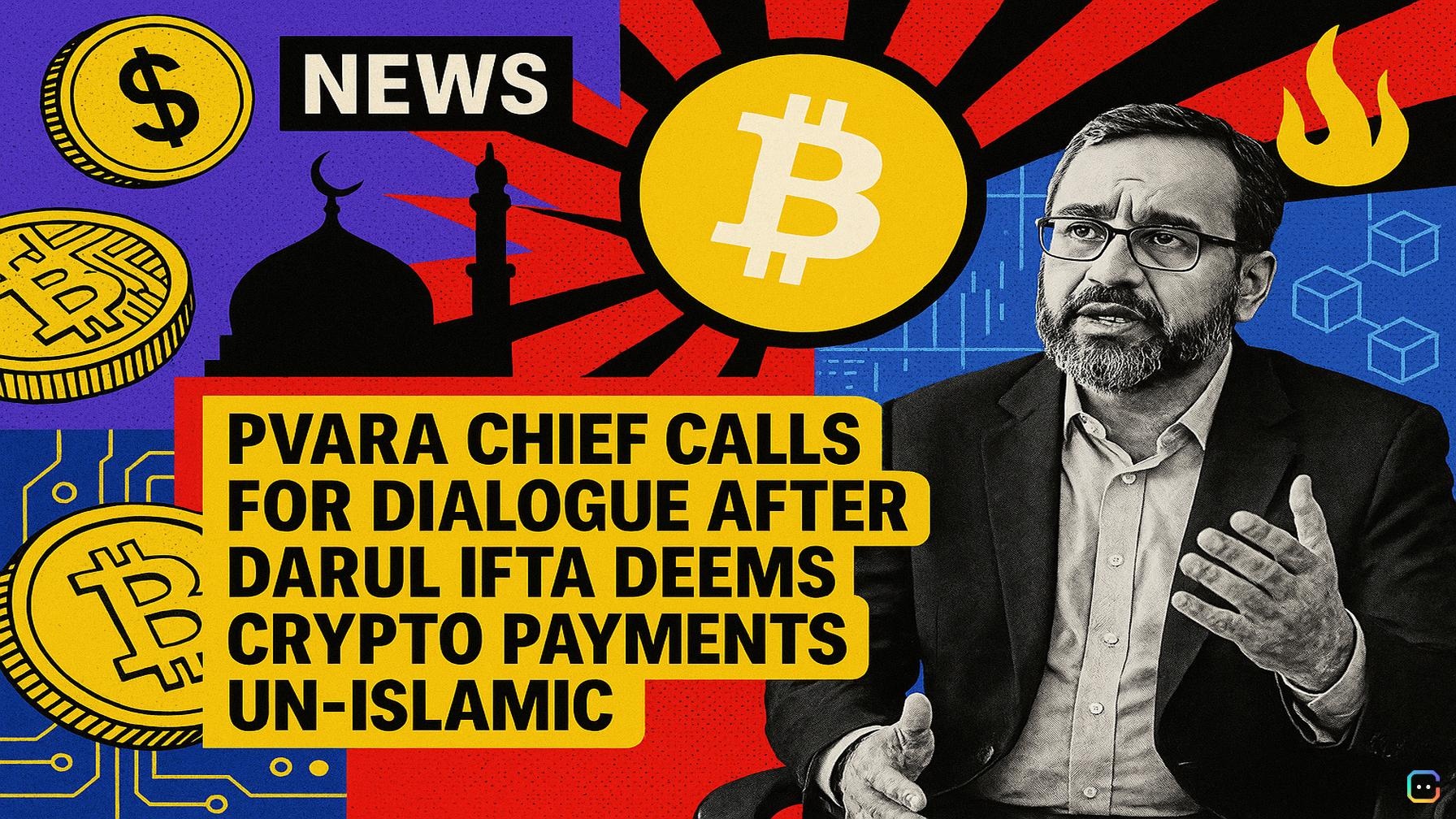
Bilal bin Saqib, chairman of the Pakistan Virtual Assets Regulatory Authority (PVARA), met with Mufti Taqi Usmani on July 11 and urged continued engagement between religious scholars, regulators and industry specialists. Saqib framed the goal as shared: protect Pakistanis from fraud, exploitation and financial harm while carefully assessing new technologies.
The meeting followed a June 10, 2026 ruling from Darul Ifta at Jamia Darul Uloom Karachi — signed by Mufti Usmani and five other scholars — which said purchases made with cryptocurrencies, including the stablecoin USDT, are not permissible under their reading of Shariah. The scholars argued current research does not recognise crypto as property or wealth and described it as “merely the recording of fictitious numbers in an account,” according to local reporting.
Saqib did not directly contest that finding. Instead he urged distinctions between different types of digital assets — blockchain protocols, stablecoins, tokenized real-world assets and others — calling for “careful technical assessment alongside rigorous Shariah examination” rather than one sweeping judgment. He also asked for more engagement among religious authorities, regulators and technical experts to avoid blanket rulings that neglect important differences in use-cases and risk profiles.
The exchange comes as Pakistan builds a regulated virtual-asset sector. The Virtual Assets Act 2026 created PVARA as the licensing and supervisory authority and launched a public consultation on rules for exchanges, custodians, brokers, token issuers and other service providers. On April 15 the State Bank of Pakistan allowed banks to open accounts for firms licensed by PVARA, provided banks verify licences, perform enhanced due diligence, monitor accounts and segregate customer funds. Banks are barred from using their own capital or customer deposits to trade or hold virtual assets, and must still comply with foreign-exchange, anti-money-laundering and counterterrorism-financing rules; suspicious activity is to be reported to the Financial Monitoring Unit.
Those policy shifts ended an eight-year de facto banking ban on regulated crypto firms, although firms remain subject to licensing and central-bank controls. Meanwhile, Islamabad has explored tokenization and stablecoin use with international partners: a December 2025 nonbinding agreement with Binance to study tokenizing up to $2 billion of state assets (linked to government bonds, Treasury bills and commodity reserves), and a January 2026 initiative to research a USD-backed stablecoin for cross-border payments involving the finance ministry and central bank. Both projects remain contingent on regulatory, technical and formal approvals.
The Darul Ifta ruling injects an additional Shariah assessment into Pakistan’s regulatory equation. PVARA has not changed licensing rules following the meeting; Saqib’s public remarks keep the conversation open as the regulator continues drafting operating standards. For now, licensed firms remain regulated under the Virtual Assets Act and subject to central-bank restrictions, even as religious and technical reviews proceed in parallel.
Read more AI-generated news on: undefined/news