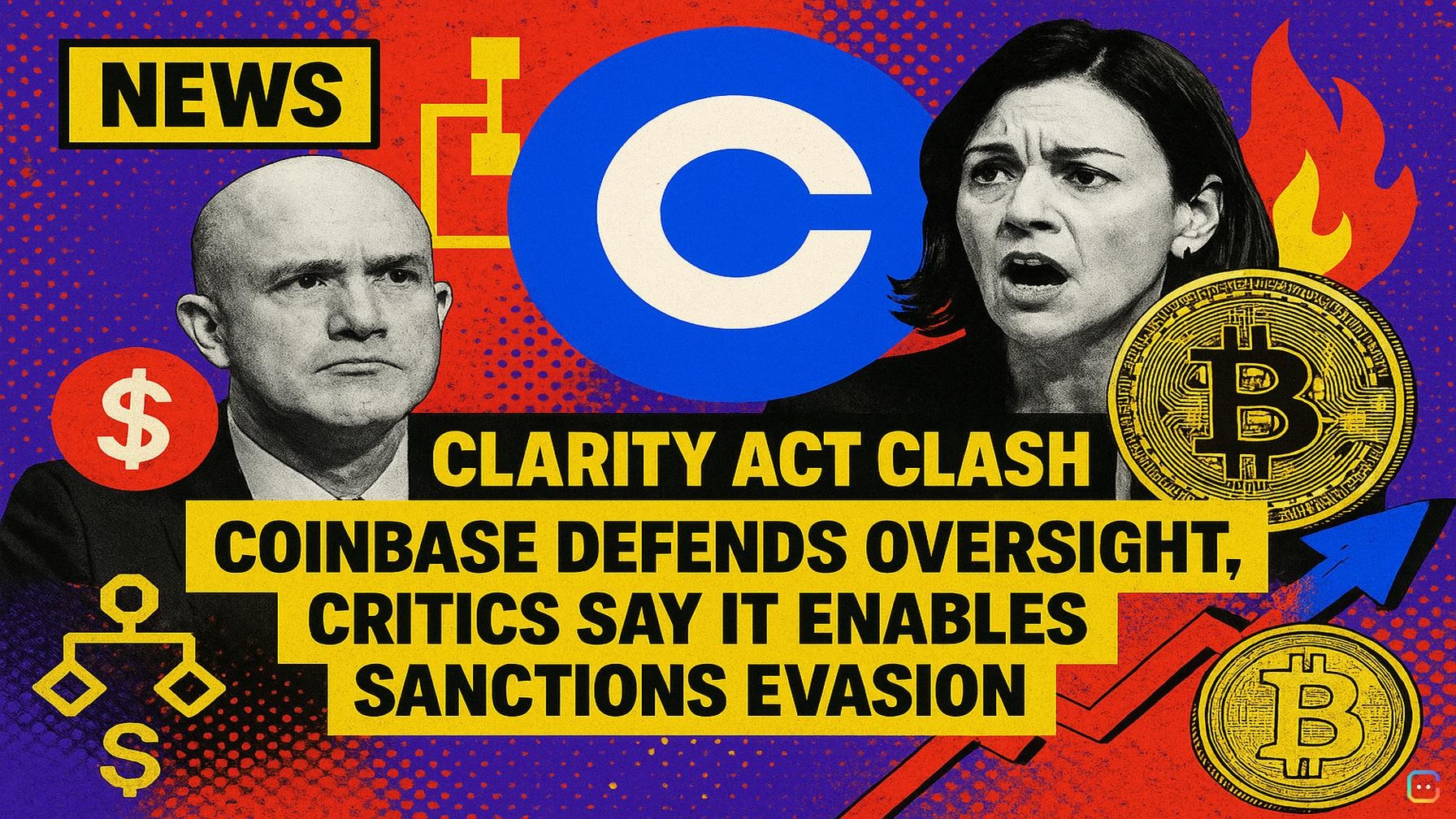
As Congress races toward a possible vote on the CLARITY Act, a sharp showdown has emerged over whether the bill tightens U.S. oversight of crypto or leaves dangerous gaps that could be exploited by bad actors.
Coinbase pushes back
Coinbase Chief Policy Officer Faryar Shirzad took to X on July 11 to reject warnings that the CLARITY Act would weaken national security. He argued the bill would actually bring more crypto activity into a unified federal compliance framework instead of letting it float under patchwork regulation where illicit actors can hide. Shirzad highlighted that the proposal would subject crypto brokers, dealers, and exchanges to Bank Secrecy Act obligations — including anti-money-laundering programs, customer due diligence, suspicious-activity reporting, sanctions compliance, and the ability for platforms to pause suspicious transfers at law enforcement request. “This isn’t a free pass for crypto,” he wrote, calling the bill a “strict security mandate.”
Warren and national security critics push back
Senator Elizabeth Warren has taken the opposite view, sharing an analysis by Richard Nephew — a former National Security Council Iran director — and warning that “as currently drafted, the CLARITY Act is a ticket to sanctions evasion.” Nephew and other critics contend the bill could leave some decentralized finance (DeFi) players outside clear Bank Secrecy Act responsibilities, making enforcement against foreign governments, criminal networks, and sanctioned entities harder. A minority advisory from the Senate Banking Committee raised similar concerns.
What’s at stake in the text
At the heart of the dispute is which crypto businesses must register, monitor transactions, and answer to federal agencies — and whether exemptions for certain non-custodial or decentralized services would create enforcement loopholes. Supporters of the bill counter that existing sanctions laws would remain in place and that the CLARITY Act actually adds enforcement tools and funding for Treasury and FinCEN.
Key elements in the Senate Banking Committee fact sheet:
- Applies federal anti-money-laundering and counterterrorist financing rules to centralized digital-asset intermediaries.
- Creates “Special Measure 6,” a Treasury authority to target foreign jurisdictions, institutions, or transaction types tied to major digital-asset money-laundering risks.
- Boosts FinCEN funding and requires risk controls at digital-asset firms.
- Establishes a government-industry information-sharing program.
- Brings crypto kiosks into regulation and orders studies on mixers, illicit finance, cyber risks, and national security threats.
Where negotiations stand
Senate staff plan to release a merged CLARITY Act draft the week of July 13 that combines work from the Banking and Agriculture committees. Reportedly, negotiators have already added more than 70 pages to the bill, including stronger consumer protections and other bipartisan changes. Senate leaders are eyeing potential floor action the week of July 20, but multiple contentious issues remain unresolved: ethics rules, stablecoin reward programs, DeFi protections, and legal safeguards for software developers. Senator Ron Wyden has been vocal about preserving protections for developers who do not control customer funds.
The legislative timeline remains tight. The House approved an earlier version in July 2025, and the Senate Banking Committee advanced its draft on a 15-9 vote in May 2026. Both chambers must pass matching language before the bill can go to the president, and the Senate begins its August recess on August 7 — leaving limited time for final debate and amendments. The ongoing national security disagreement will be a key factor as supporters try to secure enough Democratic votes before lawmakers head out for summer.
Read more AI-generated news on: undefined/news