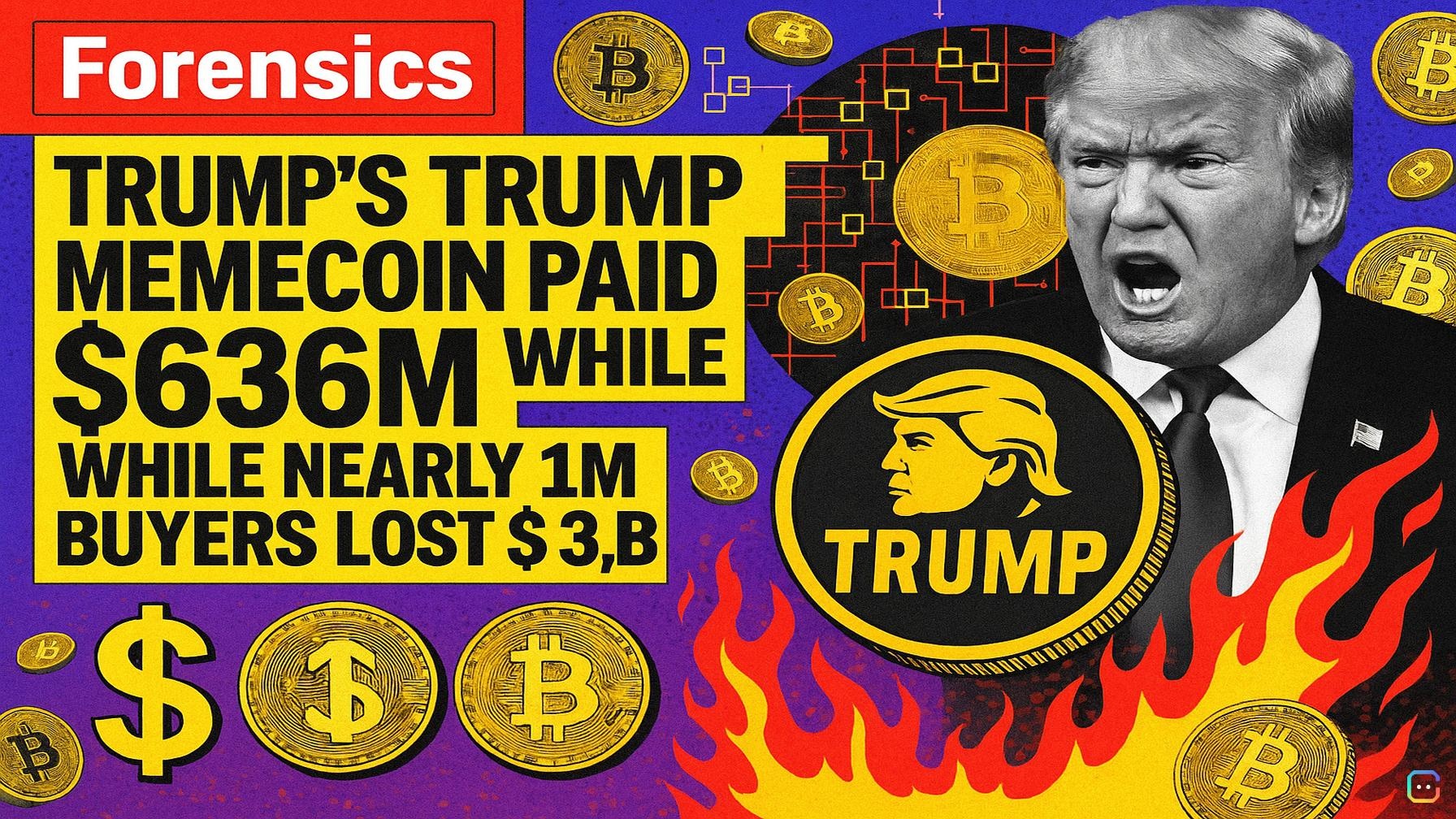
Headline: Blockchain forensics show Trump’s TRUMP memecoin paid him $636M while nearly 1M buyers lost $3.8B
Summary: New analysis tying blockchain data to President Donald Trump’s financial disclosures reveals stark winners and losers from the Official Trump (TRUMP) memecoin. Analytics firm Nansen and reporting by The New York Times show Trump’s operation generated hundreds of millions for him and affiliates while most retail buyers suffered heavy losses.
Key facts and findings
- Trump payout: Trump’s 2025 financial disclosure lists a $636 million payout connected to the TRUMP memecoin. The filing also reports at least $1.4 billion in crypto-related income during the reporting period, largely from licensing tied to the memecoin and token sales by Trump-backed World Liberty Financial (WLFI).
- Buyer losses: Nansen reports 988,905 wallets that bought TRUMP had cumulative losses of $3.81 billion through the end of June. That figure includes both realized and unrealized (paper) losses.
- Price collapse: TRUMP traded around $1.76 on the Friday cited—about 97% below its all-time high of $75.35.
- Profit concentration: Fewer than 500,000 wallets produced roughly $4 billion in combined profits, with gains heavily concentrated among early entrants, automated traders and experienced crypto participants who bought before and sold into retail demand.
- Loss ratio: Nansen estimates roughly two out of every three wallets that bought TRUMP ended up losing money.
- WLFI performance: Of 26,663 WLFI wallets tracked by Nansen, 85% were underwater—combined losses of about $83 million versus roughly $23 million in profits. Nansen cautioned actual losses may be higher because some exchange trades aren’t publicly traceable.
How the structure favored organizers
- The venture generated revenue for Trump regardless of the token’s direction because of transaction- and licensing-related income—meaning trading volume benefited the issuer even while late buyers lost value.
- Trump actively promoted the memecoin on Truth Social, encouraging supporters to participate. He introduced TRUMP three days before his January inauguration and positioned it as a way for supporters to join his community.
Voices from investors and officials
- One investor, Nicholas Pinto, told The New York Times he invested roughly $500,000 and estimated he’d lost about half of that. Pinto called the project “almost a legal scam,” saying Trump’s public backing encouraged buyer confidence.
- White House spokeswoman Anna Kelly told The New York Times that Trump had made the U.S. the “crypto capital of the world” and framed his actions as in the public interest.
- In a CNBC interview, Trump said he was unaware that his crypto ventures had generated at least $1.4 billion, adding he could determine the exact amount if he wanted and asserting there was nothing improper about earning money from digital assets. He said he had no plans to distance himself or his family from their crypto businesses.
Political fallout and regulatory attention
- The disclosure has reignited ethics and regulatory debates in Washington. Sen. Kirsten Gillibrand renewed calls for rules to bar government officials and their spouses from creating or promoting crypto memecoins.
- Congress is also considering the CLARITY Act, where negotiations include topics such as stablecoin yields, anti–money laundering safeguards and ethics provisions tied to crypto activity.
Why it matters
- The TRUMP memecoin case underscores how token launches with heavy promotion from public figures can funnel substantial revenue to founders and affiliates while exposing retail buyers to extreme downside.
- It also highlights the intersection of crypto markets, political influence and the growing call for clearer ethics and regulatory guardrails.
Read more AI-generated news on: undefined/news