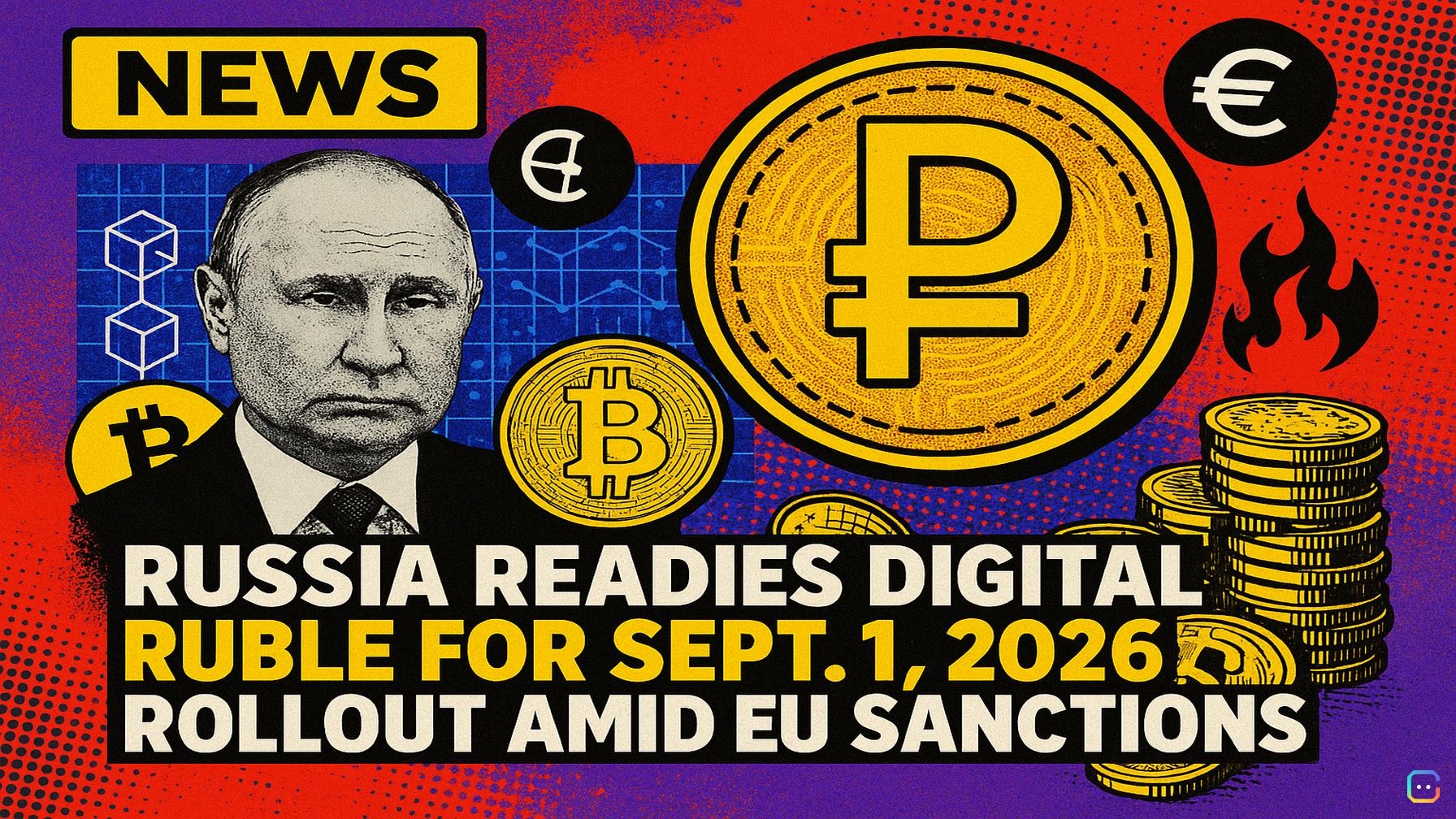
Russia is pressing ahead with its central bank digital currency: the Bank of Russia says the digital ruble is ready for a scheduled rollout on Sept. 1, and Governor Elvira Nabiullina told RIA Novosti on July 2 that “everyone is ready.” The CBDC will circulate alongside cash and existing non-cash rubles rather than replace them, and the central bank plans wallet access through banks’ apps on its platform — with no fees for individual transactions.
Key rollout milestones
- Sept. 1, 2026: Major banks must offer digital-ruble services; large retailers with annual revenue above 120 million rubles must accept payments.
- Sept. 1, 2027: Banks with universal licenses and retailers with revenue above 30 million rubles join the network.
- Sept. 1, 2028: Remaining banks and smaller retailers are required to support the digital ruble; very small merchants remain exempt.
Why the timing matters
After more than a year of pilots — including smart-contract tests in Tatarstan that tried conditional spending of public funds — Moscow appears ready to move the project from experimental use cases into real-world payments. The central bank has framed the rollout as consumer-focused: Nabiullina said the goal is for the digital ruble to be “in demand by people and businesses” and “convenient.”
Sanctions and geopolitical headwinds
The launch comes amid tightening EU restrictions. In its 20th sanctions package, the EU Council banned transactions involving RUBx and blocked EU support for digital-ruble development, citing concerns about sanctions evasion tied to Russia’s war in Ukraine. Brussels has also proposed wider limits on foreign crypto services suspected of facilitating sanctions circumvention — a response to scrutiny around ruble-linked crypto rails and tokens that could enable cross-border flows outside Western controls.
How this contrasts with other major economies
The Russian push for a state-run CBDC contrasts with US policymaking, where recent legislation proposals — such as the 21st Century ROAD to Housing Act — would bar the Federal Reserve from creating a digital dollar or similar asset through 2030 if enacted. US debates emphasize privacy, state control, and the role of private stablecoins; Russia’s approach is a centrally managed digital currency paired with tailored digital-asset rules to preserve trade and financial access amid sanctions.
Practical limits and strategic choices
Analysts warn Russia may face constraints if it tries to lean on decentralized crypto like Bitcoin to sidestep sanctions. A February report by Jack Jarmon at the Australian Institute of International Affairs noted infrastructure and technology limitations — factors that make a state-controlled digital ruble an attractive, more controllable option for Moscow.
What to watch next
The Sept. 1 milestones will be a real test of adoption across banks, retailers and users. Key signals to follow: merchant and bank uptake rates, how the platform integrates with existing banking apps, any technical or liquidity issues during early use, and how EU and global sanctions are enforced against ruble-linked digital flows. If the Kremlin succeeds, Russia will join a growing list of countries operationalizing CBDCs — but the broader geopolitical and technical landscape will determine how far and fast the digital ruble travels.
Read more AI-generated news on: undefined/news