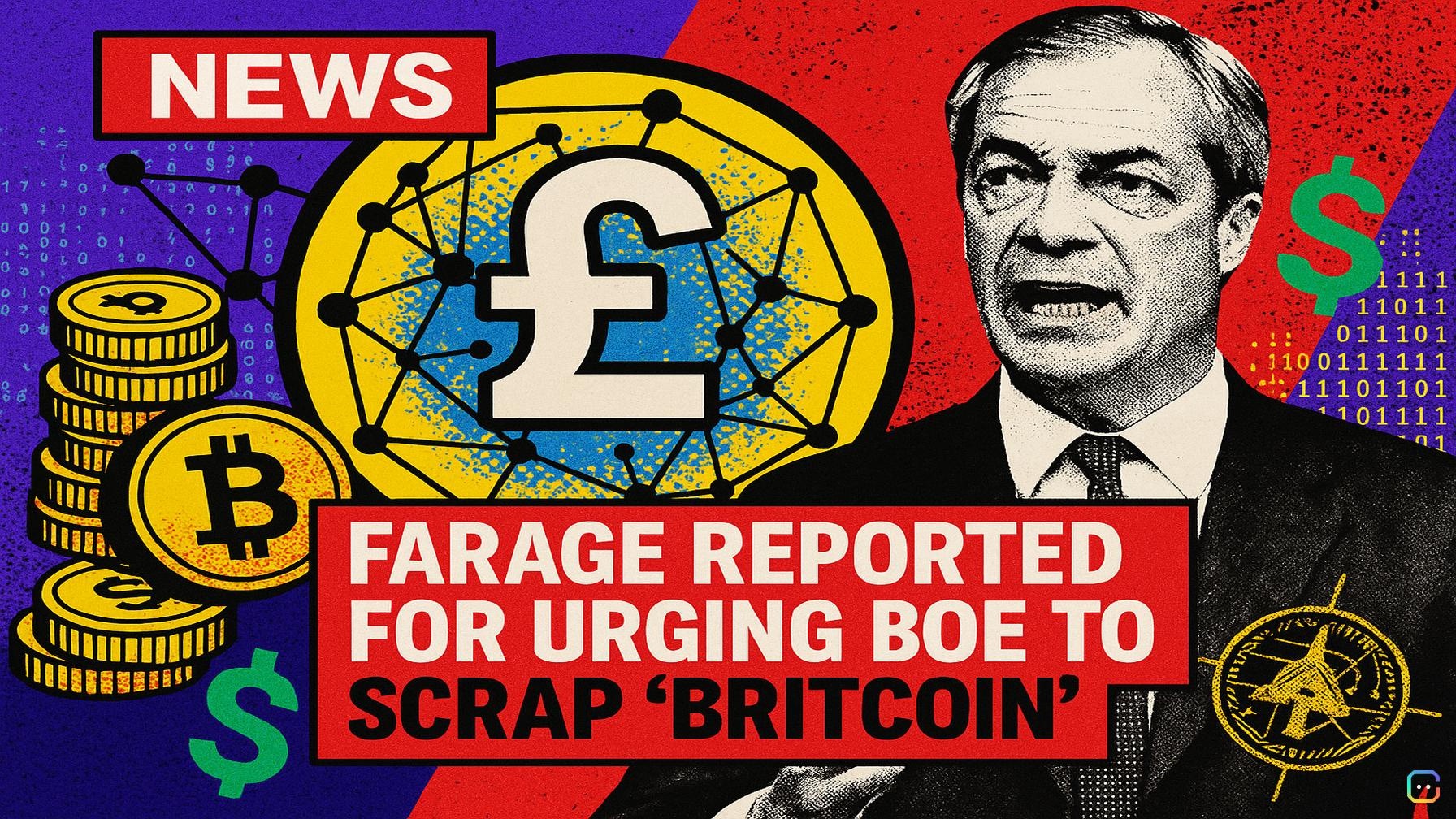
Nigel Farage has been reported to the parliamentary standards watchdog amid claims he lobbied the Bank of England to abandon plans for a UK central bank digital currency (CBDC) — a move critics say could advantage a billionaire donor with large crypto holdings.
What happened
- Farage, leader of Reform UK, met Bank governor Andrew Bailey in September 2025 and, according to his own account, pressed the Bank to drop plans for a British CBDC — sometimes dubbed “Britcoin.” At an October crypto event in London he described the Bank’s proposal with “total and utter horror” and said he would be “prepared to go to prison” to stop it.
- Labour MP Phil Brickell, who chairs the parliamentary group on anti-corruption and responsible tax, has asked the standards commissioner, Daniel Greenberg, to investigate whether Farage’s private meeting with the Bank breached parliamentary lobbying rules. Brickell says the inquiry is distinct from Greenberg’s ongoing probe into whether Farage should have declared a previously undisclosed £5m gift from donor Christopher Harborne.
- Brickell argues Farage’s actions matter because Harborne is a major investor in Tether and other stablecoins — private digital currencies that could benefit if regulators soften restrictions, or if a state-backed digital pound that might compete with them is abandoned.
Why it matters for crypto
- The debate pits central bank digital currency proposals, designed to offer a state-backed digital money, against private stablecoins such as Tether. A decision by the Bank to scale back CBDC plans could reduce competition for private stablecoins and materially affect their market value.
- Brickell said: “This is not simply a debate about cryptocurrency. It is about whether an MP who has received millions from one individual should be lobbying for policies that could increase the value and profitability of that donor’s investments.”
Transparency and follow-up
- Another Labour MP, Joe Powell, has written to Andrew Bailey seeking details of what was discussed at the meeting and whether the Bank’s policy has changed as a result of interventions from Farage and Reform’s deputy leader, Richard Tice. The Bank has so far refused to release minutes of the meeting.
- The parliamentary code of conduct notes lobbying rules apply for 12 months after a reward or consideration is received. Relevant payments and meetings highlighted in reporting include: Farage accepting a personal £5m gift from Harborne shortly before the July 2024 election; two £25,000 donations for trips in January 2025 and February 2026; Reform UK receiving about £15m from Harborne between August 2025 and February 2026; and Farage’s meeting with the Bank governor in September 2025.
Responses
- Farage and Harborne have denied any quid pro quo, saying Harborne asked for nothing in return for donations. A Reform spokesperson previously dismissed the controversy as “utter rubbish,” saying Farage’s “only focus is on saving the country.”
- The Bank described Farage’s meeting as part of its normal engagement with political representatives and noted Farage held a “differing view” from the governor.
- The standards commissioner is already investigating the undeclared £5m gift; Brickell’s complaint asks for a separate probe into whether Farage’s interactions with the Bank ran afoul of lobbying rules. Powell has yet to receive a reply from the Bank about his request for meeting details.
Why crypto readers should care
- The case highlights how political influence, major donors, and regulatory decisions intersect with the future shape of digital money in the UK. Whether or not any rules were broken, the episode underscores calls for greater transparency around meetings that could shape CBDC policy — decisions with direct consequences for private stablecoin projects and the broader crypto market.
Read more AI-generated news on: undefined/news