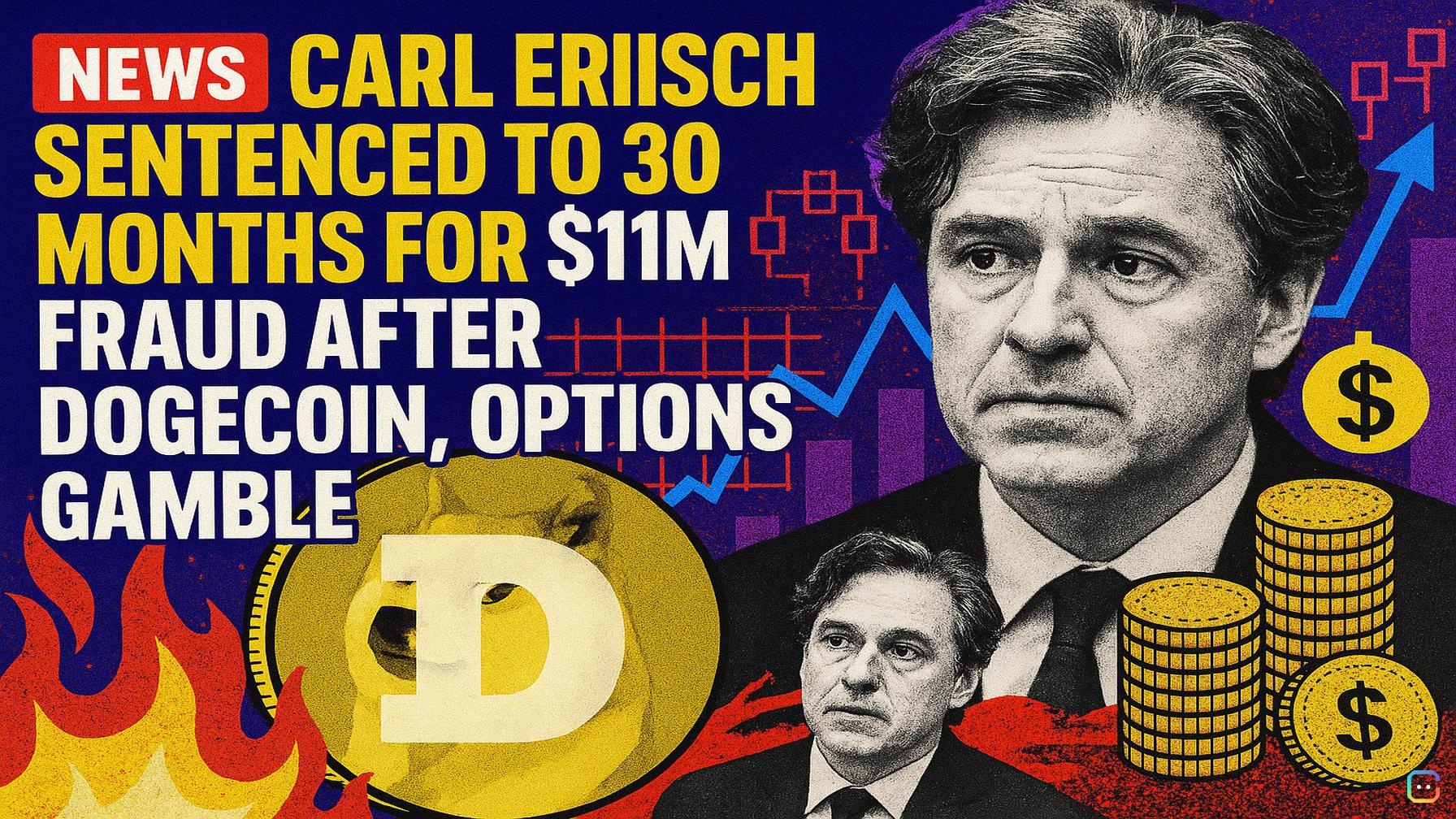
A Manhattan federal judge has sentenced film director Carl Erik Rinsch to 30 months behind bars for diverting $11 million in production funds — money prosecutors say he used instead to place risky stock-option bets, buy cryptocurrency (notably Dogecoin), and fund a luxurious personal lifestyle.
Key verdict and penalties
- Sentence: 30 months in federal prison and three years of supervised release.
- Financial penalties: $11 million forfeiture and $700 in mandatory special assessments.
- Conviction: In December 2025, after a one-week trial, Rinsch was found guilty of one count of wire fraud, one count of money laundering, and five counts of engaging in monetary transactions in property derived from unlawful activity.
- Maximum exposure: Wire fraud and money laundering each carry up to 20 years; the five other counts carry up to 10 years each. Prosecutors had requested a five-year sentence; the defense sought no prison time, citing mental health concerns and letters of support — including one from actor Keanu Reeves.
What prosecutors say happened
Federal filings say Rinsch, known for directing 2013’s 47 Ronin, obtained an additional $11 million in March 2020 from a subscription streaming service identified in court filings only as “Streaming Company‑1” (widely reported as Netflix). That money was supposed to finish a sci‑fi series he was developing — originally titled White Horse and later renamed Conquest — a project for which the streamer had reportedly already paid Rinsch about $44 million in 2018–2019.
Instead, prosecutors say, Rinsch moved the extra funds through multiple accounts into a personal brokerage account, used them for speculative options trading tied to pharmaceutical stocks and the S&P 500 (losing more than half of the $11 million within two months), and then shifted remaining proceeds into cryptocurrency. Prosecutors highlighted a Dogecoin trade, saying Rinsch converted roughly $4 million into about $27 million during the period — but they stressed that any crypto gains did not change the original illicit source of the funds.
Luxury spending and personal use
The government says Rinsch spent production money on personal expenses and high-end purchases, including multiple Rolls‑Royces, a Ferrari, watches, clothing, furniture and antiques, credit card bills, and legal fees. He never finished the show or returned the additional funds, prosecutors say.
Case timeline and context
- Arrest: Rinsch was arrested in March 2025.
- Trial and conviction: Found guilty in December 2025 after a weeklong trial.
- Sentencing: The judge imposed prison time, forfeiture and supervised release, less than the five years sought by prosecutors but still a substantial custodial sentence.
U.S. Attorney Jay Clayton framed the case bluntly: “Carl Erik Rinsch promised to make a television show. Instead, he used $11 million meant for production as his personal casino and luxury fund.”
Why the crypto angle mattered
Rinsch’s use of Dogecoin drew particular attention from the media and crypto observers, but the court’s focus remained on whether he induced additional production funding under false pretenses and then used those funds for unauthorized trading and personal expenditures. The government’s position underscores a broader point for the industry: crypto gains do not erase the illicit origin of funds, and prosecutors can — and will — pursue misappropriation even when proceeds move into volatile digital assets.
The sentence brings to a close the legal saga that began with Rinsch’s March 2025 arrest and culminated in his conviction and sentencing following the December 2025 trial.
Read more AI-generated news on: undefined/news