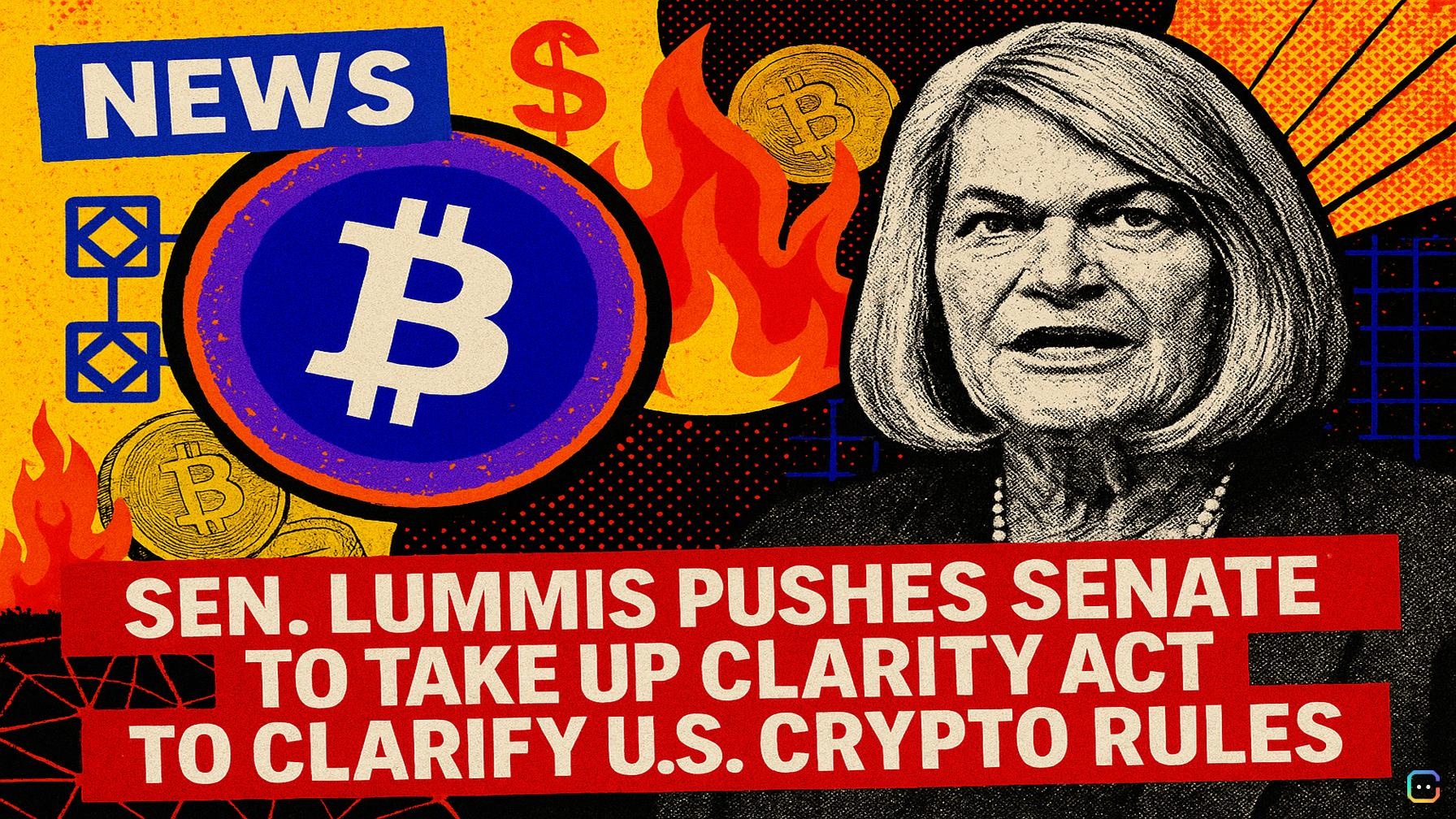
Sen. Cynthia Lummis is pressing the Senate to take up the CLARITY Act before lawmakers head into recess, keeping U.S. crypto market-structure reform squarely in the spotlight. The bill is being watched closely because it could finally clarify which digital assets fall under securities law and which are treated as commodities — a distinction that would shape enforcement, product design and capital flows across the industry.
Why timing matters
Crypto firms have long argued that murky market rules push activity offshore and leave compliant businesses guessing about legal obligations. A serious push in the Senate would be an important signal that Congress is moving from debate toward a formal regulatory framework — even if full passage remains uncertain.
What the CLARITY Act targets
At its core, the CLARITY Act aims to rewrite the architecture of U.S. crypto regulation. Key areas the bill addresses include:
- Token issuance and how tokens are classified
- Exchange registration standards
- Custody rules for digital assets
- Treatment of decentralized finance (DeFi)
- The division of authority between the SEC and CFTC
Why partial progress matters
Even incremental movement on the bill could change market dynamics. Institutional investors are likelier to allocate capital when legal treatment, reporting obligations and enforcement risk are clearer. That’s why policy headlines can shift sentiment well before any law is signed — they change perceptions of risk, compliance burden and scalability for exchanges, custody providers and revenue-generating protocols.
Market implications for traders and builders
For traders, the central question is whether Congress can convert policy uncertainty into a predictable structure. If the CLARITY Act advances, it could bolster the case for institutional products and smoother on-ramps into traditional financial rails. If it stalls, the sector may remain subject to enforcement-driven regulation and inconsistent agency interpretations — an environment that tends to favor fragmentation and regulatory arbitrage.
Context within broader market structure
This development isn’t an isolated headline; it’s another data point in a market already sensitive to leverage, policy risk and institutional participation. Liquidity strains, new institutional launches, and stress in high-beta tokens mean even seemingly narrow policy moves can magnify sentiment and trading dynamics. That’s why the most useful coverage focuses less on guaranteed price effects and more on how legislation would change the operating landscape for market participants, developers and investors.
Bottom line
A Senate vote pushed by Sen. Lummis underscores a real possibility that U.S. crypto policy could become more specific — but progress is far from assured. Traders and institutional players will watch closely for whether this momentum translates into lasting legal clarity or another round of regulatory uncertainty.
This report is based on information from Congress.gov. Written by the News Desk; edited by Samuel Rae.
Read more AI-generated news on: undefined/news