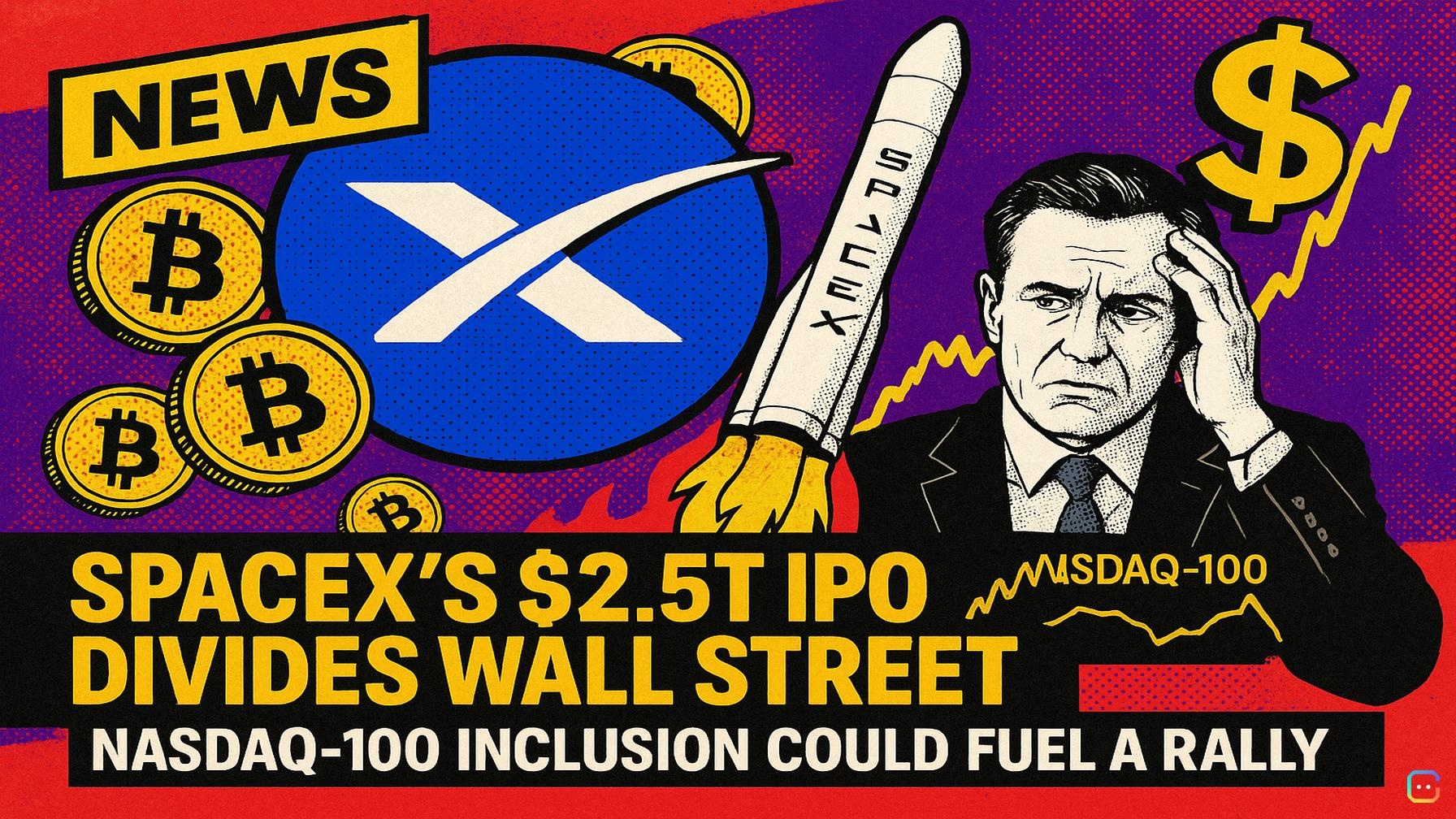
SpaceX’s blockbuster debut on June 12, 2026 has turned Wall Street into a debate stage — and investors into referees. The company listed at $135 per share in the largest IPO ever, and within days shares raced past $200, valuing Space Exploration Technologies (NASDAQ: SPCX) at more than $2.5 trillion. That meteoric rise leaves SPCX trading at roughly 115x trailing sales — about 95% richer than Palantir, the priciest S&P 500 name — and sets up one of the most polarized stock-price conversations in recent memory.
Why the divide? It comes down to expectations. Can today’s frothy price be justified by SpaceX’s growth plans, or is the market pricing in a near-miraculous string of technical and commercial wins?
What analysts are saying
- Coverage so far is sparse but wide-ranging: five firms have published 12‑month targets, producing an S&P Global average of $164, a high of $227 and a low of $63. That spread underscores how speculative valuations are at this level.
- Morningstar’s Nicolas Owens puts fair value at $63 — about 65% below mid‑June trading — arguing a probability-weighted discounted cash flow model only supports current prices in an extreme “Moonshot” outcome. He assigns that outcome a 7% chance; it requires Starship to reach full rapid reusability and for orbital AI data centers to scale commercially before 2028 — two big engineering and commercialization hurdles.
- CFRA opened coverage with a sell rating and a $115 target. NewStreet Research started with a buy and a $165 target, but the analyst noted that case only makes sense over a 20–25 year horizon.
A gambler’s spread: $1,000 today...
Depending on which forecast you accept, $1,000 in SPCX could be worth as little as $310 or as much as $1,120 in a year. History adds a cautionary footnote: among the 15 largest U.S. IPOs since 2006, the average stock fell 33% in its first year, and some plunged as much as 50% at some point — examples include Meta, Uber, Rivian, Coinbase and Robinhood.
Near-term technical catalysts
Traders are also watching calendar events. TD Securities’ Peter Haynes told CNBC the most important dates are still ahead — specifically July 6, when the Nasdaq‑100 rebalances and is set to include SPCX. That single action could trigger an estimated $22–$27 billion of passive ETF buying into the shares, a mechanical demand surge that can lift prices irrespective of fundamentals. For traders and liquidity-sensitive crypto-market participants accustomed to fast-moving flows, that’s a key trigger to monitor.
The fundamentals: real growth, real questions
SpaceX’s revenue trajectory looks aggressive but tangible:
- Analysts expect revenue to nearly double to $34.5 billion in 2026 and then to jump to $64.5 billion in 2027.
- Loss per share is forecast to narrow from $0.64 in 2026 to $0.09 in 2027.
- Starlink, today the only profitable segment, generated $11.4 billion of SpaceX’s $18.7 billion in 2025 revenue. Subscriber counts doubled over the past year to 10.3 million.
These numbers validate a powerful growth story — the debate is whether that growth, plus future projects like Starship-scale launches and orbital AI infrastructure, is already baked into a $2.5 trillion market cap. Most fundamental analysts say the valuation is optimistic.
Governance and dilution risk
An important non-price factor: corporate control. Elon Musk retains roughly 82.4% of SpaceX’s voting power, meaning public shareholders shoulder economic risk with virtually no governance influence. SpaceX’s revised S‑1 also warns the company may issue substantial equity in future transactions, adding dilution risk and further complicating valuation models.
Bottom line for investors (and crypto readers)
SpaceX’s IPO has created a high-stakes binary: a relatively small set of technological and commercial outcomes could validate today’s price, while more ordinary outcomes could see the stock fall sharply. Near-term technical events — notably the Nasdaq‑100 inclusion and ensuing passive flows — could prop prices regardless of fundamentals. For risk-tolerant investors and traders, that creates both opportunity and volatility; for long-term, fundamentals-focused investors, the key questions remain whether Starship and orbital AI scale as hoped, and whether the company’s governance and dilution profile fit their risk tolerance.
The current analyst range — $63 to $227 — captures how wide the outcome possibilities are. Whether SPCX becomes a multi-year winner or a dramatic correction will depend on engineering progress, commercial traction, and how much growth expectations are already reflected in today’s price.
Read more AI-generated news on: undefined/news