Hyperliquid’s rapid rise from a niche perpetual-futures venue to a potential backbone of decentralized finance is drawing fresh attention from Wall Street analysts.
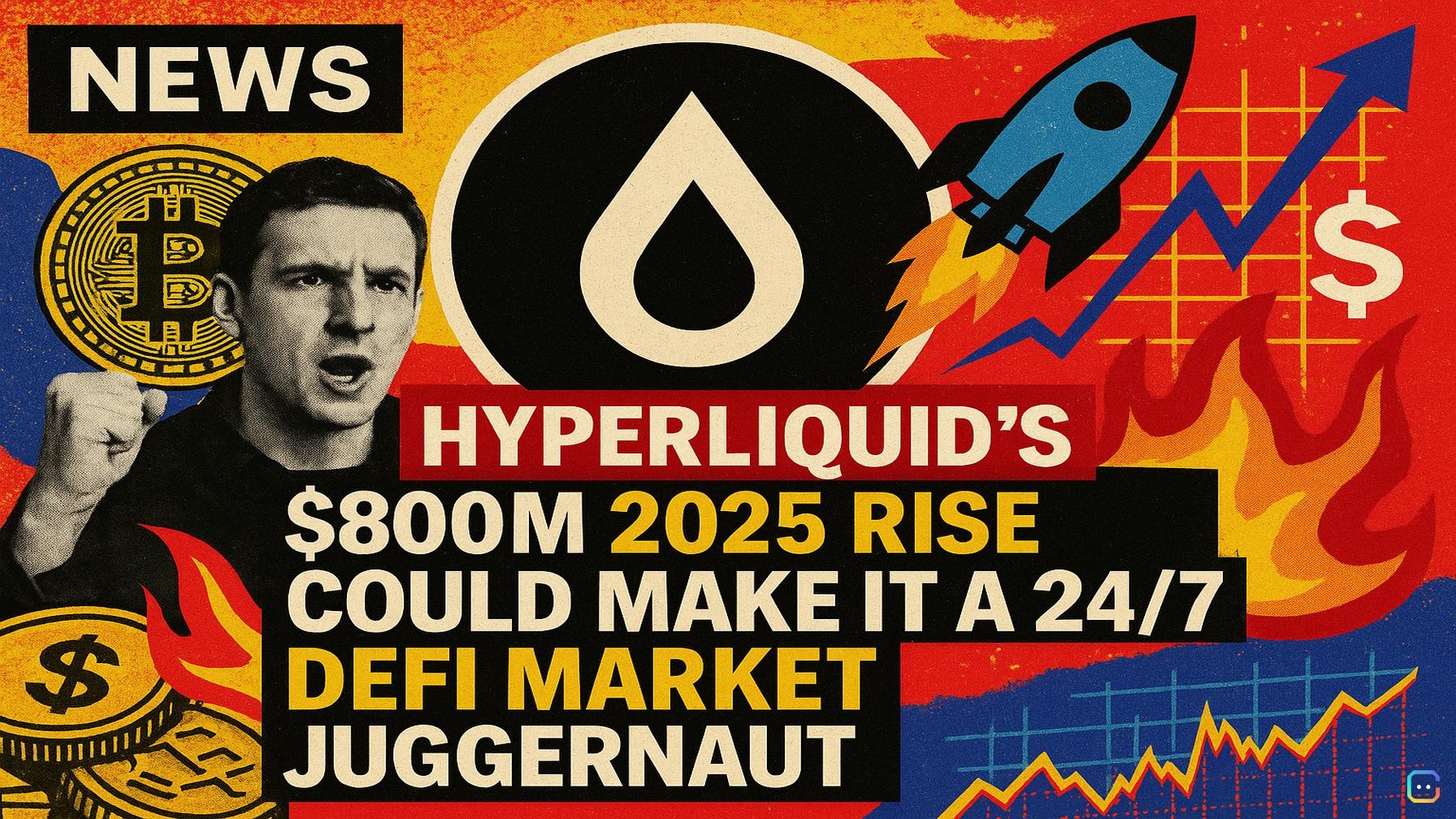
In a new report, Grayscale paints Hyperliquid (HYPE) as more than just another crypto exchange. Launched less than three years ago as a decentralized perpetual futures platform, the protocol “generated roughly $800 million in revenue in 2025” and handled about $2.9 trillion in perpetual-futures volume that year, the firm said. Hyperliquid now carries roughly $7 billion in open interest. “If it continues to execute well … we think Hyperliquid could become a financial services juggernaut,” Grayscale wrote.
Perpetual futures — or perps — are a core part of crypto trading: contracts that let traders bet on price moves without expiry. The market has ballooned into one of the sector’s largest segments, averaging around $200 billion in daily volume this year, according to Grayscale. Until recently, centralized exchanges like Binance and Bybit dominated this space. Hyperliquid is notable for being one of the first decentralized exchanges to compete at that scale while offering self‑custody and on‑chain transparency.
But Grayscale argues Hyperliquid’s ambitions go beyond perps. Through its HIP‑3 and HIP‑4 frameworks, the platform now supports tokenized equities, commodities and prediction-style markets — effectively letting developers spin up new trading venues on the same blockchain rails. Those products are already behaving like 24/7 markets for assets that have historically traded only during Wall Street hours.
A separate note from FalconX reached similar conclusions last week, suggesting Hyperliquid is beginning to vie with traditional incumbents such as CME Group and newer prediction-market operators like Kalshi and Polymarket. FalconX strategist Martin Gaspar highlighted traction in HIP‑3 markets, including growing interest in pre‑IPO markets.
Regulation will be a major determinant of how far Hyperliquid can go. The platform currently blocks U.S. users because perpetual futures remain in a regulatory gray area under U.S. law. Both reports say that shifting regulatory guidance — and expressed interest from regulated players such as Coinbase, Robinhood and Kraken — could pave the way for perpetual-style products to be offered in the U.S. under a compliant model.
Risks remain. Grayscale flagged the HYPE token’s high volatility and cautioned that Hyperliquid’s long-term growth is closely tied to future regulatory developments.
Still, analysts contend Hyperliquid has moved beyond the label of “just another exchange.” If it can navigate compliance hurdles and keep scaling its market infrastructure, the platform might represent an early example of a 24/7 global financial marketplace built on blockchain rails — a potential disruptor to parts of traditional exchange and derivatives markets.
Read more AI-generated news on: undefined/news