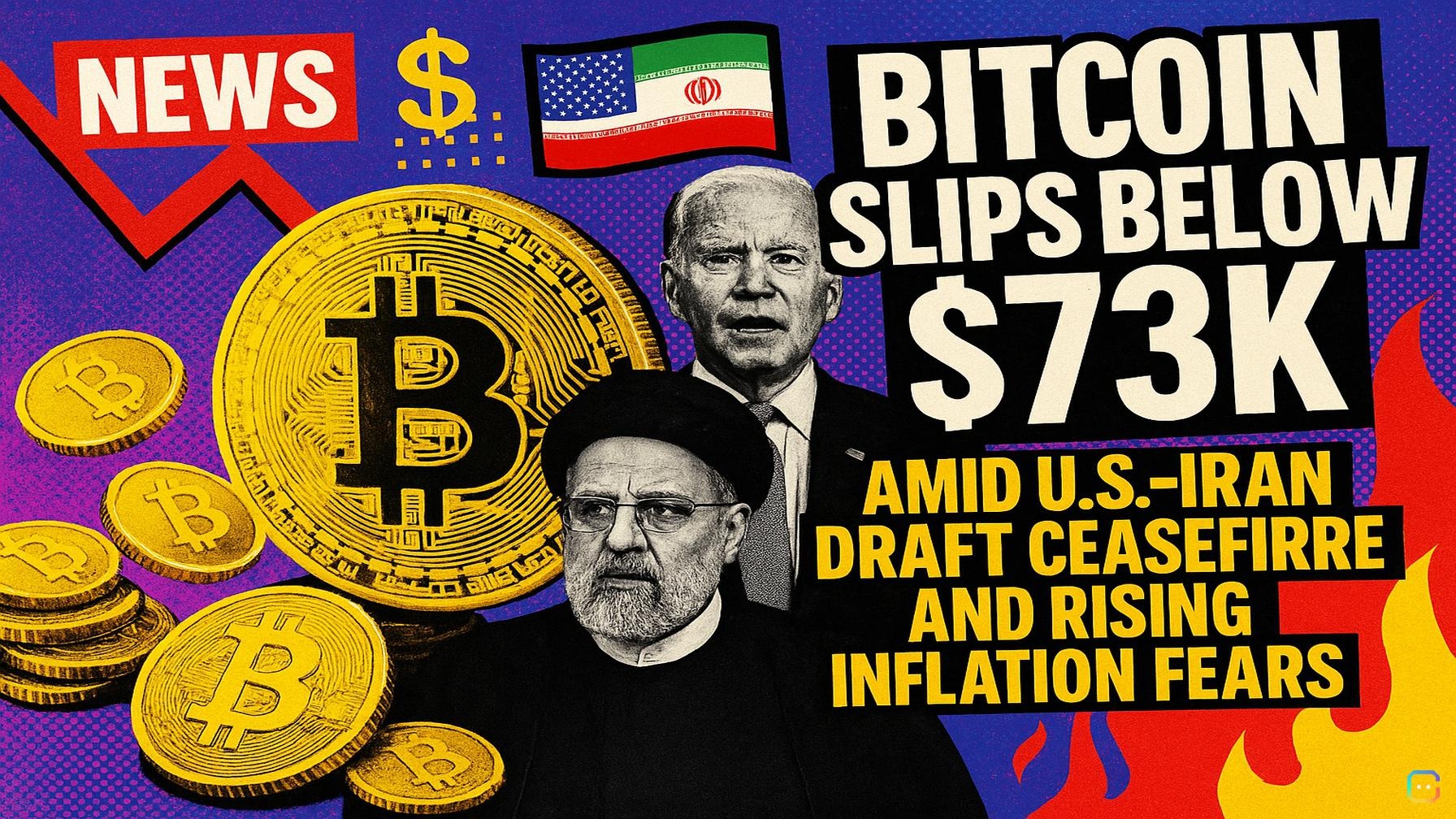
Bitcoin slipped back below $73,000 on renewed geopolitical uncertainty and mixed macro signals, even after reports of a possible U.S.-Iran temporary deal.
What happened
- Axios reported U.S. and Iranian negotiators have a draft 60-day memorandum of understanding to extend a ceasefire and open talks on Iran’s nuclear program. The deal reportedly awaits approval from President Donald Trump.
- The report came after overnight U.S. airstrikes on an Iranian military site near the Strait of Hormuz — the strategically vital energy shipping corridor that’s been a focal point for markets in recent months.
- Despite repeated false dawns for Middle East peace, the Axios story pushed stocks and bonds higher and sent oil sharply lower. The Nasdaq, which was down earlier, rose about 0.6%, while WTI crude plunged below $90 per barrel.
Crypto reaction
- Crypto markets were less enthusiastic. Bitcoin (BTC) briefly tested gains but couldn’t hold them, sliding to about $73,293 and down roughly 2.7% over the past 24 hours as it fell back under the $73,000 mark.
- The lack of a sustained risk-on move in crypto suggests traders remain cautious and sensitive to headline risk from geopolitics and macro data.
Tensions and warnings
- After the Axios story, Treasury Secretary Scott Bessent issued a sharp warning that the U.S. “will not tolerate” attempts to impose tolls on ships transiting the Strait of Hormuz, threatening aggressive sanctions. He specifically called out Oman, saying the Treasury would target any actors “directly or indirectly” involved in facilitating such tolls.
Macro backdrop: inflation heats up
- Adding to market complexity, the first inflation report under Federal Reserve Chair Kevin Warsh showed price pressures rose in April. The Fed’s preferred measure, the Personal Consumption Expenditures (PCE) index, climbed to 3.8% year-over-year — its highest in nearly three years and up from 2.8% in February.
- Olu Sonola, head of U.S. economics at Fitch Ratings, warned that both headline and core inflation are moving the wrong way and are likely to persist in the near term. “The Fed is stuck — and the heat is clearly being turned up,” he said.
Why it matters for crypto
- Geopolitical headlines can create short bouts of volatility in risk assets; oil price swings feed into growth and inflation expectations, which in turn influence monetary policy outlooks that matter to crypto.
- Rising inflation and the prospect of a central bank that can’t ignore it often increase market complexity: higher rates or a more hawkish Fed stance can pressure risk assets including digital assets, while any credible de-escalation in the Middle East could support risk-on flows—if investors trust the headlines.
Bottom line
Bitcoin remains range-bound for now, unable to capitalize on hopeful headlines. Traders are watching for confirmation of any U.S.-Iran agreement, further developments around the Strait of Hormuz, and upcoming macro prints that will shape Fed policy expectations — all of which will continue to dictate short-term moves in crypto markets.
Read more AI-generated news on: undefined/news