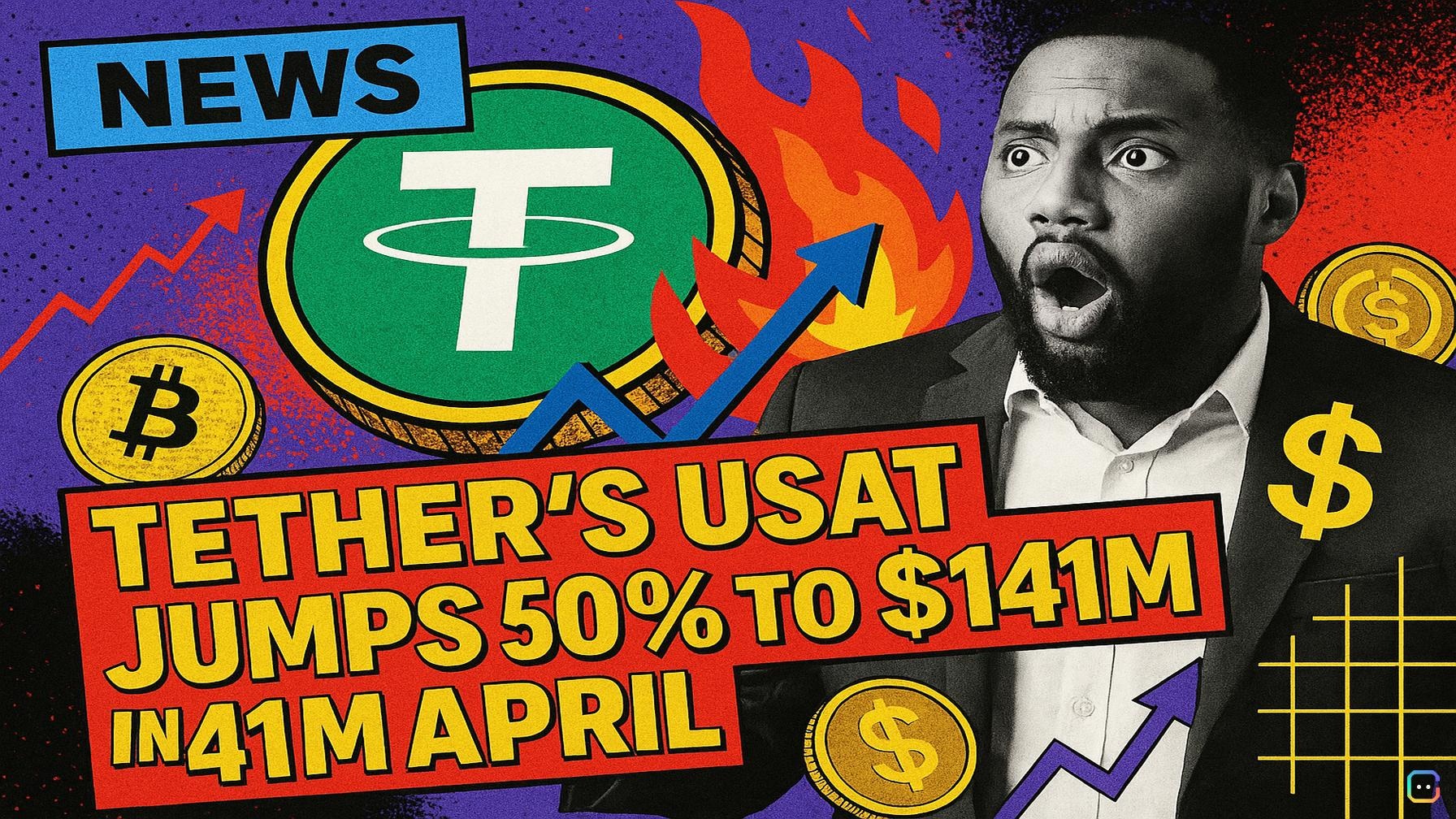
Tether’s newly launched U.S.-focused stablecoin USAT surged more than sixfold in April but remains tiny next to established rivals.
According to the latest Deloitte-signed reserve report released Thursday, USAT’s circulating supply jumped to $140.8 million as of April 30, up from $22 million at the end of March — a roughly 540% month-over-month increase. Reserve assets backing the token rose in step, to $141.2 million from $22.2 million in March.
Bo Hines, CEO of Tether USAT, attributed the spike to “increased use across institutional treasury operations, settlement flows, and regulated dollar liquidity management,” adding that “the broader policy environment is moving in the right direction, and USAT is already operating in the kind of structure that institutions are asking for.”
USAT debuted in January and is issued by Anchorage Digital, the federally chartered crypto bank that Tether partnered with to expand into the U.S. market. The launch comes as the broader stablecoin sector tops $300 billion in aggregate market value and becomes increasingly embedded in traditional finance and payment rails. The GENIUS Act — which established a federal framework for dollar-backed stablecoins — has helped open the door for banks, fintechs and crypto firms to issue regulated digital dollars in the U.S.
Even with April’s rapid growth, USAT has a long way to go to catch U.S.-focused heavyweights. Tether’s flagship USDT remains the largest dollar-pegged token globally, with a market cap near $189 billion and broad usage in payments, savings and trading across emerging markets. Circle’s USDC sits around $76 billion, Paxos’s PYUSD about $5.5 billion, and newer entrants such as RLUSD have reached roughly $1.7 billion since launching late last year. All trade roughly at par with the dollar.
Bottom line: USAT’s breakout month underscores strong institutional demand and a friendlier regulatory backdrop, but the token must sustain growth and adoption to close a wide gap with entrenched competitors.
Read more AI-generated news on: undefined/news