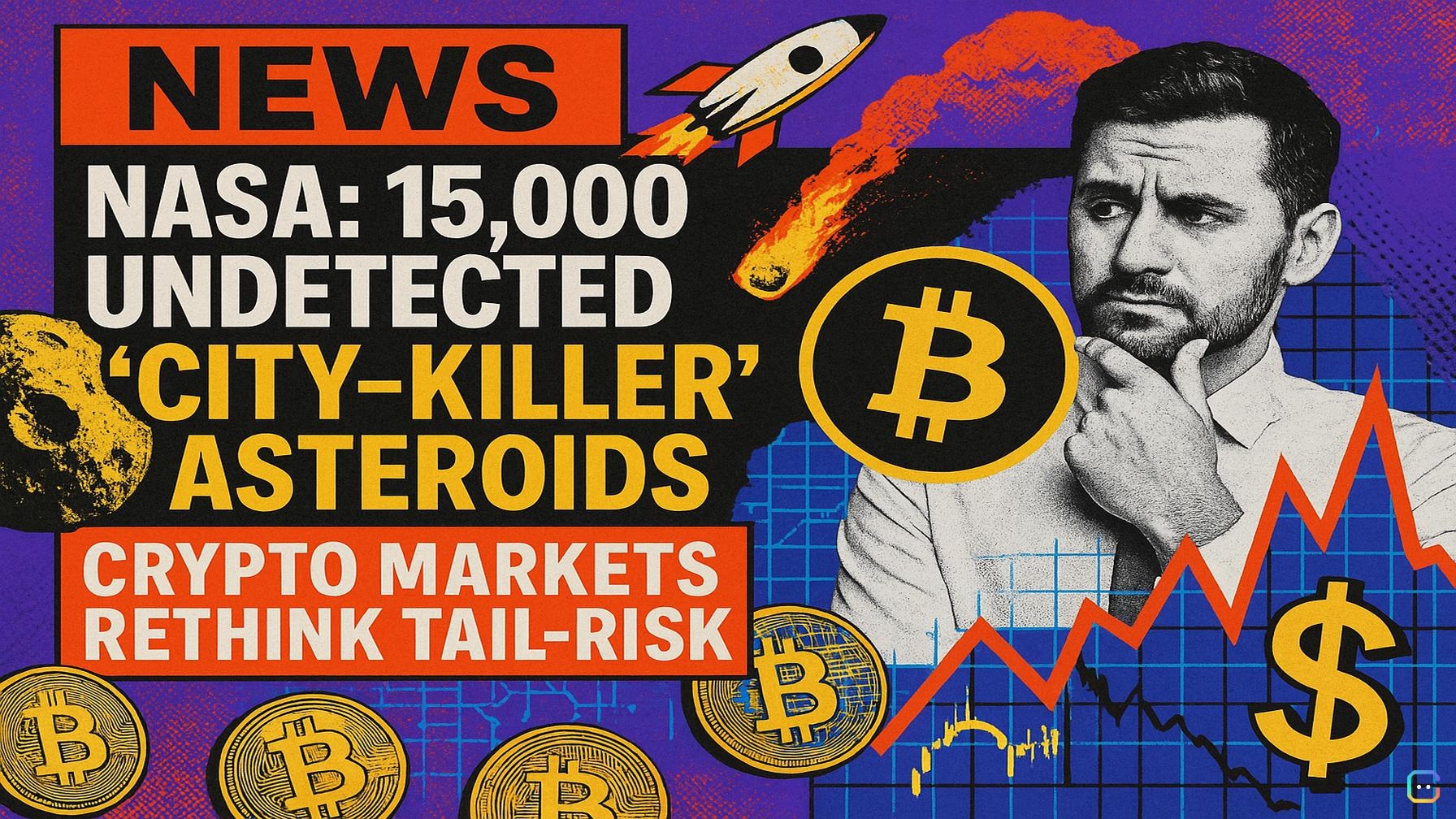
NASA data released Feb. 18, 2026 has jolted planetary defense experts — and financial markets — into a quiet but serious rethink of low-probability, high-impact risk. New analysis of NASA’s asteroid tracker shows roughly 15,000 mid-sized near‑Earth asteroids remain undetected today, revealing significant blind spots in current surveillance and leaving no ready deflection system on standby.
The headline: “city‑killer” asteroids — generally considered objects 140 meters or larger, capable of leveling a city — are far less cataloged than previously assumed. NASA’s tracker currently identifies only about 40% of near‑Earth objects above that 140 m threshold. Many of the rest travel on trajectories where the Sun’s glare blinds ground telescopes, meaning scientists sometimes spot them only days before closest approach.
Speaking at the AAAS conference in Phoenix, Dr. Kelly Fast, NASA’s acting planetary defense officer, put it bluntly: “What keeps me up at night are the asteroids we don’t know about. It’s the ones in-between that could do regional damage. Maybe not global consequences, but they could really cause damage. And we don’t know where they all are. It’s not something that even with the best telescope in the world you could find.”
The detection gap matters because detection is the first and most important line of defense. Demonstrations like the DART mission proved kinetic deflection can work, but there’s no operational system ready for an emergent threat. Dr. Nancy Chabot of Johns Hopkins, who led DART, warned at the same conference: “DART was a great demonstration. But we don’t have [another] sitting around ready to go if there was a threat that we needed to use it for. If something like YR4 had been headed towards the Earth, we would not have any way to go and deflect it actively right now. We could be prepared for this threat. And I don’t see that investment being made.”
The implications extend beyond planetary defense teams. Defense contractors, satellite tracking startups, and insurers are quietly re-evaluating exposure to these tail risks. Historically, persistent warnings of an unaddressed catastrophic threat lead to catastrophe‑risk reassessment — and that’s happening now. Analysts note increased interest in tail‑risk hedging in options markets as investors price in far‑out, high‑impact scenarios. Insurance markets in particular could see valuation shifts as models are forced to account for a larger pool of untracked mid‑sized objects.
As Dr. Fast framed the strategic case: “It’s the only natural disaster we could potentially prevent.” NASA’s February 2026 findings make clear the detection problem is real and persistent. For markets and tech players alike, the message is simple: the planetary‑defense blind spot is no longer a purely scientific concern — it’s a financial and strategic one, and stakeholders are beginning to adjust accordingly.
Read more AI-generated news on: undefined/news