Morning Minute by Tyler Warner — analysis and opinions his own.
GM. Quick takes on today’s biggest crypto headlines:
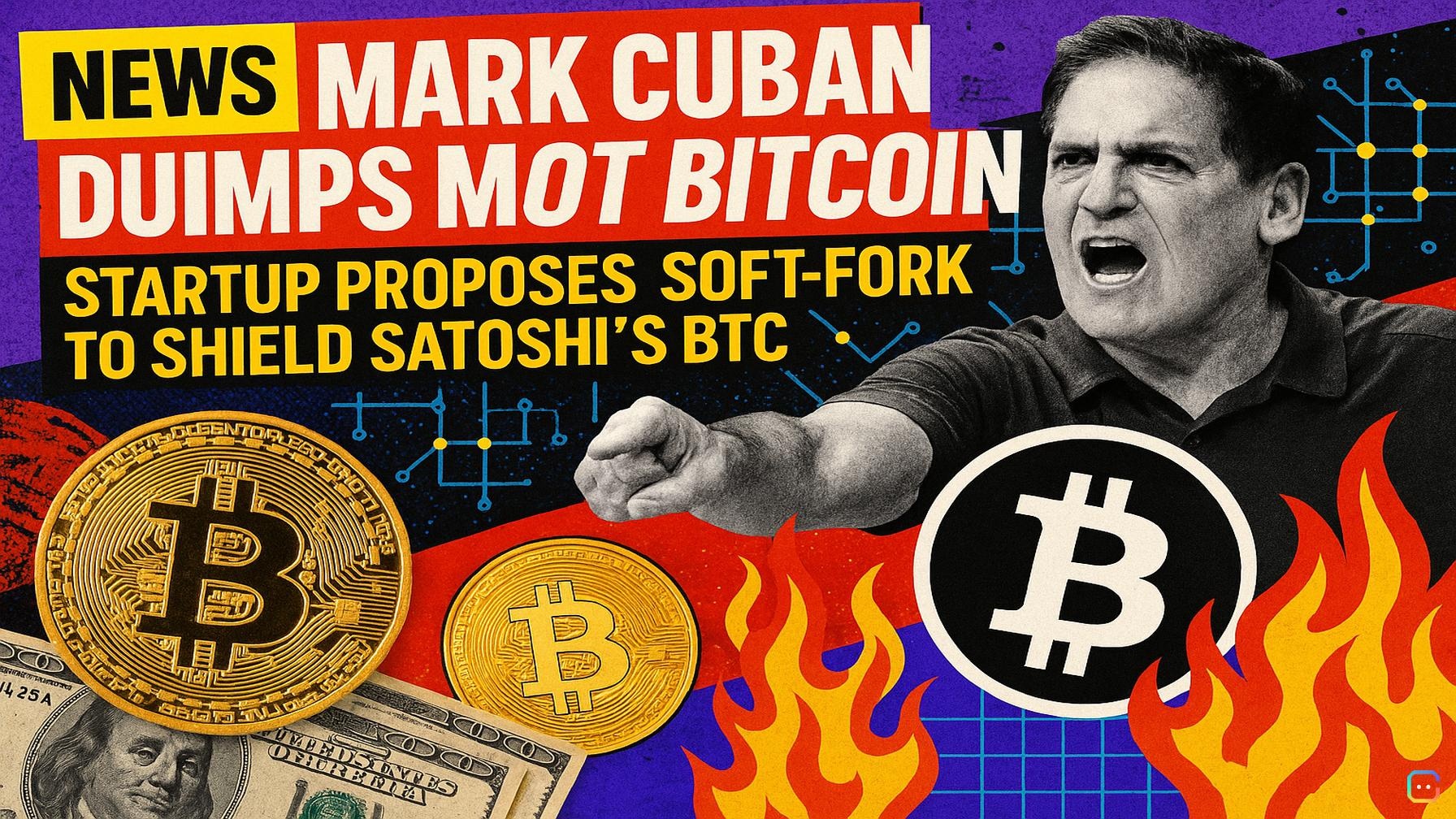
Mark Cuban dumps most of his Bitcoin
- Billionaire investor Mark Cuban says he sold the bulk of his Bitcoin holdings after concluding the asset didn’t behave like the hedge he’d expected during recent geopolitical stress—specifically the Iran conflict. Cuban, who long touted Bitcoin as a “better version of gold” and allocated a large portion of his crypto portfolio to it, pointed to a stark divergence between gold and Bitcoin as the breaking point. While gold spiked, Bitcoin failed to rally even as the dollar weakened—the exact scenario where the “digital gold” thesis should have held up.
- Cuban: “I always thought it was a better version of gold than gold, but gold just blew up and went to $5,000, and Bitcoin dropped. Every time the dollar dropped, Bitcoin should’ve gone up. It’s not the hedge I expected it to be.”
- His disappointment extends beyond BTC. Cuban said crypto still hasn’t found “an application for grandma,” and called NFTs “disappointing” (stopping short of declaring them dead). His move mirrors a broader trend of long-term holders—some 5–10 year investors—starting to capitulate in 2026.
A startup proposes a soft-fork defense to protect Satoshi’s coins from quantum attacks
- Researchers at AmericanFortress unveiled a proposal for a multi-layer quantum defense that could protect Satoshi Nakamoto’s roughly 1.1 million dormant BTC—and other coins with exposed public keys—against future quantum attacks. The underlying concern: about 6.9 million BTC sit in addresses that have exposed public keys and would be vulnerable if a quantum computer capable of running Shor’s algorithm against secp256k1 appears.
- Previous ideas, like Jameson Lopp’s BIP-361, suggested freezing vulnerable coins if owners didn’t migrate to quantum-safe keys. Cardano founder Charles Hoskinson pointed out a limiting reality: roughly 1.7 million coins can’t be migrated because their owners can’t be reached—1.1 million of those belong to Satoshi—meaning voluntary migration isn’t possible if keys are lost or the owner is gone.
- AmericanFortress’s approach skips requiring owner action. It proposes a soft fork that would place vulnerable addresses into a protected “dormancy” state by wrapping them in quantum-resistant cryptographic locks, using multiple post-quantum signature schemes so an attacker can’t exploit exposed public keys. The proposal is in early peer review and has not yet been filed as an official BIP.
- A parallel idea, PACTs (from Paradigm researcher Dan Robinson), offers a different route: let holders timestamp cryptographic proofs of ownership today and later unlock coins with quantum-resistant STARK proofs if the network freezes vulnerable addresses.
Also in today’s newsletter: notes on corporate treasuries & ETFs, plus a meme-coin tracker.
For more, catch our new daily news show summarizing the top stories in five minutes—available on Apple Podcasts and Spotify.
Read more AI-generated news on: undefined/news