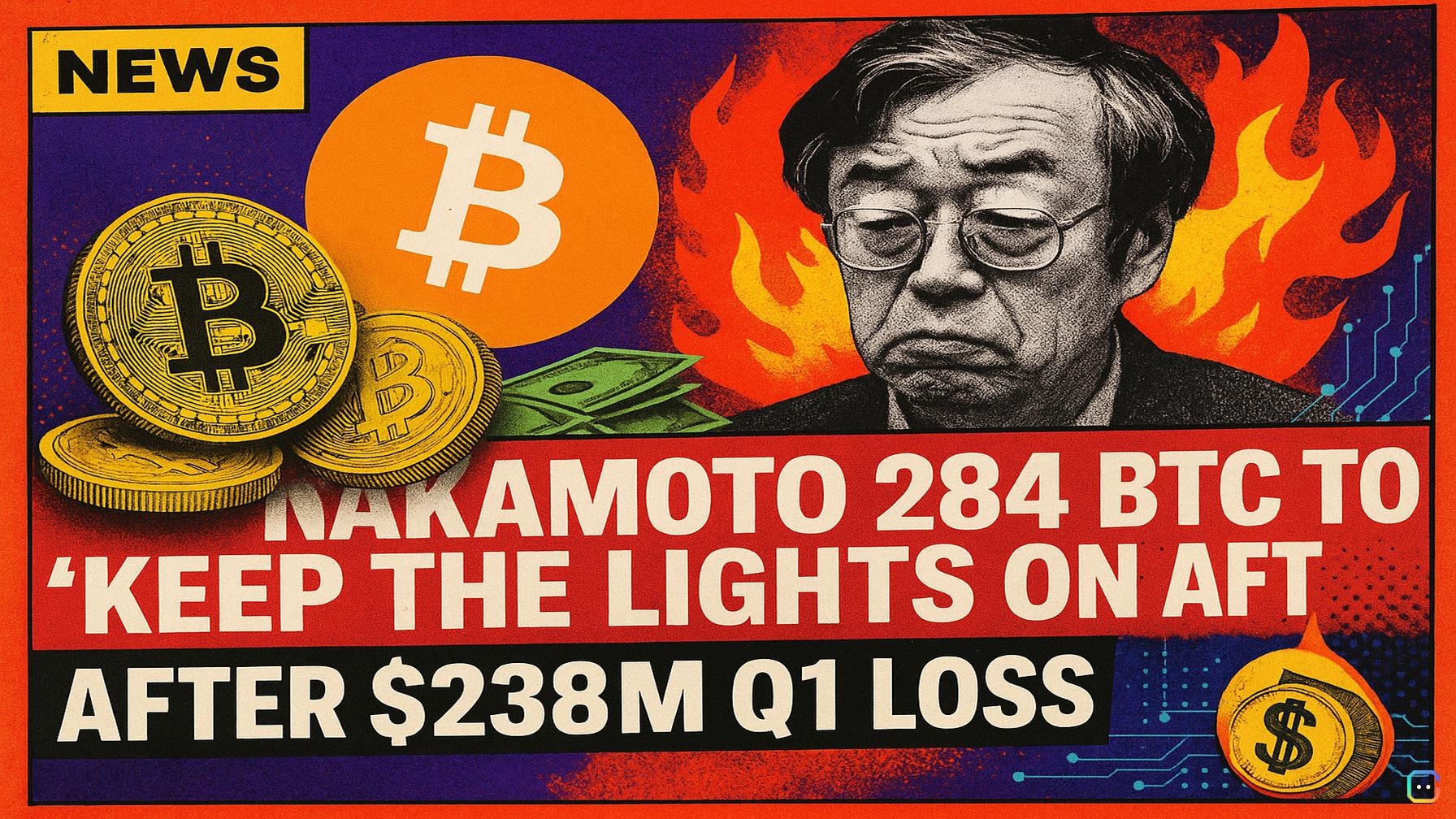
Nakamoto’s cash crunch laid bare: sold 284 BTC “to keep the lights on”
A stark detail tucked inside Nakamoto’s first-quarter financials — the sale of 284 Bitcoin on the last day of March — captures how far the once-accumulation-focused crypto treasury company has fallen. That sale, the company says, was made simply to cover operating expenses.
Big losses despite revenue jump
Nakamoto posted a Q1 net loss of $238 million. More than $102 million of that loss came from the markdown in Bitcoin’s value after the cryptocurrency fell about 20% during the quarter. The company did report a 500% quarter-over-quarter revenue increase, but the gains were overwhelmed by the valuation decline and other costs.
Where it stands on Bitcoin holdings
Nakamoto now holds 5,058 BTC, which ranks it roughly 20th among corporate holders — just behind ProCap Financial. By contrast, MicroStrategy (Michael Saylor) remains far ahead with more than 843,000 BTC, underscoring Nakamoto’s relatively modest scale.
Racing to stay listed on Nasdaq
A more immediate headache: Nasdaq issued a warning last December after Nakamoto’s share price traded below $1 for 30 consecutive trading days. The company has until June 8 to regain compliance. To meet that requirement, shareholders approved a 1-for-40 reverse stock split that becomes effective May 22, 2026. The split will reduce outstanding shares from about 696 million to roughly 17.4 million.
The move is purely structural — it won’t change Nakamoto’s market capitalization — but it aims to push the per-share price above Nasdaq’s minimum. The stock closed at $0.16 on Wednesday, down 7.5% for the day and more than 99% below its level a year ago.
A sector under pressure
Nakamoto’s situation is part of a wider downturn for crypto treasury companies that began in 2025. Many firms in the space are trading below the value of the assets on their books and have started liquidating Bitcoin to meet liabilities. For example, Genius Group sold all 84 BTC in its reserve in February to pay down debt.
What this means
Selling 284 BTC to cover operations signals liquidity stress for a company that had previously prioritized accumulation. The reverse split buys time to stay listed, but it does not address the fundamental pressures of volatile crypto markets, asset markdowns and the need for consistent cash flow. Nakamoto’s path forward will depend on whether it can stabilize revenue, manage costs and rebuild investor confidence in a challenging market environment.
Read more AI-generated news on: undefined/news