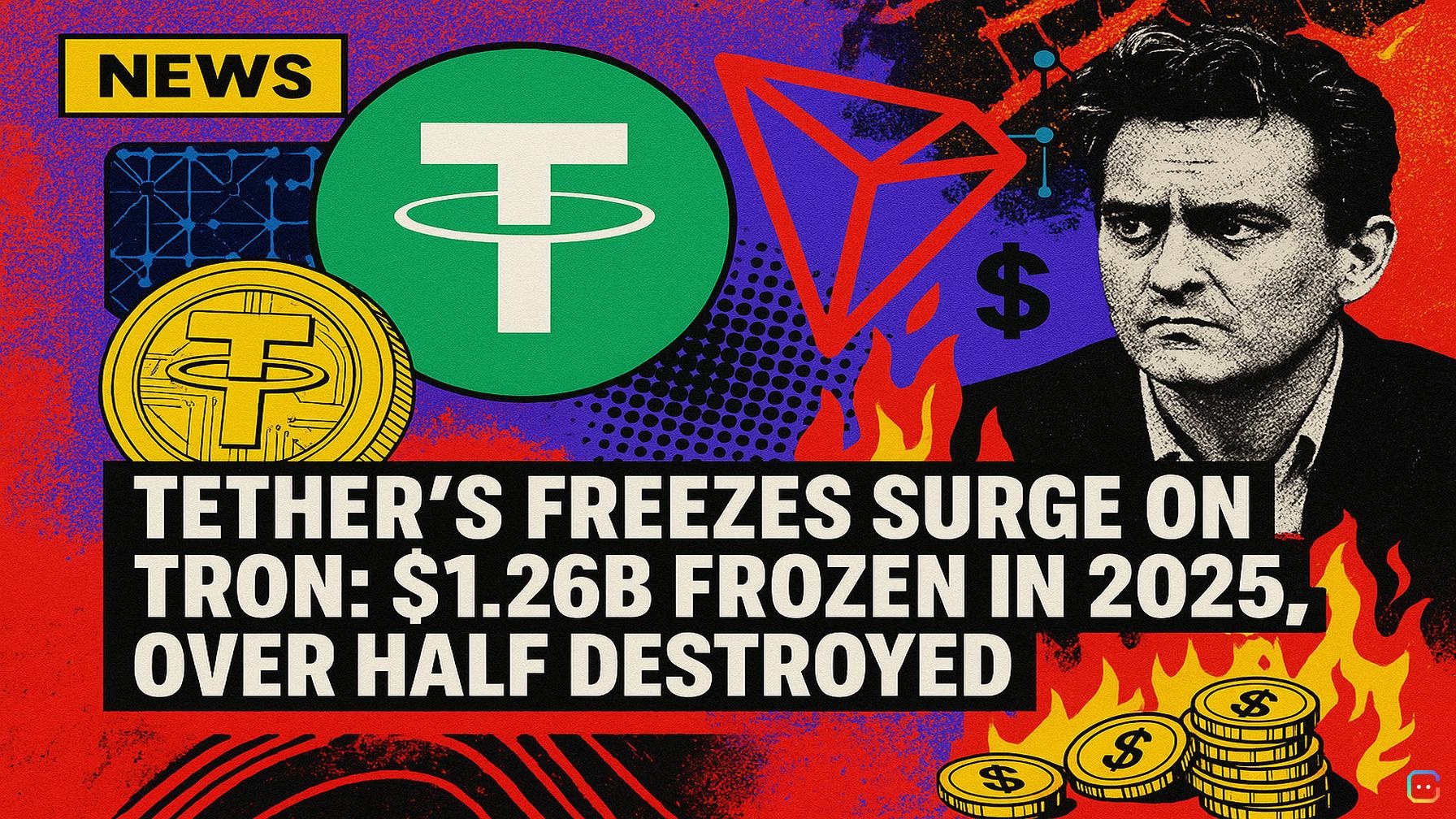
Tether’s freezes are proving unusually final — and increasingly frequent.
BlockSec data shows that just 3.6% of addresses blacklisted by Tether in 2025 were later removed, and more than half of the value tied to those addresses was permanently destroyed via the contracts’ destroyBlackFunds function. That detail highlights how definitive these enforcement actions can be.
Recent activity has been large and concentrated. Over the past 30 days Tether froze more than $514 million in USDT across 370 addresses on Ethereum and Tron, according to BlockSec’s USDT Freeze Tracker. Tron was the main theater: 328 of the blocked addresses sat on Tron with roughly $506 million locked there, while Ethereum accounted for 42 addresses and about $8.73 million. The scale on Tron points to that network as the primary front of Tether’s enforcement push.
The pace is accelerating. In 2025 so far Tether has blacklisted 4,163 addresses and frozen about $1.26 billion; if current trends continue, that total could be exceeded well before year-end. Looking at a longer window, a BlockSec study covering 2023–2025 puts the cumulative freezes at roughly $3.3 billion across 7,268 addresses — a level far ahead of rival stablecoin issuer Circle over the same period.
Many high-value freezes have been coordinated with authorities. In April, Tether worked with the U.S. Treasury’s Office of Foreign Assets Control to lock more than $344 million in USDT across two Tron addresses tied to suspected sanctions evasion involving Iran. In February, Tether assisted law enforcement in seizing over $61 million connected to “pig butchering” scams, where fraudsters manipulate victims into sending large sums.
Tether had previously said it froze about $4.2 billion in tokens over three years for links to illicit activity, with $3.5 billion of that amount frozen since 2023 as enforcement around crypto has ramped up.
The surge in blacklisting is renewing a broader debate about custody, control, and the limits of decentralization. Many DeFi projects already use upgradeable contracts and admin keys to pause or recover funds after exploits; the aggressive use of freeze and destroy functions by stablecoin issuers makes clear who can control on-chain liquidity and when. For issuer-backed stablecoins like USDT, that control — over minting, burning and freezing — is an active, routine tool in fraud, sanctions and scam investigations, not a rare fallback.
The trend underlines the continuing role of off-chain compliance in shaping on-chain behavior and reinforces why traders and platforms pay close attention to custody, liquidity and where funds actually move on-chain.
(Image: Halo; chart: TradingView)
Read more AI-generated news on: undefined/news