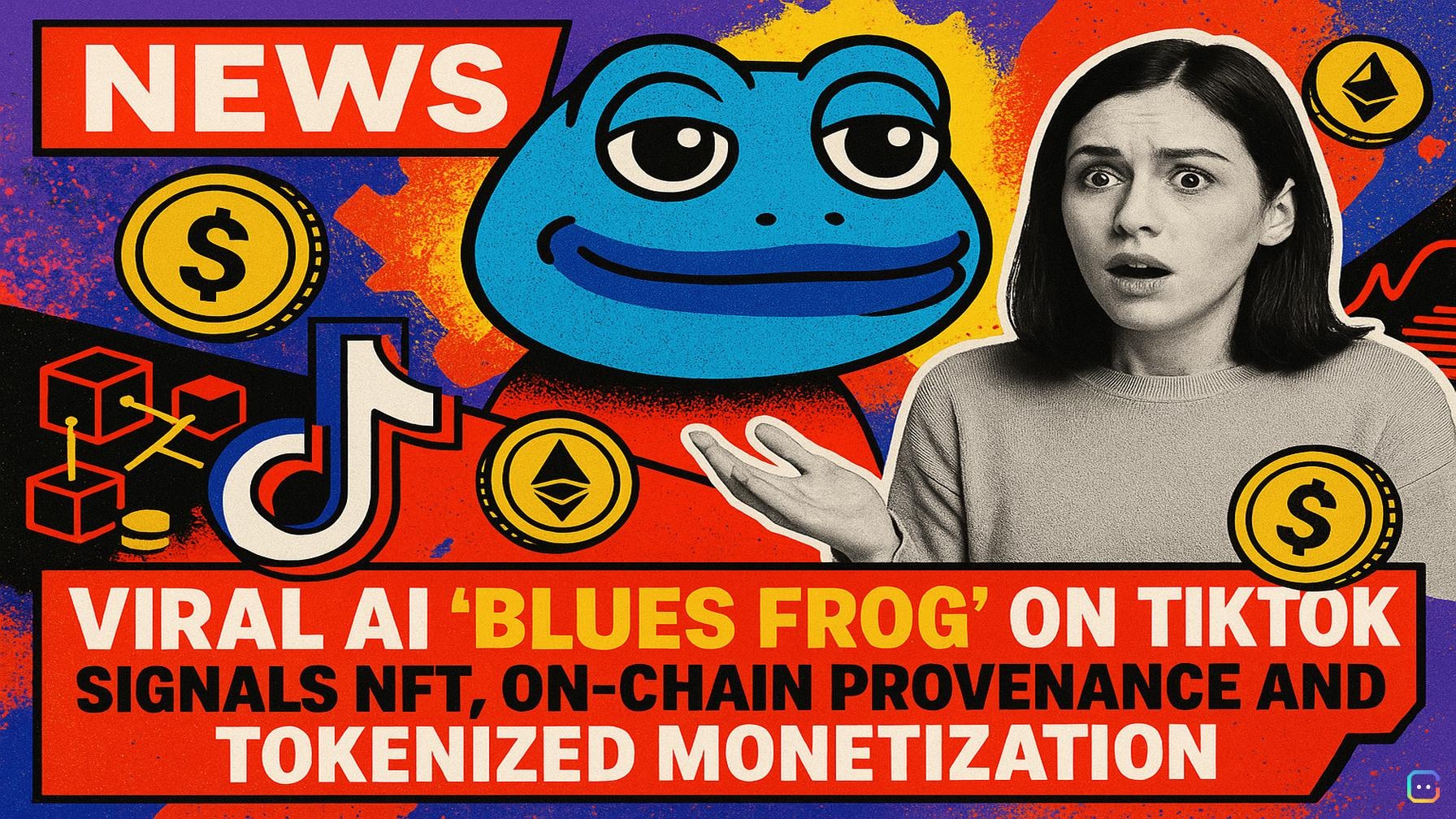
A blues-singing AI frog is the latest viral hit on TikTok Brazil — and it’s also a signal of how quickly AI-native culture is reshaping the creator economy.
The clip repurposes the Brazilian nursery rhyme “O Sapo não lava o pé” (the frog doesn’t wash his feet) into a 1950s-style blues number. An account called IABatida (Portuguese for “AI Beat”) presents the song as a smoky lounge performance by a quartet of AI-generated frogs: gravelly vocals, warm guitar, and a stand-up bass give the piece an eerie-but-convincing authenticity. The video is clearly labeled as AI-generated and has already pulled in more than 1.5 million likes on TikTok in days, with a parallel YouTube Shorts upload performing similarly.
IABatida has turned this approach into a recurring gimmick: running children’s songs and pop earworms through AI to sound like they were recorded in another era. The account has 328,000 followers and 6.7 million total likes. Its 50s Motown-style Baby Shark cover has 1.6 million likes; an indie-rock variant of Baby Shark has another 388,900. The secret is that these tracks aren’t just clever concept pieces — they have real arrangements (choruses, bridges, restrained solos) and period-appropriate visuals. The result feels deliberate and polished, not slapped together.
That polish highlights a shift in what AI memes can be. This frog video belongs to a growing category called AI-native memes: cultural artifacts that only exist because modern generative tools make them possible. Decrypt has been tracking this lineage for a while. Some milestones:
- Late 2023: The “Make It More” trend, where users prompted ChatGPT and image models to iteratively transform images into progressively absurd variants.
- March 2025: “Ghibligeddon” — GPT‑4o’s image generator spurred a surge of sign-ups (about a million people in a single hour) as users converted selfies into Studio Ghibli–style stills; Sam Altman publicly asked users to slow down as OpenAI’s GPUs strained.
- Early 2025: Italian “brainrot” memes emerged, featuring surreal mashups like Tralalero Tralala (a three‑legged shark in Nike sneakers), Bombardiro Crocodilo (a crocodile fused with a WWII bomber), and Ballerina Cappuccina (a ballerina with a cappuccino cup head). Tralalero Tralala surfaced in January 2025 from a now-banned TikTok account; Ballerina Cappuccina followed in March 2025. By spring those characters were appearing in mainstream ad campaigns (Ryanair, Loewe).
- 2025 onward: Other AI-native trends include the “pack” meme and the “dollification” wave spawned after Google released the Nano Banana tool — a one‑prompt shift from photo to figurine style. Google Gemini even promoted the dollification fun on Sept. 1, 2025.
IABatida flips the usual AI-meme script. Where early AI memes often celebrated incoherent, delightfully janky outputs, the frog blues lands by being alarmingly competent. Viewers expect a punchline; instead they get a forty-second track that could easily be mistaken for a vintage studio recording — and then it gets stuck in their heads.
That’s partly because the tools have matured. Audio and image generators such as Suno, Udio, and Google’s Lyria 3 can now spin up three-minute songs with coherent structure from a one-line prompt; visual models can render a frog quartet in period-correct lighting without manual 3D modeling. The practical barrier to producing something that looks and sounds like a professional production is increasingly minimal — roughly the time it takes to type a paragraph.
IABatida’s catalog includes covers of Aladdin’s “Arabian Nights,” the Brazilian children’s classic “Pintinho Amarelinho,” and multiple Baby Shark variants across genres; the frog is merely the most recent hit. According to the account’s caption, the “next cover drops whenever the algorithm cools down.”
Why this matters to crypto audiences
- Attention economy: Viral, AI-native content concentrates massive attention quickly — a commodity projects and creators aim to monetize.
- Provenance & authenticity: As AI output proliferates, on-chain metadata and NFTs could provide provenance, preserve creator rights, or certify “official” AI releases.
- New monetization models: Artists and meme creators can combine AI tooling with token-gating, limited-edition NFTs, or DAO curation to capture value from viral formats.
- Legal and IP risks: Polished AI covers of copyrighted songs and characters raise licensing questions that could push creators toward clear, on-chain licensing frameworks.
The frog-blues moment is playful, but it’s also a close-up of the near future: high-quality, meme-native cultural output produced in minutes, distributed by algorithms, and ripe for experimentation with crypto-native monetization and provenance tools. Whether platforms, labels, and creators will lean into tokenized ownership or retreat into stricter rights control is one of the next big stories to watch.
Read more AI-generated news on: undefined/news