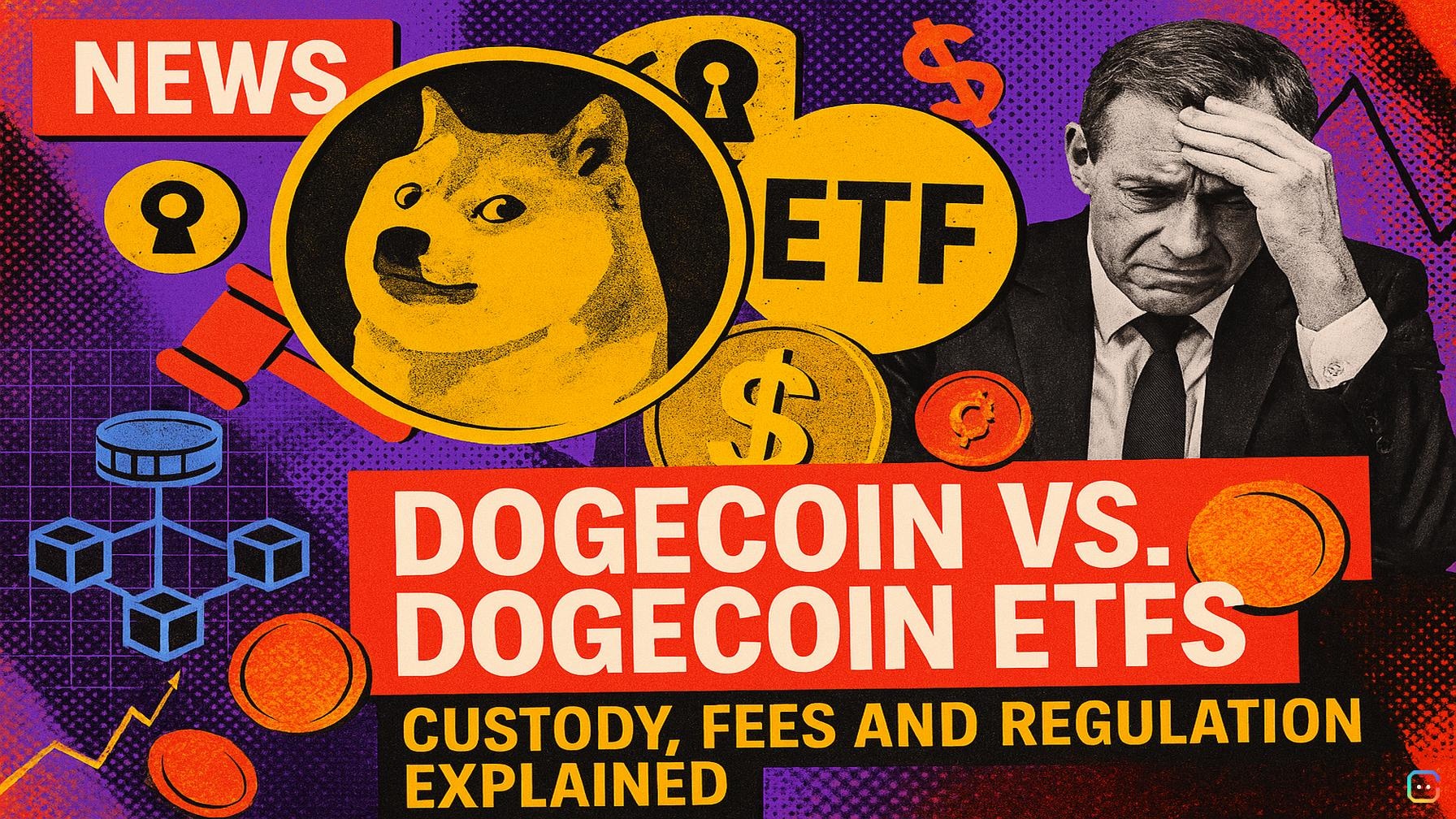
Dogecoin’s leap into mainstream finance accelerated in 2025–2026 when several Dogecoin ETFs launched — making DOGE the first memecoin to be packaged as an exchange-traded fund. That milestone sparked a common question among newcomers: what’s the difference between holding Dogecoin itself and investing in a Dogecoin ETF? The distinction is significant, and it comes down to regulation, ownership, custody and investor protections.
Regulatory status: commodity vs. security
- Dogecoin (DOGE) is treated by U.S. regulators as a digital commodity — effectively a non-security — and therefore falls under the Commodity Futures Trading Commission (CFTC) rather than the Securities and Exchange Commission (SEC).
- A Dogecoin ETF, however, is a regulated financial security. Although the ETF’s underlying asset (DOGE) is a commodity, the ETF structure itself is a registered security and is regulated by the SEC. In short: the asset and the product that tracks it live under different regulatory regimes.
What each option means for investors
- Holding Dogecoin (DOGE)
- You own the underlying token directly and control custody (wallets/private keys).
- There are no fund management fees charged by an ETF manager.
- Some investors may face less friction from securities regulators because DOGE is classified as a commodity.
- Downsides: less formal investor protection. The SEC noted in February 2025 that memecoins can resemble digital collectibles and that “neither meme coin purchasers nor holders are protected by the federal securities laws.”
- Buying a Dogecoin ETF
- You buy a regulated security that tracks DOGE’s price; you do not own the underlying coins themselves.
- ETFs operate under SEC oversight and are managed by fund managers, which generally adds transparency, custody by a regulated entity, and standardized reporting.
- Downsides: ETF investors pay management fees and give up direct ownership and control of the tokens.
Why it matters
The arrival of Dogecoin ETFs gives investors two very different paths to exposure: direct ownership for those who want custody and full control of the asset, or a regulated, brokerage-friendly product for those who prioritize ease, oversight and institutional custody. Each has trade-offs in fees, protections and control — so the right choice depends on your risk tolerance, custody preferences and regulatory comfort.
Bottom line: DOGE and a Dogecoin ETF track the same market, but they are fundamentally different products. One is a self-custodied digital commodity; the other is a regulated financial security that provides price exposure without direct ownership.
Read more AI-generated news on: undefined/news