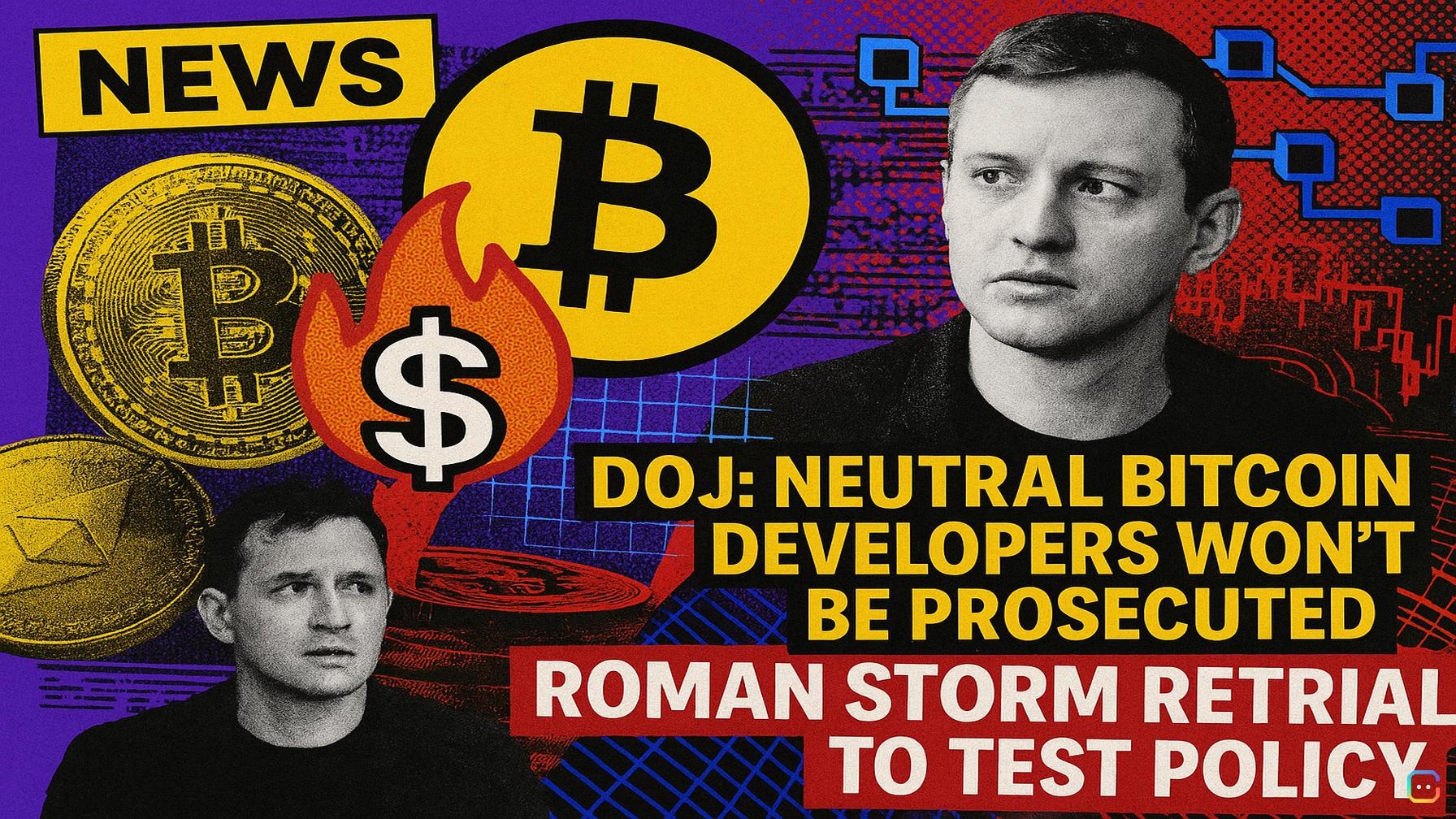
In a rare and direct reassurance to the crypto community, Acting U.S. Attorney General Todd Blanche and FBI Director Kash Patel told the Bitcoin 2026 Conference in Las Vegas on April 27 that software developers who write neutral Bitcoin code will not be treated as federal criminal targets—so long as they are not knowingly helping others commit crimes.
Speaking via videoconference in a session moderated by Coinbase Chief Legal Officer Paul Grewal, Blanche framed the Department of Justice’s position bluntly: “If you are developing software, if you are a coder, if you are part of that process and you are not the third‑party user and you are not helping and knowing the third party is using what you develop to commit crimes, you are not going to be investigated and not going to be charged.” Patel added that Bitcoin “isn’t going anywhere,” calling it part of the economic infrastructure that powers daily life.
Blanche’s remarks expand on a policy memo he issued in April 2025 while serving as Deputy Attorney General that directed the DOJ to end what he called “regulation by prosecution” in crypto cases and disbanded the National Cryptocurrency Enforcement Team. That memo explicitly steered prosecutors away from pursuing developers who create neutral, open‑source tools later misused by third parties—a stance the DOJ invoked when narrowing charges against Tornado Cash co‑founder Roman Storm ahead of trial.
But Blanche was careful to draw a clear boundary: writing code is protected, but knowingly facilitating money laundering or sanctions evasion is not. “The mere fact that you happen to be a coder doesn’t excuse you from criminal liability,” he said, urging developers who receive subpoenas to have counsel engage directly with prosecutors—and to elevate concerns to him personally if a case appears inconsistent with the memo.
All eyes are now on the Roman Storm retrial as the first practical test of whether the DOJ’s stance produces different outcomes. Storm was convicted in August 2025 of operating an unlicensed money transmitter, but jurors deadlocked on the more serious money‑laundering and sanctions counts—charges that carry heavy potential prison terms. SDNY prosecutors have sought an October retrial on those unresolved counts, a procedural reality Blanche acknowledged at the conference while describing some cases as “lingering” and “procedurally complicated.”
Patel offered a complementary but different emphasis: he named pig‑butchering scam networks based in Southeast Asia as the FBI’s top crypto enforcement priority and said he plans on coordinating overseas enforcement in Cambodia, Myanmar and Thailand this summer. The divergence in focus—Blanche on developer liability, Patel on active fraud networks—gave the industry a clearer sense of federal priorities.
Industry groups and advocates welcomed the tone but said important questions remain. The DeFi Education Fund had sent a letter to White House crypto czar David Sacks on April 28, 2025, urging an end to what it called a campaign to criminalize open‑source development. Peter Van Valkenburgh of Coin Center called Blanche’s remarks a step forward but stressed the unresolved issue: how prosecutors will distinguish between publishing open‑source code and possessing actionable knowledge of wrongdoing. As Coinbase’s Grewal summed it up for attendees: “Crime is criminal; code alone shouldn’t be.”
The Roman Storm retrial in October will be the first high‑profile test of whether Blanche’s policy shift changes real‑world prosecutorial outcomes—or remains mostly rhetoric. For now, federal leaders have provided the clearest public statement on developer liability since the Tornado Cash prosecutions began, but the crypto sector will be watching closely to see how that guidance is applied in court.
Read more AI-generated news on: undefined/news