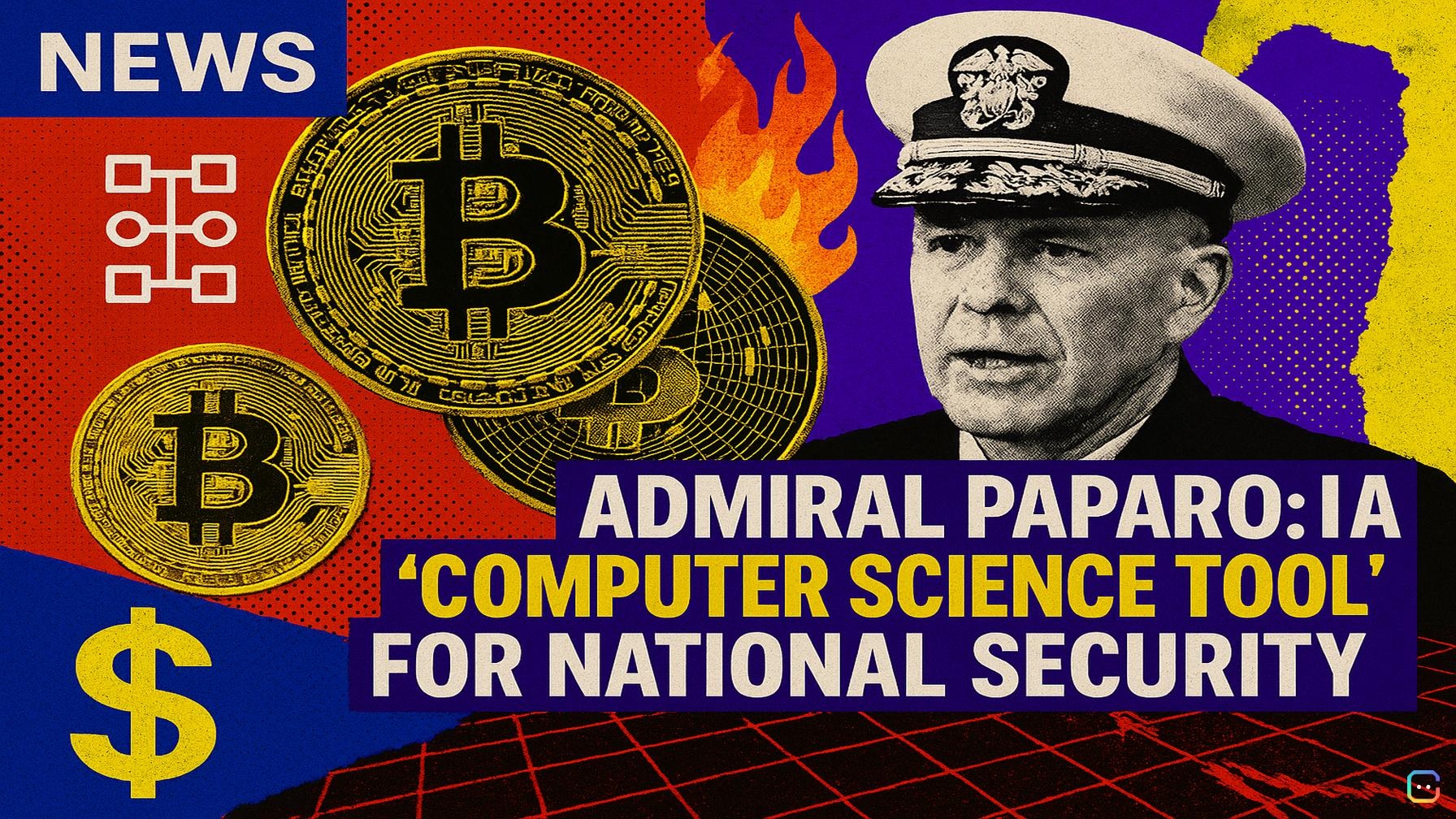
Bitcoin is moving out of the purely financial conversation and into the national security playbook, according to testimony this week from a senior U.S. military commander.
At a Senate Armed Services Committee hearing tied to the fiscal 2027 defense budget request, Admiral Samuel Paparo — speaking on the posture of U.S. Indo‑Pacific Command and U.S. Forces Korea — framed Bitcoin not just as money, but as “a computer science tool” built from cryptography, blockchain and a secure proof‑of‑work (PoW) mechanism. His remarks signal that military leaders are increasingly weighing the cryptocurrency’s potential role in cybersecurity, resilience and the projection of national power.
Key points from Paparo’s testimony
- Strategic framing: Paparo called Bitcoin “a reality,” noting its global use, and argued its architecture could influence how countries project power in digital and geopolitical arenas.
- Technology over price: He emphasized Bitcoin’s network design — not its market value — as the source of strategic interest.
- PoW and security implications: Paparo described Bitcoin’s PoW protocol as giving the network “incredible potential” because it requires substantial computing power to secure the blockchain. That same computational cost, he warned, could have downstream effects on how U.S. military systems operate.
- Zero‑trust, peer‑to‑peer model: Bitcoin’s decentralized, peer‑to‑peer structure removes the need for a trusted central authority and aligns with broader cybersecurity debates about reducing single points of failure.
- Cybersecurity utility: The Admiral highlighted how Bitcoin’s cryptography (public‑key encryption) and decentralization make transactions hard to falsify and the network difficult to attack; PoW raises the cost of attempted breaches, which Paparo sees as potentially useful for defense applications.
Why it matters
Paparo’s testimony reframes Bitcoin from a payment method or store of value into a piece of technology with strategic utility. By focusing on network architecture — cryptographic safeguards, decentralization and energy‑intensive PoW security — he linked Bitcoin directly to discussions of military readiness, resilience and national power. For policymakers and defense planners, the question now is how, if at all, these technical qualities should be incorporated into cybersecurity strategies or broader defense capabilities.
The Admiral’s comments contribute to a growing debate over whether cryptocurrencies can be harnessed to strengthen national security — and what trade‑offs, costs and operational impacts that would entail.
Read more AI-generated news on: undefined/news