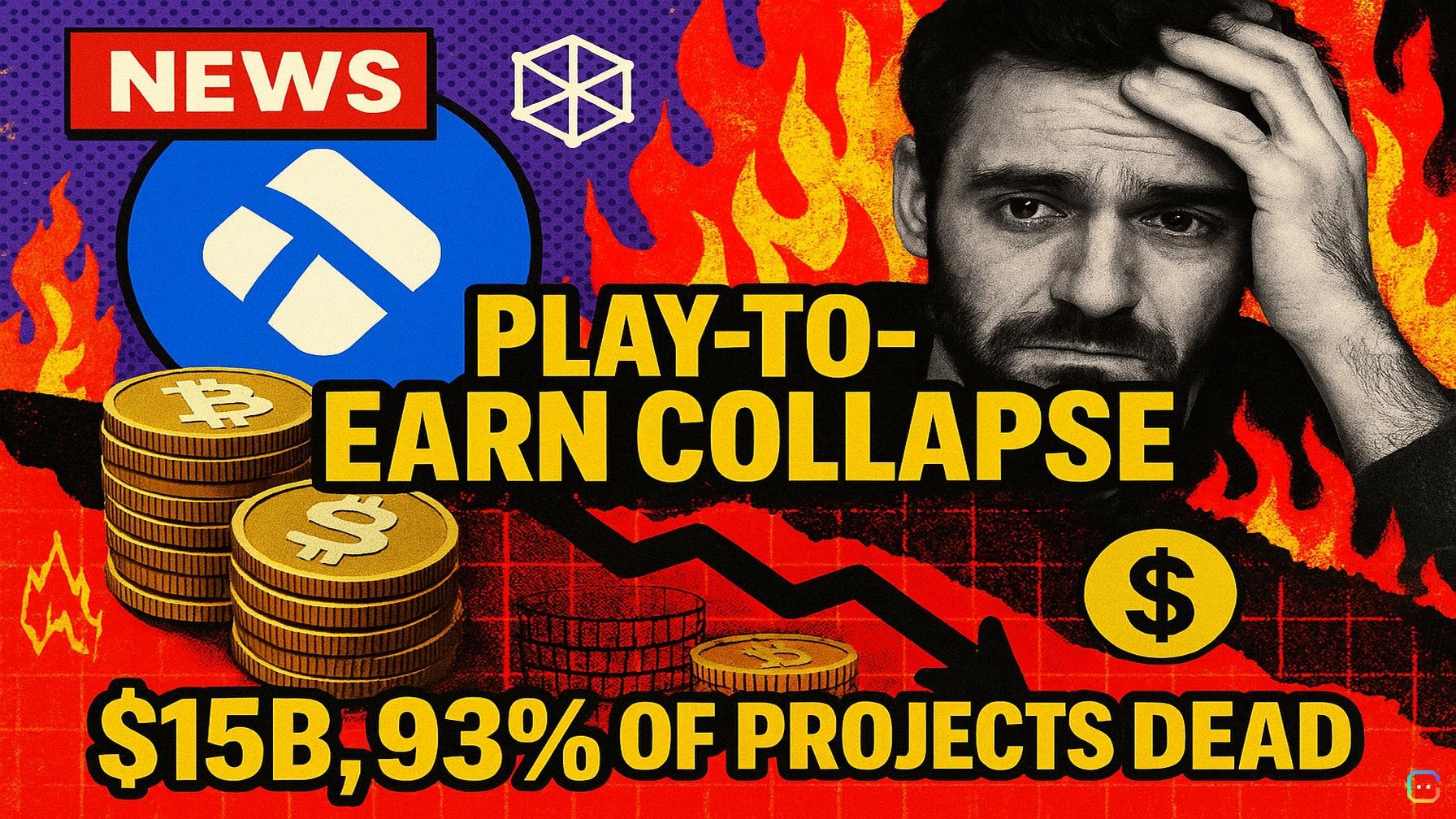
The Web3 gaming boom has largely fizzled — and the fallout is stark. New analysis from market-maker Caladan estimates the sector burned through as much as $15 billion chasing a token-driven future that mainstream gamers never embraced. The result: roughly 93% of GameFi projects are now effectively dead, token values are down about 95% from 2022 highs, and funding to blockchain game studios collapsed 93% by 2025.
Why it unraveled
GameFi’s play-to-earn model turned games into financial loops: players bought tokens or NFTs, earned rewards in those same assets, and relied on a steady influx of newcomers to keep prices and rewards viable. When new money dried up, the economics broke — token prices plunged, in-game rewards evaporated, and users left, taking entire in-game economies with them. As Caladan bluntly puts it, “Capital was destroyed at every layer simultaneously,” from VCs to retail NFT buyers, guilds and the Telegram-driven tap-to-earn craze.
Hard numbers and sharp collapses
- More than 300 blockchain games have shut down, according to DappRadar.
- Game tokens are down roughly 95% from 2022 peaks.
- Funding to Web3 game studios fell 93% by 2025.
- Gaming’s share of all Web3 venture investment fell from 62.5% in 2022 to single digits by 2025.
- Animoca Brands, once the sector’s biggest backer, trimmed gaming to about 25% of its portfolio and is shifting capital toward stablecoins, real-world-asset tokenization (RWAs) and AI.
Notable project failures
The fallout includes high-profile failures and painful post-mortems. Axie Infinity — once the poster child for play-to-earn — saw daily active users slide from roughly 2.7 million at its peak to about 5,500 today (DappRadar). Hamster Kombat lost 96% of its users within six months of launch. Yield Guild Games’ token (YGG) trades roughly 99.6% below its November 2021 peak. Pixelmon raised $70 million in a 2022 NFT mint but still has no public game four years on. Ember Sword burned through $18 million over seven years before shutting down last May without refunds. Gala Games faces a lawsuit alleging a co-founder diverted $130 million in tokens. Even major incumbents like Square Enix quietly wound down blockchain experiments such as Symbiogenesis last July.
Structural mismatch, not just bad timing
Caladan’s data argue this wasn’t merely a market cycle or isolated execution failures — it was a structural mismatch. The model prioritized financial incentives and speculative token mechanics over core entertainment value. Surveys cited by Caladan (Coda Labs) showed only about 12% of gamers had tried a crypto game even at the height of the mania, signaling the demand side never matched the flood of capital.
A lesson for builders and investors
Capital-heavy raises and long multi-year development cycles (often three to five years) meant many studios raised enormous sums before shipping products — removing the pressure to build games that actually retain players. Meanwhile, tokens traded in real time and required constant momentum; by launch many projects’ token economics had already collapsed. The capital that flowed into gaming has since migrated to AI, asset tokenization and infrastructure — a reallocation that reflects a harsher market reality.
Bottom line
What was once touted as the future of gaming has become a cautionary tale: financial engineering and token incentives can’t substitute for compelling gameplay and product-market fit. For Web3 gaming to recover credibility, builders will need to prioritize player-first design and durable entertainment experiences rather than speculative upside.
Read more AI-generated news on: undefined/news