Crypto Long & Short — Weekly Brief
A push to shield the engineers building DeFi, rising concerns about Layer 2 fragmentation, and fresh evidence that smart-contract failures still bite: this week’s briefing ties together policy, architecture and market fallout as DeFi matures into mainstream finance.
Protecting the people who build DeFi
By Jennifer Rosenthal, Chief Communications Officer, DeFi Education Fund
Traditional finance firms are increasingly announcing DeFi initiatives, and with that attention comes a crucial policy conversation: how do we protect the developers who build open, permissionless, noncustodial financial infrastructure?
The DeFi Education Fund is urging lawmakers and industry to defend a few core principles that make DeFi useful—open source, programmability, noncustody and interoperability—and to clarify the legal exposure of software authors who write code but do not control user funds.
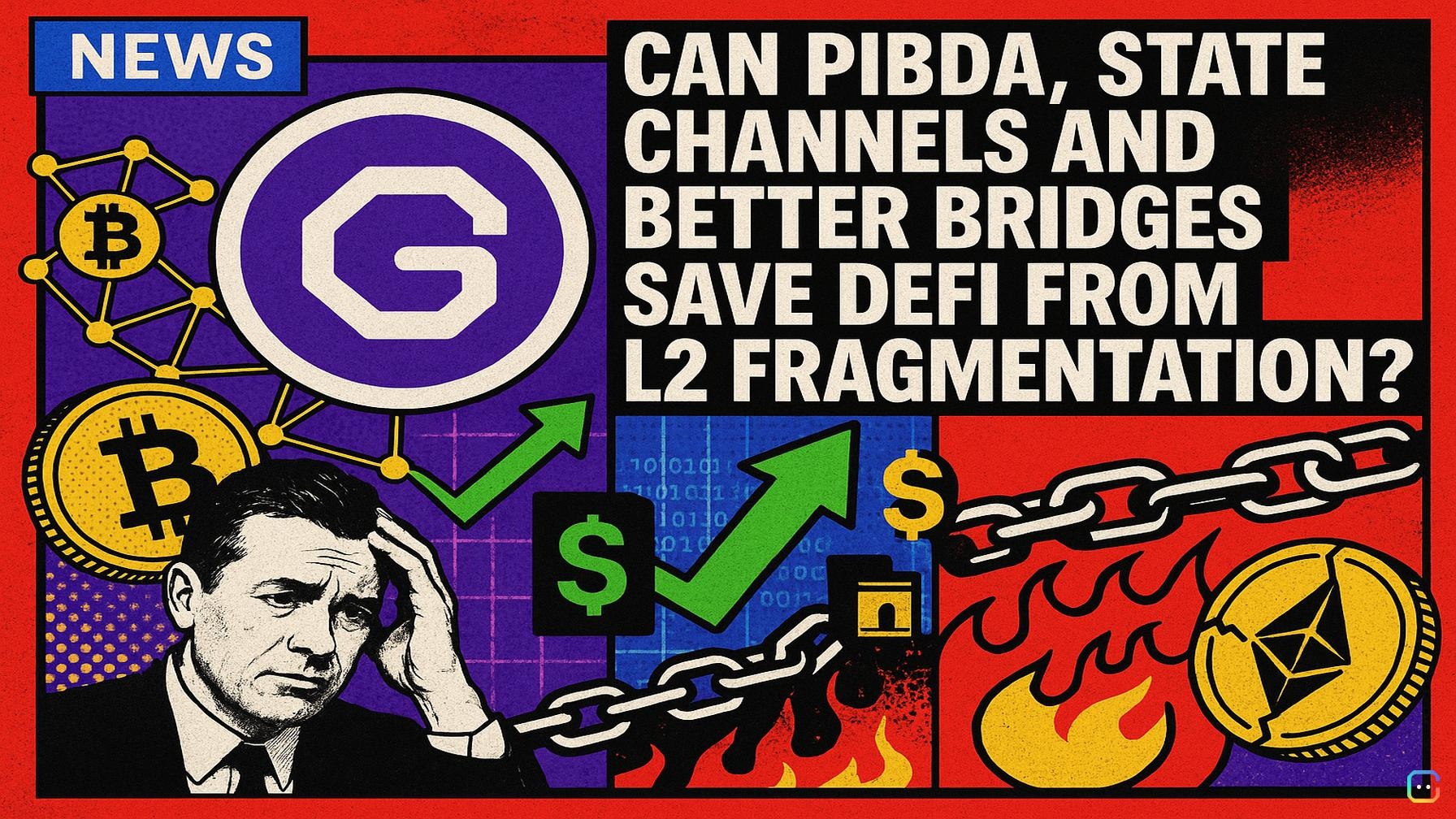
One concrete step on that front is the bipartisan Promoting Innovation in Blockchain Development Act of 2026 (PIBDA), introduced Feb. 26, 2026 by Representatives Scott Fitzgerald (R‑WI), Ben Cline (R‑VA) and Zoe Lofgren (D‑CA). PIBDA seeks to narrow how federal criminal statute Section 1960 applies, making clear it targets actors who control or transmit customer funds—not developers who merely write or deploy code. That change would align the statute with congressional intent and Treasury’s longstanding interpretation.
Rep. Fitzgerald summarized the concern: “For years, innovators and software developers have been caught in the crosshairs of an aggressive regulatory approach that treats them like criminals. The Promoting Innovation in Blockchain Development Act draws a clear line between those who develop and deploy blockchain software and those who actually move or manage funds. It provides long‑overdue legal clarity, protects innovation here at home and allows law enforcement to focus on genuine criminal activity rather than chilling American technological leadership.”
The pitch from advocates is straightforward: as DeFi becomes infrastructure for 21st‑century finance, regulators and legislators should reduce legal uncertainty so creators can build without the constant threat of being misclassified as criminal actors.
Why rollups fragmented Ethereum — and what could replace them
By Alexis Sirkia, Chairman and Co‑founder, Yellow Network
Vitalik Buterin recently conceded what many developers have observed: most Layer 2s have fragmented rather than unified Ethereum. Sirkia agrees — but argues the diagnosis needs to go deeper. The core design assumption behind rollups was that Ethereum’s main limit was throughput. Rollups scaled execution by creating parallel environments that compress and post proofs back to the base layer, increasing nominal capacity. In practice, though, they produced dozens of isolated liquidity pools that don’t interoperate without bridges.
Key numbers demonstrating that fragmentation:
- Base and Arbitrum now account for roughly 77% of all Layer 2 DeFi total value locked (TVL).
- Usage on smaller rollups has fallen about 61% since June 2025.
- Bridge hacks and failures have cost the industry roughly $2.5 billion since 2021.
The problem, Sirkia argues, isn't just buggy bridges — it's the model that forces value to route through custodial chokepoints. Attackers needn’t break two chains; they only need to compromise the bridge in between. Rebuilding better bridges repeatedly addresses the symptom, not the premise.
His alternative: state channels. These allow participants to transact peer‑to‑peer off‑chain with the base layer acting purely as an enforcement and settlement layer. Settlement hits the blockchain only when finality is required or a dispute occurs. That model keeps participants connected from the start, avoiding the intermediary trust points that have led to fragmentation and recurring losses.
This architectural debate matters because new regulated flows are coming on‑chain. The Commodity Futures Trading Commission is preparing what could be the first U.S. framework for perpetual futures, which could shift a meaningful share of the roughly $14 trillion offshore derivatives market onto regulated U.S. venues. Today, U.S. platforms handle just 1.6% of global crypto derivatives volume, so the infrastructure that absorbs even a fraction of the rest will need to settle cross‑chain, in real time, without custodial chokepoints — a role rollups, by design, struggle to play. Whether most rollups survive 2026 (as 21Shares warned) or not, the market is beginning to price in that the crucial bottleneck is trust at intermediaries, not pure throughput.
Market pulse: bridges and smart‑contract risk
By Francisco Rodrigues
As traditional finance continues to build bridges into crypto, DeFi’s own plumbing is under repeated stress from exploits and failures. One recent example highlights how quickly a single collateral incident can reshape markets.
Chart of the week — Aave’s shifting market share
- Aave’s TVL market share fell sharply from about 51.5% in February to roughly 39% following the April 18 KelpDAO rsETH exploit. The incident froze rsETH markets and prompted deposit withdrawals, knocking liquidity out of the protocol.
- The share of active loans was stickier, dropping only about 2 percentage points (from 54% to 52%), because many borrowers could not unwind positions easily.
- The AAVE token has declined roughly 50% from its January peak, pricing in both the prospect of bad debt and the reputational damage of being the largest DeFi lending venue when a significant collateral asset failed.
Bottom line
DeFi is moving from niche experimentation into the infrastructure layer of global finance. That makes legal clarity for builders and a rethink of architecture that removes custodial chokepoints two of the most consequential conversations right now. Policymakers, developers and institutions all have a stake: legislation like PIBDA could protect the people building DeFi, and design choices — whether rollups, state channels or something else — will determine how securely and efficiently capital moves across the ecosystem.
Note: Opinions in this column reflect the authors’ views and not necessarily those of CoinDesk, CoinDesk Indices, or affiliated entities.
Read more AI-generated news on: undefined/news