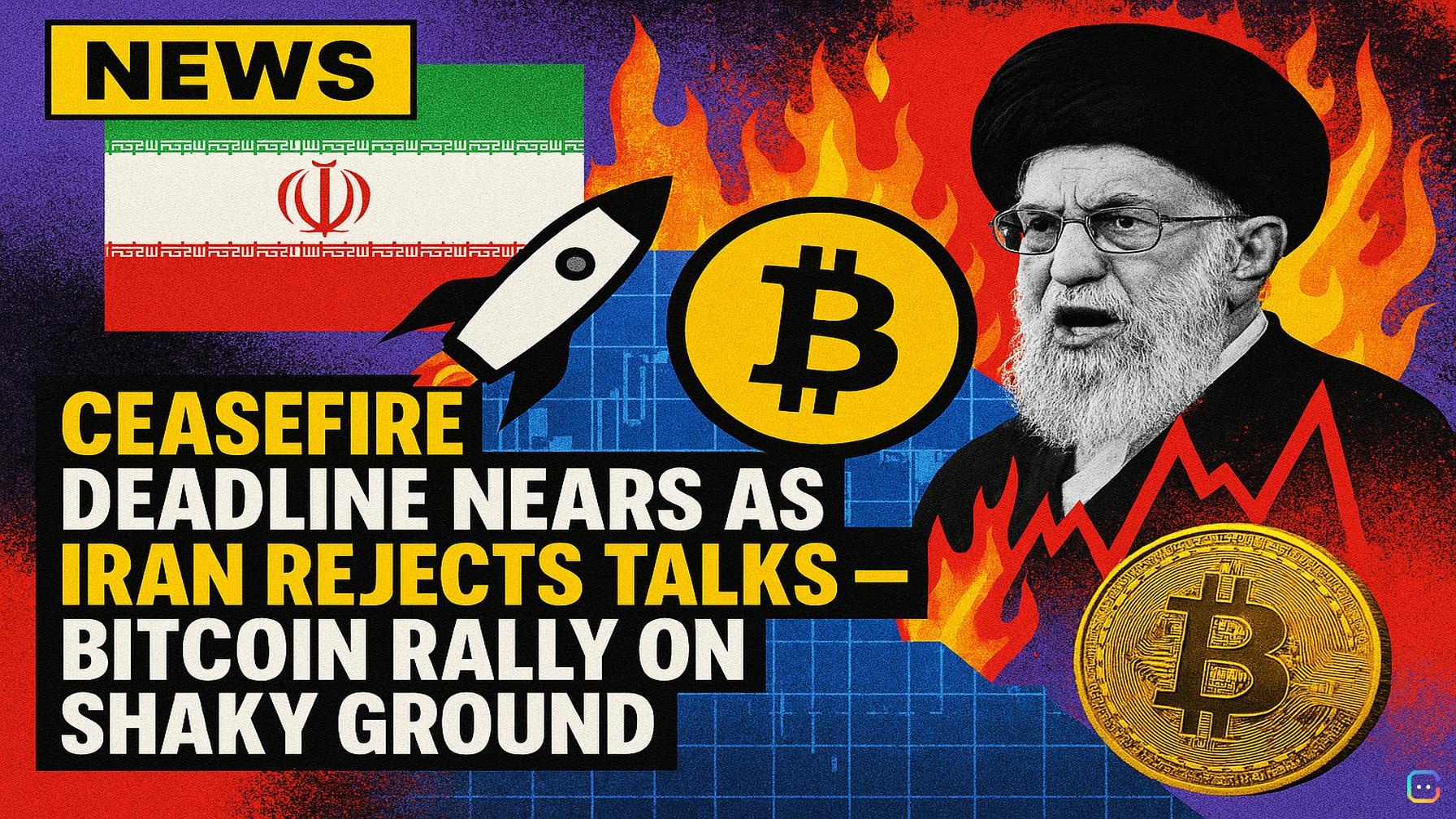
Ceasefire deadline heightens geopolitical risk as Iran rejects talks “under threat,” putting crypto’s recent rally on shaky ground
A fragile pause between the US and Iran is set to end Wednesday, and Tehran has made clear it will not enter negotiations while it feels coerced. Iran’s parliament speaker Mohammad Bagher Ghalibaf wrote on X that the country “does not accept negotiations under the shadow of threats” and warned Tehran has prepared “new cards on the battlefield.” Foreign Ministry spokesperson Esmaeil Baqaei told reporters there are currently “no plans for the next round of negotiation,” underscoring Iran’s demand that US actions change before talks proceed.
What Iran objects to is structural: Washington imposed a naval blockade on Iranian ports the same day the ceasefire was announced, a move Tehran treats as coercion rather than a genuine pause. Iranian officials say any further negotiations hinge on the US lifting the blockade and stopping what Iran calls ceasefire violations. President Massoud Pezeshkian also criticized mixed messaging from US officials, pointing to contradictory public claims about what was—or wasn’t—agreed during the truce.
Tensions around the Strait of Hormuz remain acute. Tehran briefly reopened the strait before closing it again after the seizure of the cargo ship Touska. Iran also sent drones toward US ships after US forces boarded the vessel, signaling its military posture remains active. US carrier groups are in the region: the USS Gerald R. Ford in the Mediterranean and the USS Abraham Lincoln in the north Arabian Sea, with a third carrier group expected by month’s end.
The US negotiating team led by JD Vance was due in Islamabad as rhetoric from both sides hardened. President Trump told CNBC he’s “ready to go” if talks fail, while also saying he wouldn’t be rushed and that Iran has “no choice” but to negotiate — statements that Tehran says amount to pressure and that reinforce its refusal to discuss terms while facing a blockade and public threats.
Why crypto traders should care
- Market reaction so far: Ceasefire hopes had been a major tailwind for risk assets — Bitcoin climbed to about $72,700 and oil fell roughly 13% on April 8.
- What’s at risk: If the truce collapses at midnight Wednesday and hostilities resume, Brent crude could push back above $100/bbl. Higher oil would feed through to inflation expectations, likely complicating Fed policy and tightening financial conditions — a negative for risk assets including crypto.
- Immediate drivers to watch: the status of the naval blockade, any military escalations around the Strait of Hormuz, official statements from Tehran and Washington, and updates from the Islamabad talks.
Bottom line
The ceasefire deadline is the single largest near-term geopolitical variable for crypto markets. Traders should monitor oil prices, safe-haven flows, and headlines coming out of Islamabad and the Gulf: a breakdown in the truce would likely remove the macro tailwind that helped push Bitcoin higher over the past two weeks and could trigger a rapid repricing across risk assets.
Read more AI-generated news on: undefined/news