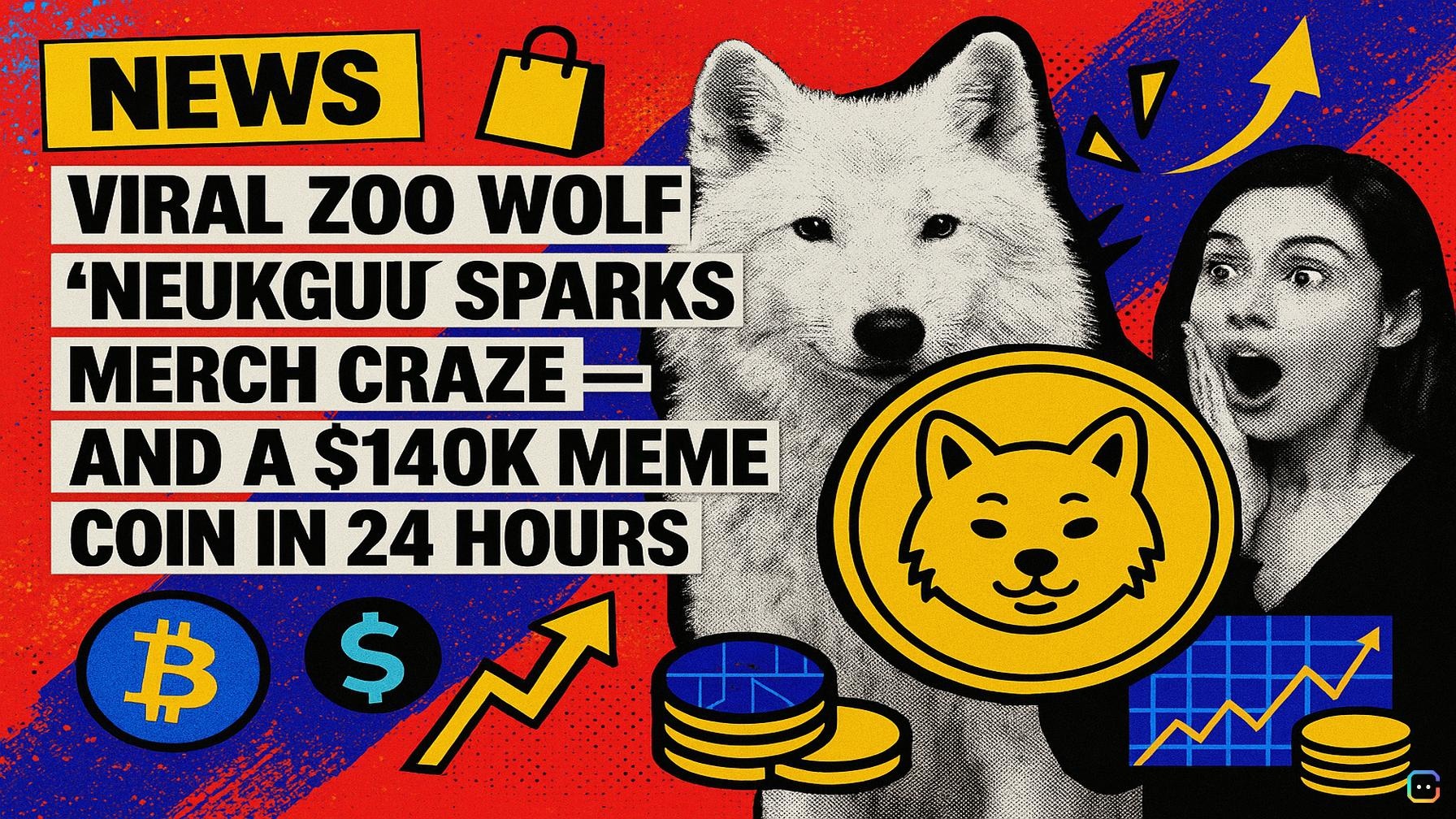
A missing wolf turned viral mascot — and even spawned its own cryptocurrency — after a nine-day escape from a South Korean zoo.
What happened
- Neukgu, a two-year-old wolf at O-World safari in Daejeon, slipped out of his enclosure on 8 April by digging under a fence. A large, multi-agency search involving roughly 300 personnel and drones followed, and a nearby elementary school was briefly closed. He was found and recaptured near a highway interchange on 17 April.
From escape to overnight brand
- Neukgu’s story quickly became a local phenomenon. Daejeon bakery Harehare launched a chocolate-cream bun stamped with the wolf’s face — “Neukgu bread” — producing 50 loaves a day that sold out almost instantly. The buns debuted at 2,500 won (about £1.26) and, amid surging demand, the price rose by 300 won the next day.
- The Daejeon Tourism Organisation has received public suggestions for more Neukgu-themed items — a mascot character, paw-shaped bread, a children’s book “Neukgu’s Adventure,” and a limited T-shirt — as the city looks to capitalise on the craze.
- Corporate promotion followed: LG Electronics ran messages to Neukgu on a large Daejeon billboard, switching from “Come back, Neukgu” during the search to “Thank you for coming back, Neukgu” after his return.
Crypto and internet culture join the pack
- During the search a cryptocurrency bearing Neukgu’s name surfaced online and recorded roughly $140,000 in trading within 24 hours, Reuters reported. The token is one of several recent examples where viral animal stories inspire meme coins and speculative tokens.
- Social platforms filled with AI-generated memes and videos that placed Neukgu in mock interviews and news segments — including spoof clips with Yoo Jae Suk, South Korea’s best-known TV host — amplifying engagement and token trading momentum.
Why people latched on
- Choi Miyeon, a media-content professor at Paichai University, told KBS that Neukgu’s real-time saga “drew in the public’s emotions,” unfolding like a participatory drama as people shared updates and locations online.
The “Neukgu effect”
- The wolf’s return coincided with a boost for local sports: Daejeon Hana Citizen ended a three-game losing streak and the Hanwha Eagles recorded a win after a 10-day drought — an upswing some locals dubbed the “Neukgu effect.” Daejeon mayor Lee Jang Woo posted on Threads that Neukgu is “healthy, eating well, and recovering,” and noted both local teams’ wins.
Health, recovery and zoo response
- O-World has been posting recovery updates. A video showing Neukgu eating meat drew nearly 50,000 likes in under 24 hours; the zoo reported he ate 1.16 kg of a beef-and-ground-chicken mix in one feeding, up from 650 g the day he returned.
- Vets found Neukgu had lost about 3–4 kg during his time outside and had swallowed a 2.6 cm fishing hook plus small debris (a fish bone and leaves). The hook, lodged in his stomach, was removed by endoscopy; initial blood tests were normal but he remains under observation for infections or parasites and is being kept isolated before any reintroduction to other wolves.
- O-World says it will prioritise “a full overhaul of our safari management systems” before reopening.
A note for crypto readers
- Neukgu’s token is a reminder of how fast viral stories can spur speculative crypto activity. Such tokens can show rapid volume and extreme volatility — and may lack transparency or long-term utility — so traders should exercise caution.
Bottom line
A brief escape turned a zoo wolf into a local celebrity, merchandising boom and short-lived crypto phenomenon — showcasing how social media, retail appetite and crypto markets can collide around a single viral story.
Read more AI-generated news on: undefined/news