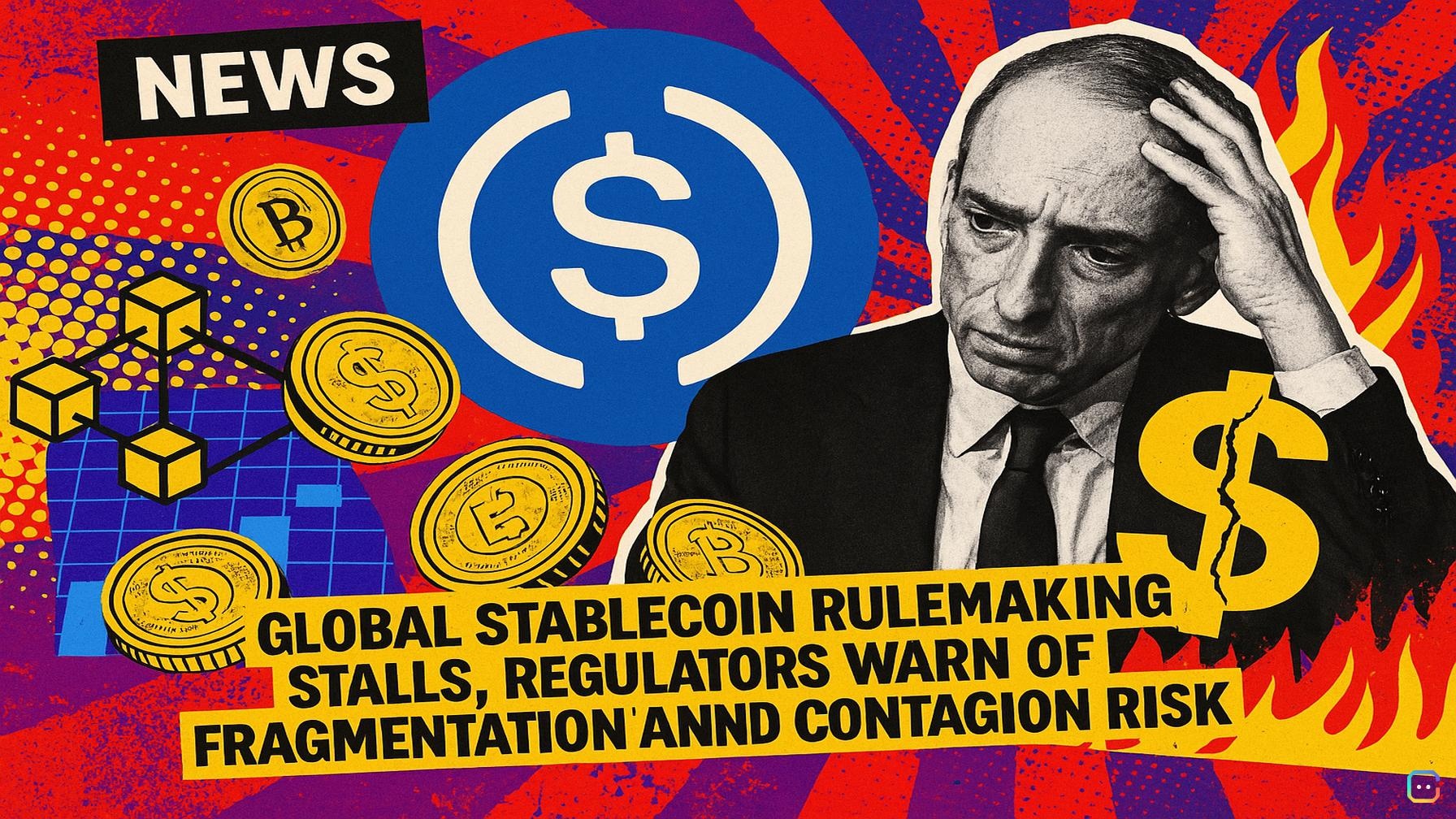
Global stablecoin rulemaking has lost momentum over the past year, prompting fresh warnings from top regulators who say stalled coordination risks fragmenting markets and amplifying financial instability.
What happened
Bank of England Governor Andrew Bailey — who chairs the Financial Stability Board — told Reuters last week that progress on international rules for stablecoins has slowed. The Bank for International Settlements’ general manager, Pablo Hernández de Cos, echoed that concern Monday while speaking in Japan, urging countries to cooperate to avoid a “patchwork” of divergent rules.
Why it matters
Without common standards, firms could exploit differences between jurisdictions — a practice known as regulatory arbitrage — by moving operations to places with lighter oversight. That could leave gaps in supervision and increase the chance that stress in one market spills into others.
What regulators are worried about
Stablecoins have grown rapidly and now total roughly $320 billion, according to DeFiLlama, with Tether’s USDT and Circle’s USDC accounting for the lion’s share. De Cos warned that many stablecoins behave more like securities than cash: redemption frictions can push prices away from the intended $1 peg, and sudden mass withdrawals could create contagion across crypto and financial markets.
Policy options on the table
To reduce risks, regulators and central bankers are debating measures including:
- Limits on interest payments tied to stablecoins (to curb run incentives);
- Giving issuers access to central bank lending facilities; and
- Deposit-insurance-style safeguards for redeemable tokens.
Proponents say these steps could shore up stability while preserving stablecoins’ usefulness for digital payments. Critics worry about overregulation stifling innovation — a balance that international coordination is meant to strike.
U.S. developments
In Washington, lawmakers are moving forward with the Digital Asset Market Clarity Act, which would impose a federal framework for digital assets. The bill passed the House last year and is now before the Senate, where Banking Committee Chair Tim Scott and Agriculture Committee Chair John Boozman are shepherding the effort. Senators Thom Tillis and Angela Alsobrooks have reportedly negotiated a compromise on stablecoin yield rules that might clear the way for a markup. Senator Cynthia Lummis, who chairs the Senate Banking Committee’s digital-assets subcommittee, has suggested a hearing could come in the second half of April.
Outlook
A final U.S. deal remains conditional on resolving open questions about oversight of decentralized finance (DeFi) and certain ethics provisions. Globally, officials say the clock is ticking: without coordinated standards, policy fragmentation could create new vulnerabilities at a time when stablecoins are increasingly embedded in crypto markets and broader payment systems.
Read more AI-generated news on: undefined/news