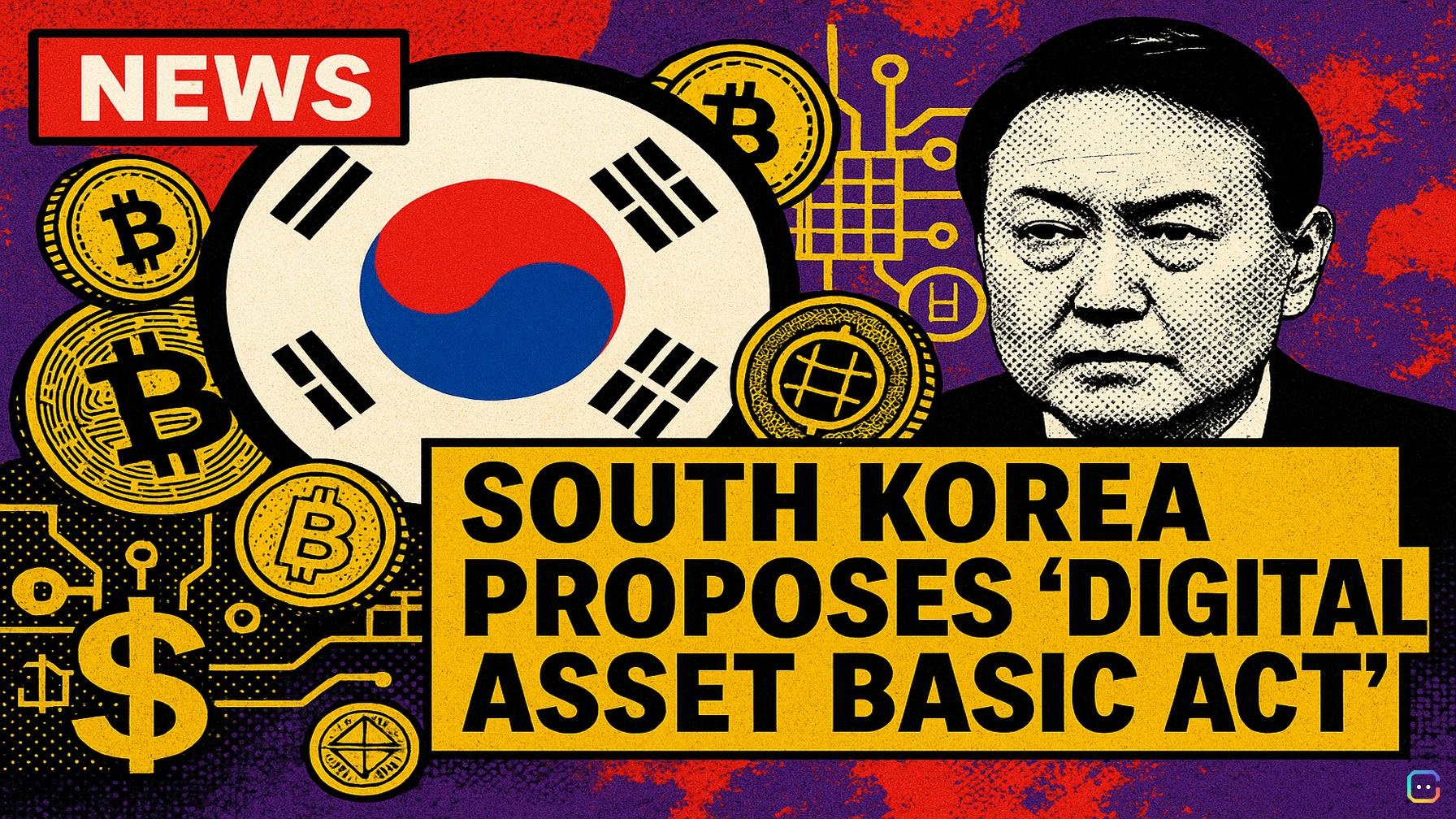
South Korea’s ruling party has unveiled a sweeping draft law that would bring bank-style rules to stablecoins and create a comprehensive legal framework for digital assets.
On Wednesday the Democratic Party introduced the “Digital Asset Basic Act,” a proposal that the party says is designed to make digital assets a regulated, transparent pillar linking the real economy and financial markets. “Digital assets are emerging as a core medium connecting the real economy and financial markets,” the bill states.
Key features of the proposal
- It defines value-linked digital assets—such as tokens pegged to fiat currency or tied to real-world assets—as a distinct category requiring issuer authorization, refund reserves and formal redemption obligations.
- Issuers would need prior approval and must meet thresholds for capital, operational capacity and reserve plans.
- The bill would impose licensing, registration and reporting duties on digital-asset businesses that operate trading, brokerage, custody and advisory services.
- New rules on disclosure, internal controls and market conduct would be mandated, including explicit bans on unfair trading practices like market manipulation and misuse of non-public information.
- The proposal also calls for a digital asset committee to coordinate policy and for national basic and implementation plans to develop the sector.
The draft arrives after months of stalled talks. Negotiations over the Digital Asset Basic Act have been frozen since early this year amid a dispute over who should be allowed to issue won-pegged stablecoins. The Bank of Korea has pushed for a model that limits issuance to institutions with majority-bank ownership—specifically banks with 51% ownership—while the Financial Services Commission has warned such a restrictive approach could stifle innovation.
Proponents say the bill aims to “establish a foundation for Korea to lead the global digital financial order,” creating clearer rules for issuance, disclosure and market structure that current law lacks. Critics will likely focus on the balance between safeguarding consumers and preserving innovation, particularly around stablecoin issuance and reserve requirements.
The proposal comes as regulators tightened exchange controls domestically: on the same day, the Financial Services Commission and the Financial Supervisory Service ordered all Korean crypto exchanges to adopt a single, strict system for delaying withdrawals to curb voice-phishing scams that depend on transaction speed.
Next steps for the Digital Asset Basic Act include parliamentary debate and negotiation with regulators and industry stakeholders. If passed, the law would mark a major step toward formalizing South Korea’s approach to crypto assets and stablecoins while raising the compliance bar for issuers and intermediaries.
Read more AI-generated news on: undefined/news