Bernstein: Bitcoin’s 40% Drop Is a ‘Confidence Wobble,’ Not a Full-Blown Bear Market
Research and brokerage firm Bernstein — which oversees roughly $867 billion in assets — told clients on March 24 that it believes Bitcoin’s price bottom is likely in and reiterated an end-of-2026 target of $150,000. That forecast implies more than a 100% gain from current levels as the firm frames the recent selloff as a temporary crisis of investor confidence rather than a breakdown in Bitcoin’s fundamentals.
Lead analyst Gautam Chhugani called this pullback “the weakest Bitcoin bear case in its history.” At the time of Bernstein’s note, BTC was trading around $70,668, roughly 40% below its peak. By contrast, prior cycle drawdowns were far steeper: 84% from the 2013 peak, 77% after 2017’s high, and about 70% following the 2021 top. Bernstein argues the current correction is much more restrained and structurally less dangerous.
Why Bernstein is bullish
Bernstein points to several structural changes that it says separate this cycle from past bears:
- Institutional flows have matured: spot Bitcoin ETF adoption is expanding and corporate treasury allocations are accelerating.
- A friendlier U.S. political and regulatory backdrop is broadly supportive of digital assets.
- The market lacks the systemic failures that defined 2022 — no collapsed exchanges, no widespread insolvent lenders, and no contagion.
The firm also highlights continued accumulation by a prominent Bitcoin strategy: that strategy now holds about 3.6% of Bitcoin’s circulating supply (roughly $53.5 billion) and raised $7.3 billion in 2026 to grow its treasury. Bernstein views the vehicle as high-beta but with a resilient balance sheet, saying only an extreme downside scenario — Bitcoin falling to $8,000 and lingering there for five years — would force a balance-sheet restructuring.
On-chain indicators support the narrative
Bernstein’s analysts point to on-chain metrics for added context. Ali Charts flagged Bitcoin’s approach to the 0.8 MVRV band (roughly $56,000–$60,000), a historical “launchpad” that preceded massive rallies: +963% (2017), +261% (2018), +1,126% (2020) and +660% after the 2022 FTX collapse. CryptoQuant analyst Crypto Dan echoed that reduced participation and waning retail interest look “textbook” for a bear market — but historically these are accumulation phases rather than exit signals. “A bear market is not a time to give up. It is the time to prepare for the next bull cycle,” he wrote on X.
Dissenting views and near-term risks
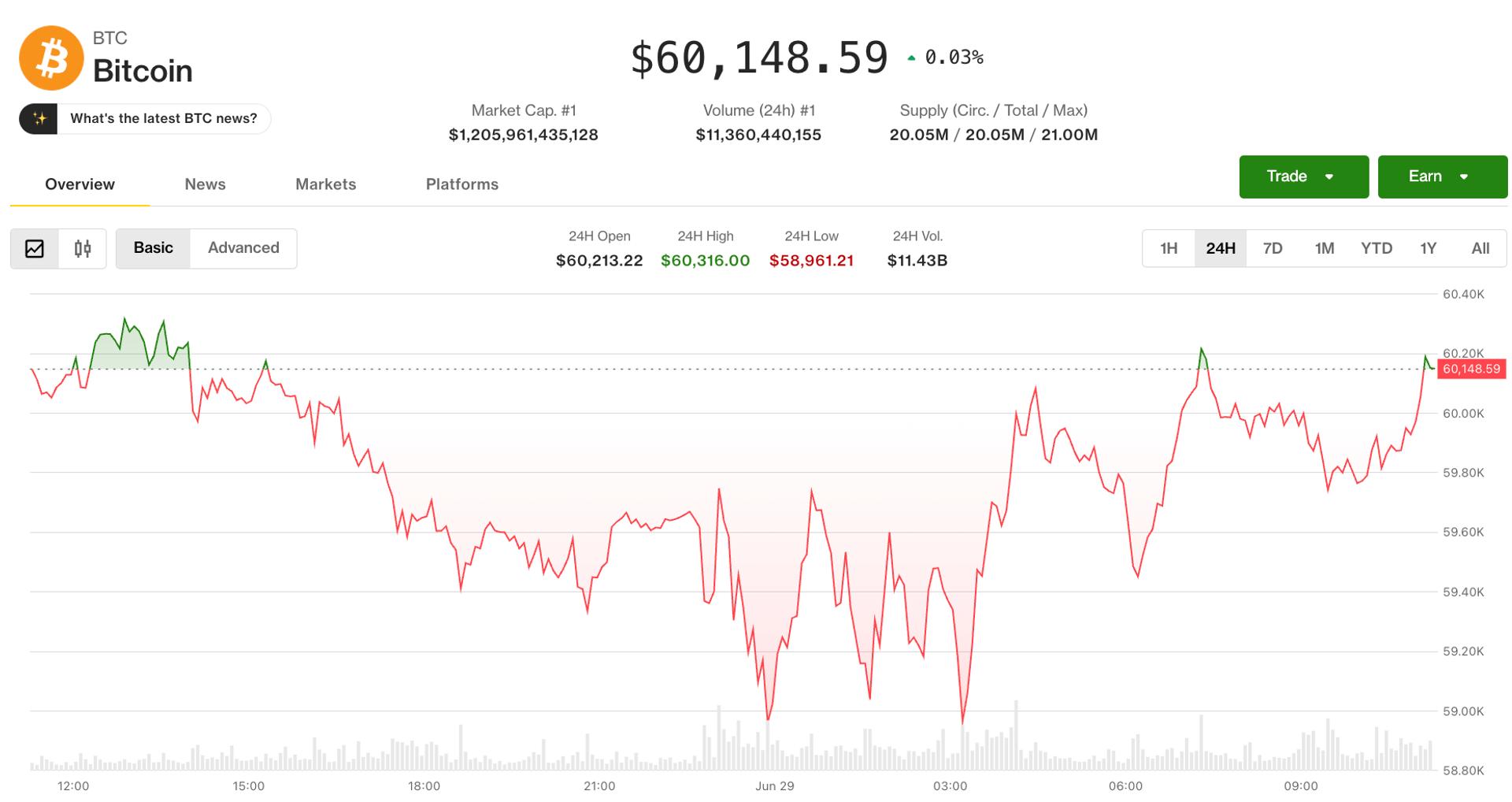
Not everyone is ready to declare a lasting bottom. VanEck CEO Jan VanEck told CNBC in early March that while a floor may be forming, 2026 fits Bitcoin’s typical fourth-year bear pattern following halvings. Some traders warn that failing to reclaim and hold above $70,000 could open the door to another leg down, potentially retesting the closely watched $60,000 support.
How Bernstein’s target fits the wider institutional picture
Bernstein’s $150,000 2026 target — first set when Bitcoin traded significantly higher — sits alongside a cluster of optimistic institutional forecasts, including $150,000 from BSTR President Katherine Dowling and $180,000 from Ripple CEO Brad Garlinghouse. Looking further out, Bernstein continues to hold a long-term $1 million target for Bitcoin by 2033.
Bottom line
Bernstein frames the current 40% drawdown as a confidence wobble amid a more mature, institutionalized market — not the structural unraveling seen in prior cycles. That view rests on growing ETF adoption, corporate treasury purchases, supportive policy signals, resilient accumulation behavior, and favorable on-chain indicators — but the usual caveats apply: failure to hold key technical levels could still invite deeper corrections.
Read more AI-generated news on: undefined/news