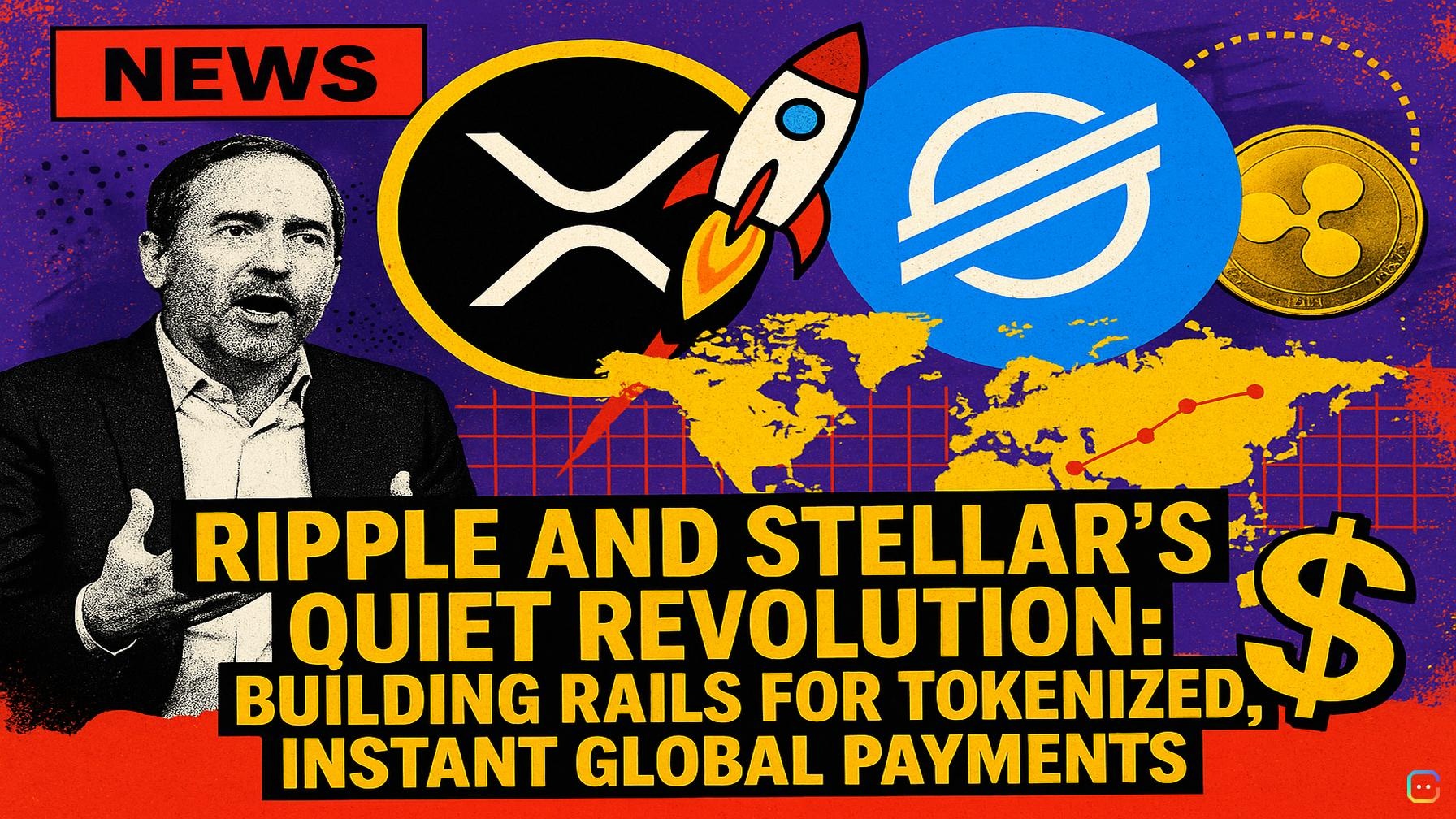
Behind the headlines about regulation, a quieter transformation is reshaping global finance — and it’s being driven less by legacy banks and more by blockchain networks such as Ripple (XRP) and Stellar (XLM). These platforms are positioning themselves as the rails for faster, cheaper, and more programmable payments, laying groundwork for an era where tokenized assets and instant digital settlements are the norm.
A recent X post from Versan Aljarrah, founder of Black Swan Capitalist, framed the shift as deliberate and long-term: while regulators grab headlines, the real structural change is happening at the protocol level, in networks that move and settle value efficiently. Ripple and Stellar sit at the center of that change, with growing adoption by banks, fintechs and payment providers that suggest they could reshape international liquidity and flows.
What Ripple brings to the table
- Performance: The XRP Ledger is capable of processing roughly 1,500 transactions per second and typically settles in about 3–5 seconds — a marked contrast to the multi-day timelines still common in some cross-border banking corridors.
- Real-world reach: Ripple reports partnerships with more than 350 financial institutions worldwide and says its On-Demand Liquidity (ODL) service facilitates hundreds of millions of dollars in cross-border payments daily. Those relationships — spanning banks and remittance firms — are central to Ripple’s claim of real-world utility for XRP as a bridge asset.
What Stellar focuses on
- Financial inclusion and low-cost payments: Stellar’s design emphasizes low fees and micropayments, targeting use cases like remittances and services for the financially underserved.
- Enterprise collaboration: Stellar has been used in projects with IBM and others to build blockchain-based payment solutions for banks and remittance providers, aiming to expand access to digital payment rails for thousands of users.
- Tokenization and programmability: Stellar supports tokenized fiat and other asset types, enabling faster, programmable transfers that power new financial products.
Why tokenization and protocol ownership matter
As currencies, equities, commodities and other assets are increasingly tokenized, settlement and custody migrate from centralized intermediaries toward the underlying protocols. In that scenario, Ripple and Stellar act as the plumbing for settlement, liquidity and cross-border value transfer — not just as payment rails, but as platforms where control, access and efficiency are encoded into the networks themselves.
Bottom line
Ripple (XRP) and Stellar (XLM) are staking claims as foundational infrastructure for a more decentralized, programmable financial system. Their transaction speeds, institutional partnerships, and support for tokenized assets position them as key building blocks in a migration away from slow, siloed legacy systems. For investors, institutions and developers, engaging with these protocols offers an early vantage point into a financial landscape increasingly defined by the networks that move value.
Read more AI-generated news on: undefined/news