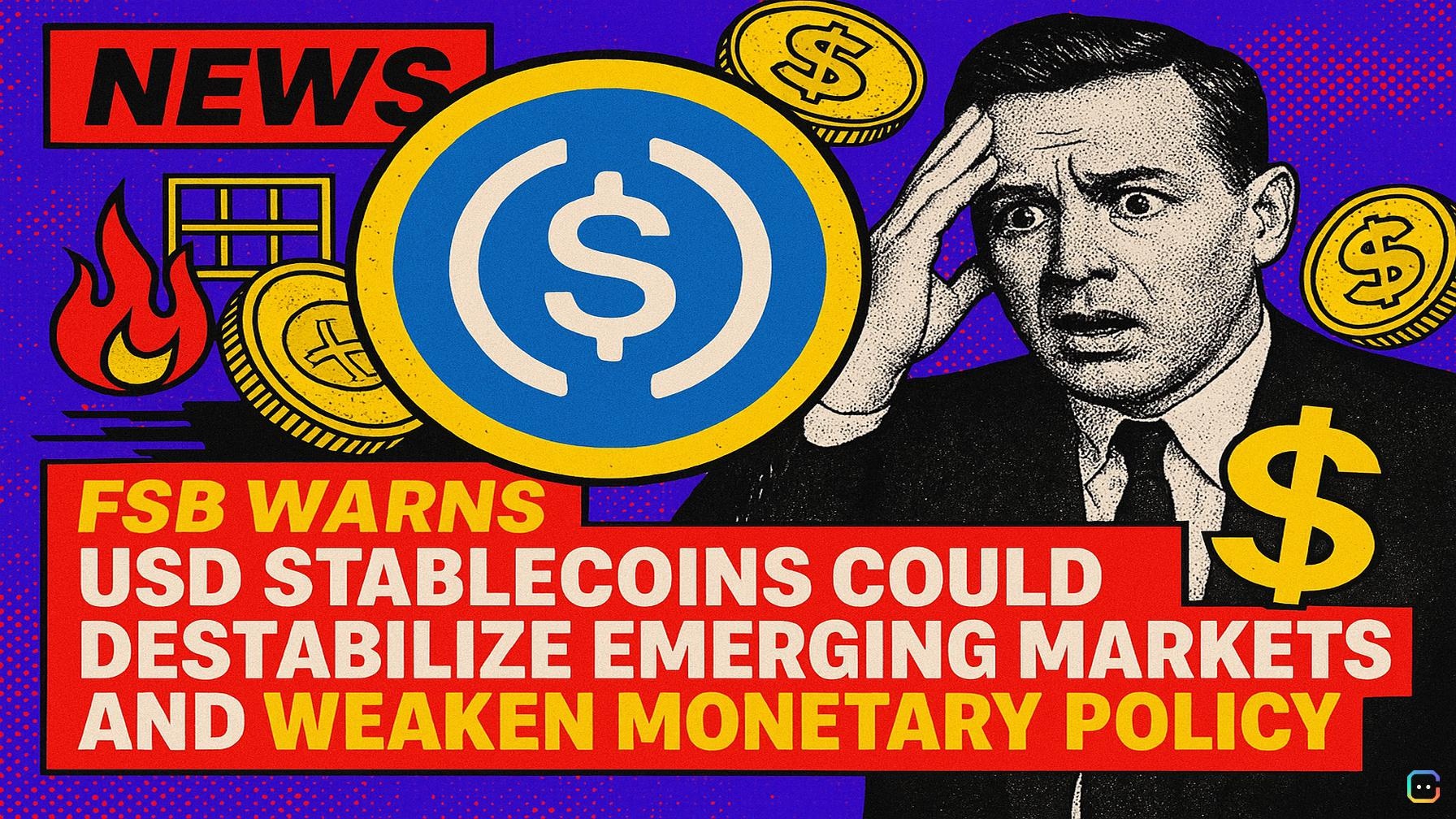
The Financial Stability Board (FSB) has warned that the growing use of foreign-currency stablecoins — especially US dollar-denominated ones — could pose meaningful risks to emerging and developing economies. In its 2025 annual report, the global watchdog said cross-border flows of dollar stablecoins may intensify financial and policy strains in countries with less-developed markets.
The FSB singled out several channels of concern. When residents and businesses shift to foreign-currency stablecoins, it can drive currency substitution (a form of “digital dollarization”), weaken local payment systems, blunt the effectiveness of domestic monetary policy, and place pressure on fiscal resources. The board warned that US dollar stablecoins moving across jurisdictions may carry “potentially more acute” risks for these markets.
Beyond macroeconomic implications, the report urged regulators to keep tracking the stablecoin sector’s operational and liquidity risks, as well as its links to the broader financial system. The FSB emphasized that oversight remains necessary given potential spillovers — for example, runs on crypto liquidity pools or operational outages that could ripple into traditional finance.
The report also reviewed the FSB’s 2023 global framework for crypto-asset activity and stablecoin arrangements and found uneven implementation. “There are still clear gaps and inconsistencies in how it is being applied across jurisdictions,” the board said, signaling the need for stronger, more harmonized rules.
On current usage, the board noted that crypto-assets and stablecoins have seen growth but remain peripheral to the “real economy.” As the report put it: “Despite growth in these markets in recent years, crypto-assets and stablecoins are not widely used in financial services supporting the real economy.” Still, the FSB acknowledged that stablecoins could offer some benefits — while stressing that regulators must continue to monitor growing linkages with core financial markets and institutions.
Looking ahead, the FSB said it will keep monitoring digital innovation tied to crypto-assets in 2026, with stablecoin-related risks a focal point, particularly around market structure and financial resilience. Other stated priorities for the coming year include:
- private credit;
- nonbank financial intermediation;
- cross-border payments;
- crisis preparedness;
- regulatory modernization.
For emerging-market policymakers and crypto stakeholders alike, the message is clear: stablecoins promise efficiency and new payment options, but they also raise tangible macro-financial and operational risks that demand coordinated regulatory attention.
Read more AI-generated news on: undefined/news