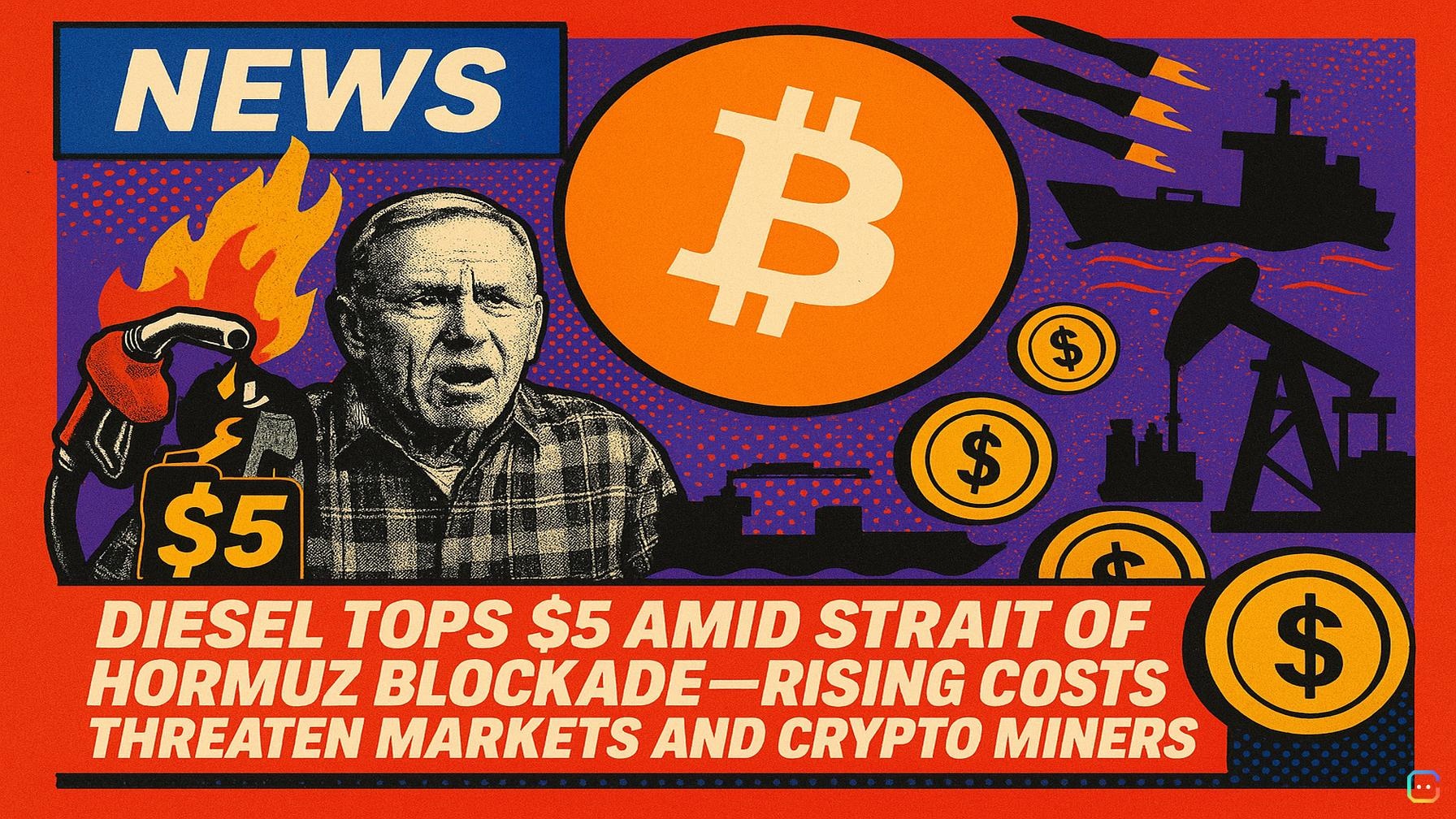
Headline: Diesel tops $5/gal in the US as Strait of Hormuz impasse tightens global supply
The spike in diesel prices above $5 per gallon in the United States is being pinned on supply disruptions in the Middle East, and the ripple effects are already being felt across supply chains, retail sales and global markets.
What’s happening
Iran’s blockade of the Strait of Hormuz — a vital chokepoint for seaborne oil flows — has curtailed shipments and tightened diesel supplies, pushing U.S. pump prices above the $5 mark. With so much freight, manufacturing and everyday commerce dependent on diesel, economists warn the surge could slow global economic activity as transportation costs rise and are passed on to consumers.
“Until we see a meaningful resumption of oil flows through the Strait of Hormuz, upward pressure on fuel prices is likely to persist,” said Patrick De Haan, head of petroleum analysis at GasBuddy. He added that supply chains have effectively stalled, with few new shipments moving through the strait.
Real-world effects
- Higher transport costs are already translating into more expensive everyday goods, as freight and manufacturing costs feed into retail prices.
- U.S. retailers reported revenue weakness this month as consumers cut discretionary spending and focus on essentials; one major chain, Target, rolled out discounts on over 3,000 items to lure shoppers back.
- Wage stagnation amid rising prices is squeezing household budgets, putting further pressure on consumption.
- The geopolitical flare-up — the Israel-Iran war now in its third week — has amplified market uncertainty; the last time diesel topped $5 in the U.S. was during the 2022 shock following Russia’s invasion of Ukraine.
- Broader market fallout is visible as stocks in parts of the Global South have tumbled amid the energy-driven disruption.
Why it matters for markets (and crypto readers)
Diesel-driven inflation and constrained trade flows affect industrial activity, corporate revenues and consumer sentiment — all key inputs for traditional markets. For crypto markets, elevated energy and logistics costs can alter miners’ operating economics and influence investor behavior as liquidity and risk appetite shift. (See also: Analyst Explains Why Bitcoin Is a Better Investment Than Gold.)
Bottom line
Until oil shipments through the Strait of Hormuz resume at scale or alternative supplies are secured, fuel prices are likely to stay elevated. That will keep upward pressure on consumer prices and weigh on economic growth and market returns in the near term.
Read more AI-generated news on: undefined/news