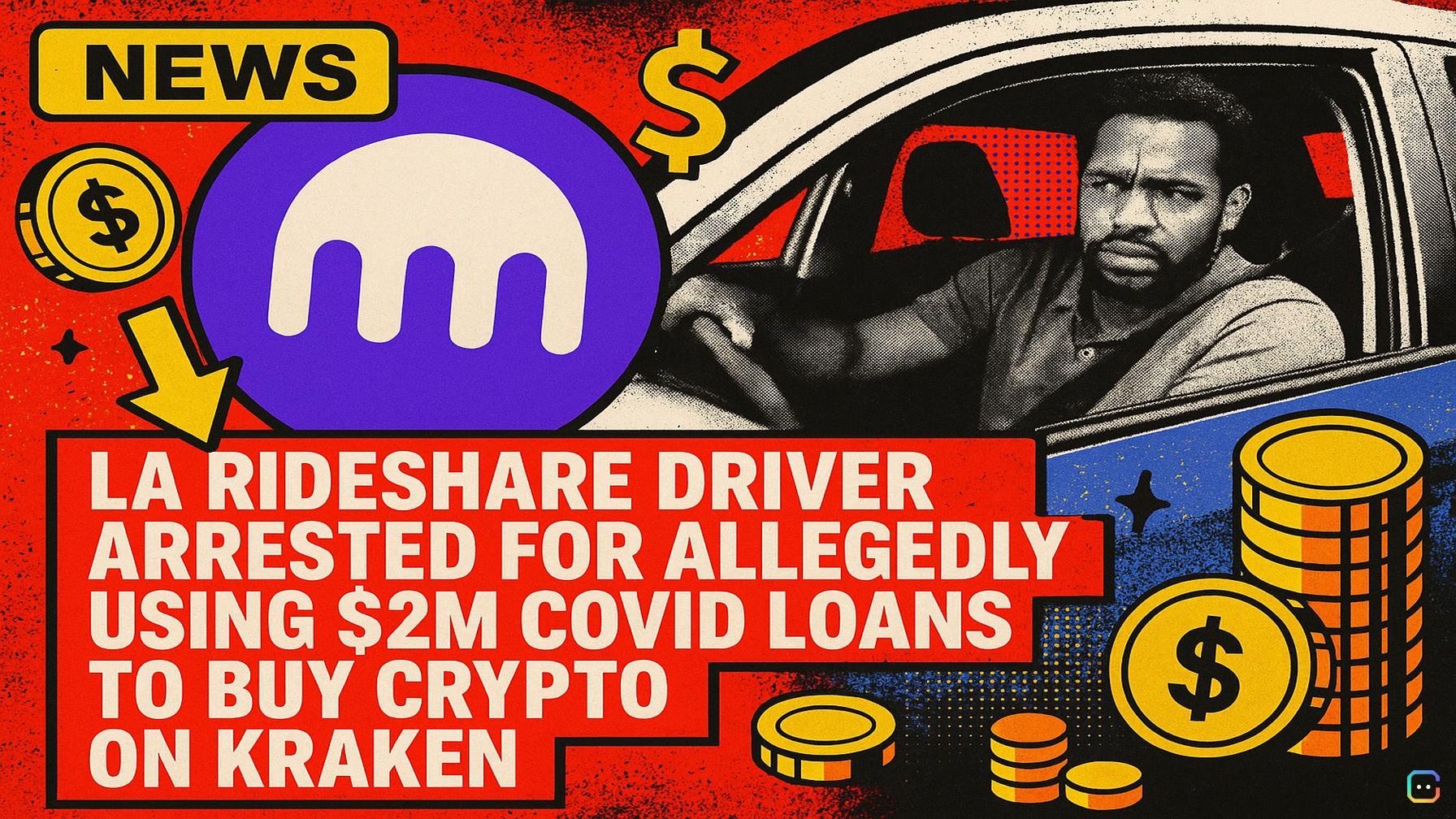
A Los Angeles rideshare driver has been arrested on federal charges after allegedly using more than $2 million in COVID-19 relief loans to buy cryptocurrency, the U.S. Attorney’s Office for the Central District of California said.
Who was arrested
- Bruce Choi, 34, a Koreatown resident, was taken into custody Tuesday at San Francisco International Airport. He’s charged with wire fraud and money laundering.
What prosecutors say happened
- Federal prosecutors allege Choi fabricated a business called “Premier Republic,” claiming to be its CEO and owner. According to the indictment, Premier Republic was a fictional entity with no operations or employees.
- Acting on that false identity, Choi is accused of submitting a fraudulent Economic Injury Disaster Loan (EIDL) application and receiving roughly $2 million intended for pandemic-hit businesses.
- Prosecutors say Choi then wired the loan proceeds to an account at crypto exchange Kraken. Investigators seized nearly 40 BTC along with other cryptocurrencies as part of the probe.
Charges and potential penalties
- The indictment includes counts of wire fraud and money laundering. Each wire fraud count carries a potential maximum sentence of 30 years; the alleged money laundering offense carries up to 10 years.
Why this matters to crypto watchers
- The case underscores ongoing federal efforts to track and prosecute alleged diversion of pandemic relief into digital assets. Authorities have repeatedly flagged misuse of COVID-era programs, and law enforcement has partnered with the Small Business Administration and other agencies to sift through millions of applications for fraud.
- Crypto exchanges and blockchain tracing have increasingly played roles in these investigations, enabling seizure and recovery of assets in some cases.
Broader enforcement context
- Similar prosecutions have emerged worldwide: in 2023 a TikTok influencer admitted guilt in a $1.2 million pandemic-loan fraud that involved laundering proceeds through crypto, and in the U.K. last year the owner of a rural business was jailed after diverting relief funds—some of which went to “investment and crypto investment” companies.
The case is ongoing; prosecutors released the charges via a DOJ press release and the U.S. Attorney’s Office for the Central District of California.
Read more AI-generated news on: undefined/news