Morning Minute — Tyler Warner: GM! Quick heads-up — our new daily news show covers the top stories in five minutes or less on Apple Podcasts and Spotify.
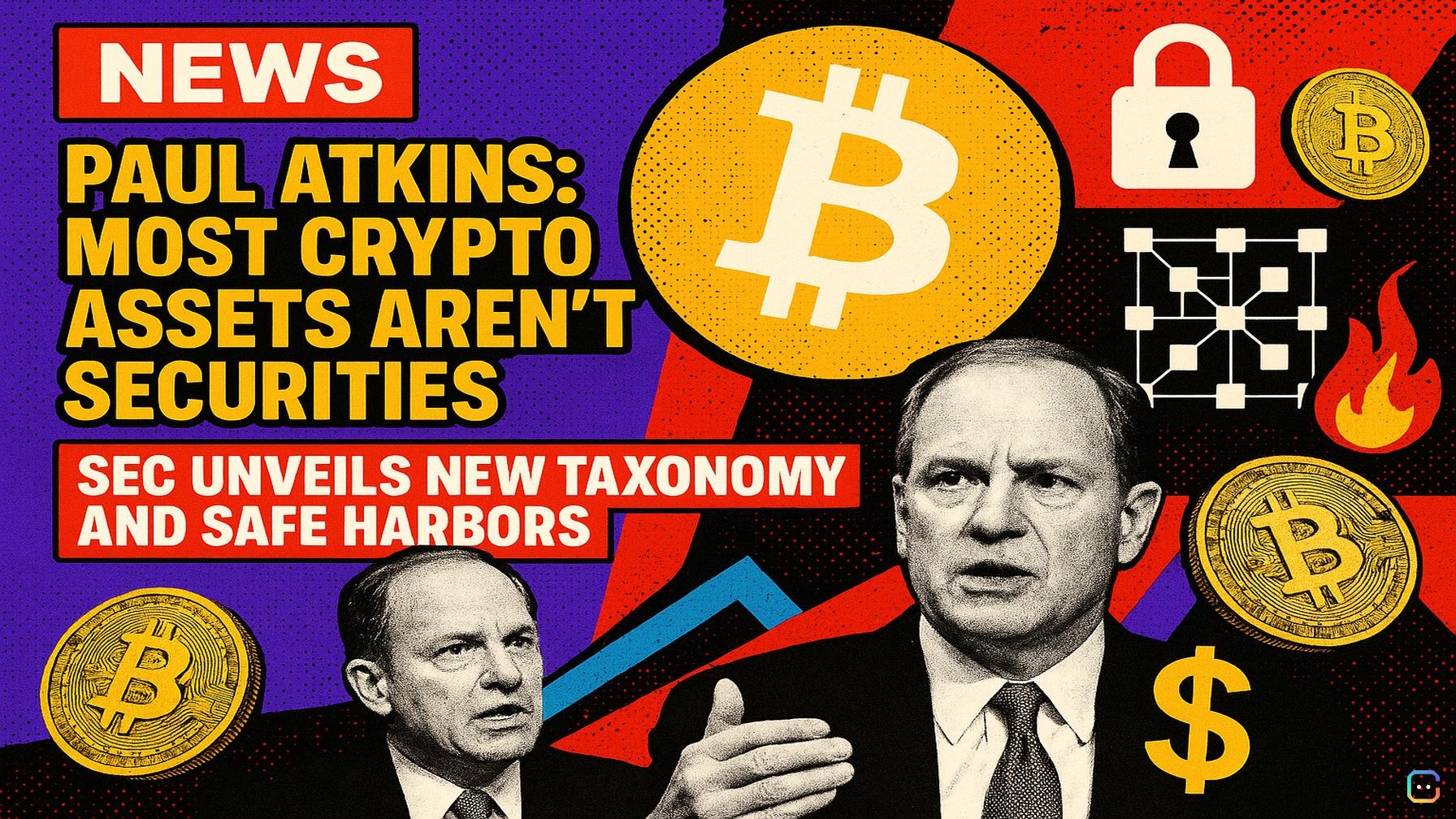
Big move out of DC: SEC Chair Paul Atkins used his keynote at the DC Blockchain Summit to deliver the most consequential regulatory guidance for crypto in a decade. The headline: “most crypto assets” are not securities.
What Atkins announced
- The SEC published a 68-page interpretive document that breaks the digital-asset universe into five categories: digital commodities, digital collectibles, digital tools, stablecoins, and digital securities. Only “digital securities” fall squarely under SEC jurisdiction.
- Explicit clarifications: bitcoin mining rewards, staking rewards, and airdrops are not securities.
- Examples were provided to make the taxonomy concrete — e.g., most NFTs and meme coins are characterized as digital collectibles (outside SEC purview), while most protocol tokens are digital commodities or tools (likely CFTC territory). Tokenized stocks and bonds remain in the SEC’s lane.
- Atkins called the prior reliance on the Howey Test — the framework former Chair Gensler leaned on — a “persistent failure to provide clarity.”
- He previewed a safe-harbor framework coming in the “next few weeks”: exemptions for startups with under $5M in capital during their first four years, and for entrepreneurs raising up to $75M via crypto investment contracts. Proposed rules should be released for public comment soon.
- Structural change: Atkins directed SEC staff to enable brokers to offer crypto and traditional securities side-by-side without needing multiple licenses — a step that could bring crypto onto more registered trading platforms.
- His line that drew applause: “We’re not the Securities and Everything Commission.”
Why this matters
For years the Gensler SEC operated largely through enforcement actions rather than rulemaking. Platforms and projects — from Coinbase and Binance to Kraken, Ripple, and Uniswap — faced lawsuits alleging tokens were unregistered securities. The lack of formal taxonomy and safe harbors pushed builders offshore, gated Americans from token sales and airdrops, and helped fuel a decade of capital flight and Cayman-structured entities.
Atkins’ guidance changes that dynamic by:
1) Delivering legal clarity: clear categories and examples reduce the ambiguity that haunted token issuance and platform operations.
2) Opening doors for U.S. onshore activity: safe-harbor proposals and broker integrations could bring projects, capital, and institutional participation back to the U.S. market.
3) Shifting enforcement focus: with a narrower SEC purview and more tokens falling under CFTC or non-security categories, regulatory conversations will center on tailored rules and inter-agency borders.
What to watch next
- The formal safe-harbor proposals and rule text for public comment.
- How the CFTC responds and whether it will assert jurisdiction over the tokens now labeled commodities or tools.
- The immediate practical effect on ongoing enforcement cases and on projects planning U.S. launches and investor offerings.
Bottom line: This guidance feels like a breath of fresh air for builders and institutions — and could mark the start of a new, more onshore-friendly era for crypto in the U.S. Stay tuned for the proposed rules and the public-comment period.
— Tyler Warner, Morning Minute
Read more AI-generated news on: undefined/news