Key takeaways
- On-device AI training: Tether is building a framework to run incremental model training on smartphones and consumer GPUs, reducing reliance on cloud datacenters.
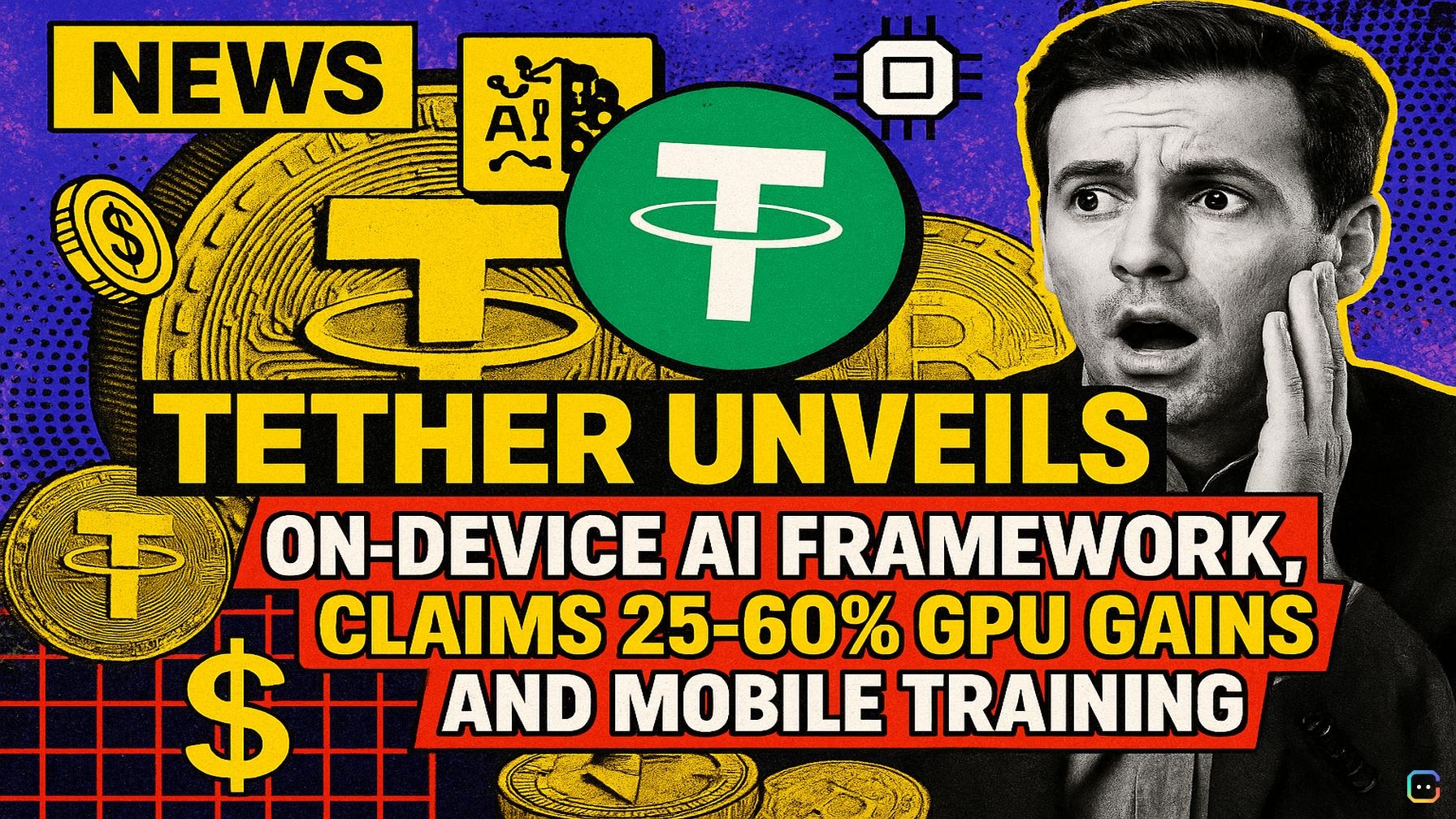
- Efficiency wins (internal tests): Company benchmarks claim up to 40% faster training on mid-range phones and 25–60% gains on consumer GPUs, with ~30% lower memory use and a 10–15% battery impact — results not independently verified.
- Decentralisation push: The effort aligns with broader trends toward edge and distributed computing, which could open AI development to individuals and smaller organisations while raising new governance and consistency challenges.
Tether — best known in crypto circles for its stablecoin business — has unveiled plans for an AI training framework aimed at moving model training off expensive cloud clusters and onto everyday hardware. The idea: optimise computation and memory so phones and widely available GPUs can perform incremental training locally, cutting the need for continuous cloud connectivity.
Why it matters
Putting training on-device could democratise access to AI development. Independent developers, students and small teams could experiment with models without costly cloud credits or specialised servers. Local training also limits data transfers to external servers, which can help privacy-sensitive use cases and meet stricter data-protection rules in regulated industries.
Tether frames this as part of a wider shift toward decentralised AI and edge computing — spreading workloads across millions of devices rather than concentrating them in a handful of hyperscale data centres. That model has potential environmental and latency benefits, and it dovetails with existing crypto-era initiatives for distributed compute markets and GPU-sharing networks.
Performance claims and caveats
Tether released internal benchmarks alongside the framework. Highlights include:
- Mid-range smartphones: up to 40% faster training in specific test conditions.
- Consumer GPUs: performance improvements ranging from 25% to 60%, depending on workload and model.
- Memory usage: reduced by roughly 30% compared with earlier approaches.
- Battery: active-session energy use rose by about 10–15% in tests.
These figures are promising but should be treated cautiously — they’re internal results that haven’t been independently audited. Real-world performance will vary with device models, workloads, and user settings.
Practical challenges ahead
Widespread on-device training brings real friction points:
- Hardware fragmentation: devices differ widely in compute, memory and thermal profiles, complicating consistent performance.
- Energy constraints: battery and thermal limits on mobile devices could restrict sustained workloads.
- Update and integrity management: ensuring model versions, verified updates and resistance to tampering across decentralised endpoints will demand new governance layers.
- UX and developer tooling: making distributed training easy and reliable requires polished tooling and developer onboarding.
Bigger picture: institutional momentum and ecosystem fit
Tether’s move arrives as institutional interest in AI infrastructure accelerates; industry estimates forecast global AI infra spending into the hundreds of billions over coming years. The pool of edge-capable devices continues to grow, and parallel projects focused on distributed GPU sharing and edge compute markets are gaining participation.
For the crypto ecosystem, on-device training frameworks can tie into existing decentralised compute marketplaces, token-based incentive models for resource sharing, and privacy-preserving ML approaches — though integration paths and business models remain to be defined.
Bottom line
Tether’s framework aims to make AI training more accessible by shifting workloads to the devices people already own. If the claimed efficiency gains hold up in public tests and the ecosystem solves fragmentation and governance issues, this approach could broaden who can build AI and how compute is allocated. For now, it’s an intriguing step at the intersection of blockchain, edge computing, and AI — one to watch as independent verification and developer adoption emerge.
Read more AI-generated news on: undefined/news