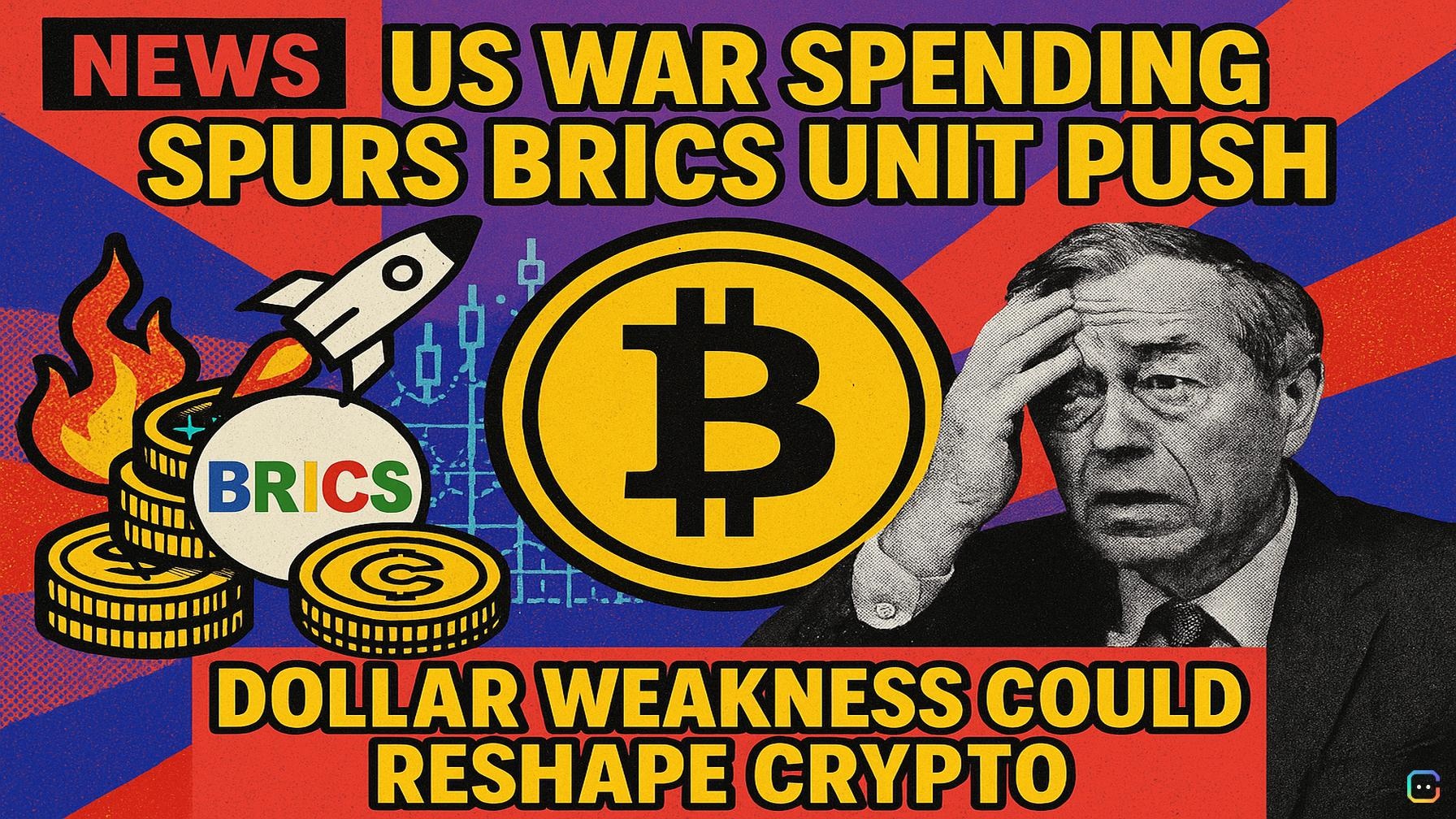
Headline: US war spending gives new urgency to BRICS Unit push — and the dollar’s dominance may be under real pressure
The debate over a BRICS settlement unit replacing the US dollar has shifted from theoretical to urgent. Sky-high US war spending amid the US‑Iran conflict — estimated between $800 million and $2 billion per day — is widening deficits, jacking up long-term Treasury yields and accelerating a de‑dollarization trend that BRICS members have been quietly preparing for years.
The cost of war: wide estimates, big consequences
- Congressional and independent analysts place daily US‑Iran war costs between roughly $1 billion and $2 billion. MS NOW’s sources pegged it around $1 billion; some Republican staffers told Politico the real figure could be double.
- The Pentagon confirmed Operation Epic Fury’s opening week cost $6 billion. CSIS calculated about $3.7 billion in the first 100 hours. Penn Wharton’s Kent Smetters told Al Jazeera early costs could hit “$2 billion per day in the early stages, settling closer to $800 million daily over time,” and estimated total direct military bills might reach $65 billion (a one‑directional estimate).
- That uncertainty and scale matter: every additional billion in war spending adds to a deficit that weakens fiscal credibility and makes the dollar less indisputably dominant.
Markets are already reacting
- The 30‑year Treasury yield rose to nearly 4.90%, the highest in a month, as markets priced in larger deficits and potential war‑driven inflation.
- Gang Hu, managing partner at Winshore Capital Partners, linked higher long yields to fiscal credibility concerns: “Long‑end rates is a fiscal story and a government credibility story. It reflects expectations that Trump needs to spend money to fund the war and subsidize consumers for higher oil prices.”
- Matt Eagan, portfolio manager at Loomis, Sayles & Co. (which manages over $430 billion), added that tariffs and wars are inflationary and will worsen deficits, potentially pushing the 30‑year yield above 5% to attract buyers.
BRICS already has the plumbing — and a gold anchor
What makes this moment especially consequential is that BRICS hasn’t just been talking about an alternative — it has been building one:
- BRICS nations represent roughly 45% of the world’s population and about 28% of global GDP.
- Russia and China settle roughly 90% of their bilateral trade in rubles and yuan.
- China’s CIPS payment system connects some 4,800 banks across 185 countries.
- mBridge — a multilateral cross‑border payments platform for digital national currencies — had processed over $55 billion in transactions by late 2025.
- Conference commentary from Andy Schectman, president of Miles Franklin, notes that “mBridge is now operational, and so is ZIPS, the cross‑border payment system, both of which are free from SWIFT intervention, and both of which are using gold through the expansion of the Shanghai Gold Exchange.”
At the center is the BRICS Unit: a proposed settlement unit reportedly backed roughly 40% by gold and 60% by member currencies. The rails to support cross‑border, gold‑linked settlement already exist — meaning a shift away from the dollar could be gradual but real.
Why the war accelerates de‑dollarization
The arithmetic is simple: every dollar the US spends on war increases Treasury supply and deficits while stoking inflation risks. That pressures long‑end rates and erodes confidence in the dollar as the only reliable global settlement currency. Central banks are already increasing gold purchases, the DXY dollar index has seen significant volatility since the conflict began, and BRICS’ payment architecture is mature enough to act on de‑dollarization momentum.
What this means for crypto and markets
For crypto investors and markets, the implications are mixed but clear:
- A credible, gold‑backed BRICS settlement unit — plus functional digital‑currency rails like mBridge — could strengthen demand for alternative stores of value and settlement mechanisms.
- Rising yields and fiscal stress in the US could alter capital flows, increase volatility in FX and crypto markets, and accelerate conversations around CBDCs and tokenized gold or reserves.
Bottom line
The BRICS Unit replacing the dollar is no longer a distant geopolitical ambition — it is a plausible outcome being fed by a combination of purposeful infrastructure buildout and a US fiscal shock driven by war spending. The shift will likely be incremental, not instantaneous, but the conditions for erosion of dollar dominance are in place and intensifying.
Read more AI-generated news on: undefined/news