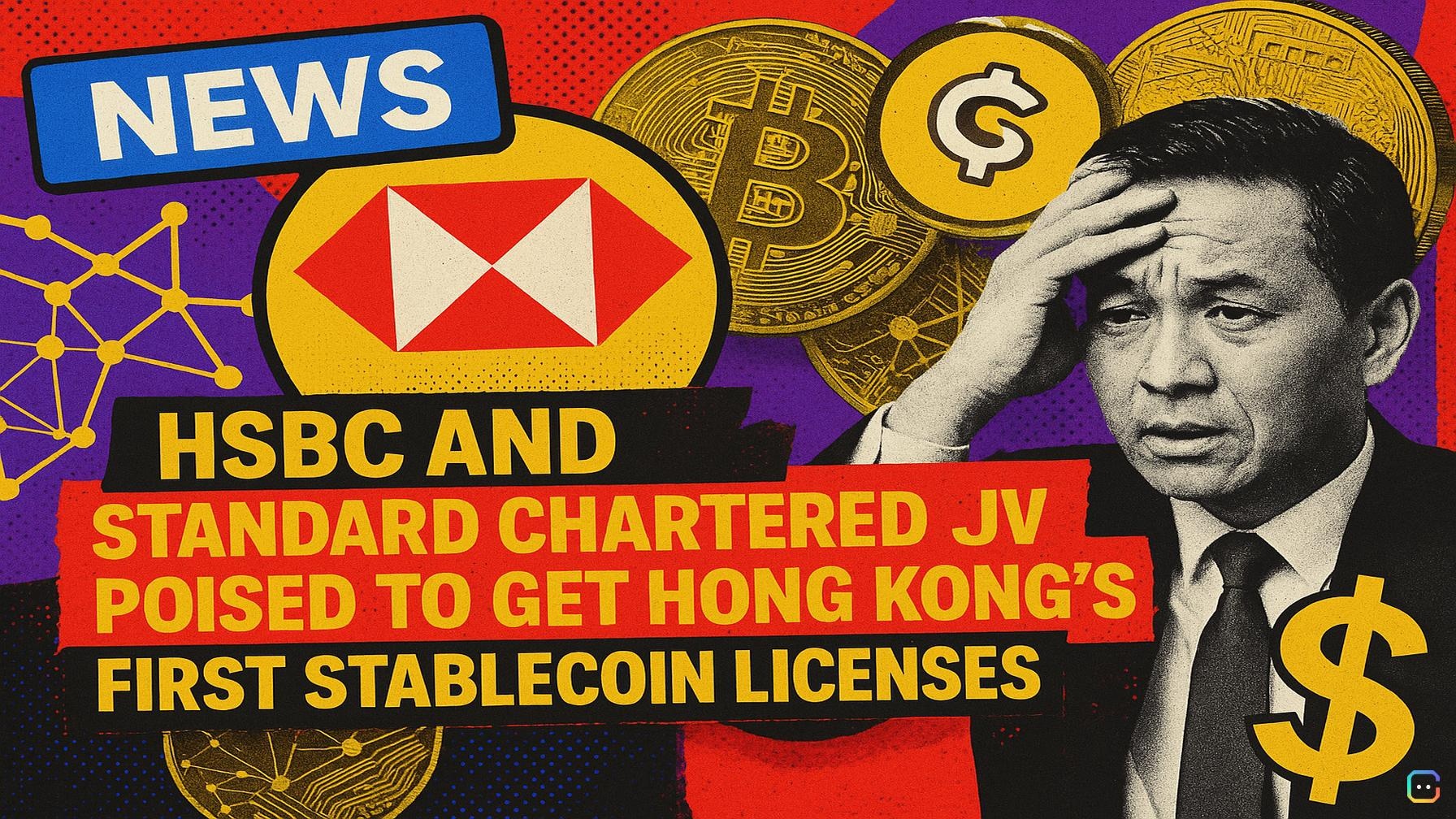
Hong Kong looks set to issue its first stablecoin licenses within weeks, with Bloomberg reporting that HSBC and a Standard Chartered–led joint venture are likely to be among the inaugural recipients.
According to people familiar with the matter, the Hong Kong Monetary Authority (HKMA) is prioritizing institutions already authorized to issue banknotes — a category that favors large banks because of their capital strength and perceived safety. That preference has reportedly put HSBC, Hong Kong’s largest bank by assets, and a Standard Chartered joint venture near the front of the line as the HKMA moves to roll out regulated fiat‑referenced stablecoins (FRS).
The timing aligns with an HKMA pledge. Chief Executive Eddie Yue said last month the regulator would grant a first, limited batch of stablecoin provider licenses in March after reviews of 36 applications neared completion. The Stablecoins Ordinance, enacted last August, requires any issuer of fiat‑referenced stablecoins in Hong Kong — including HKD‑denominated tokens — to secure a license. Media reports have suggested March 24 as a possible approval date, though the final number and schedule remain subject to change.
Standard Chartered has already signaled its intention to issue an HKD‑pegged token. The bank formed a joint venture last year with Animoca Brands and Hong Kong Telecommunications (HKT) to pursue a licensed HKD stablecoin and has been part of the HKMA’s sandbox testing since 2024. The sandbox allowed limited trials across e‑commerce payments, cross‑border trade settlement and tokenized asset trading. Other local firms, including RD Technologies — founded by former HKMA CEO Norman Chan Tak‑lam — and JD Coinlink, JD.com’s fintech arm, have also tested HKD‑pegged tokens under the same program.
HSBC’s possible inclusion surprised some market participants because the bank had not participated in the HKMA sandbox. Instead, HSBC has concentrated on tokenization projects such as tokenized deposits while engaging with local and global digital‑asset players and positioning itself to play a central role in Hong Kong’s evolving digital‑asset infrastructure.
These developments occur against a tightening stance from mainland China. Beijing has recently banned onshore tokenization of real‑world assets (RWAs), increased scrutiny of offshore activities tied to China, and reiterated prohibitions on issuing yuan‑pegged offshore stablecoins without authorization. Chinese authorities have also restated a long‑running ban on virtual currencies for domestic entities and those they control. Legal analysts have warned these moves could complicate Hong Kong’s hopes of becoming a major regulated stablecoin hub.
Still, supporters argue Hong Kong can act as a proving ground for blockchain‑based financial innovation and for internationalizing the yuan. “Hong Kong is a testing field for Chinese assets and money to go abroad on the blockchain,” Raymond Chan, chairman of the Greater Bay Area FinTech League, told the South China Morning Post, describing the city as a “firewall” that can protect China’s markets while enabling regulated experimentation.
What to watch next: the HKMA’s formal announcements on who receives licenses, the exact timetable and license conditions, and how mainland regulators respond — all of which will shape whether Hong Kong becomes a leading, bank‑led center for regulated stablecoins or faces limits from broader Chinese policy.
Read more AI-generated news on: undefined/news