Cardano (ADA) has endured a bruising stretch, dropping sharply from the price levels seen earlier in 2025 and losing significant ground versus its past highs.
Price performance and ranking
- ADA last traded above $1 in March 2025 and has trended downward through the year. CoinGecko reports declines of 3.4% over the past 24 hours, 2.8% on the weekly chart, 8.3% over 14 days and 7.8% across the last month.
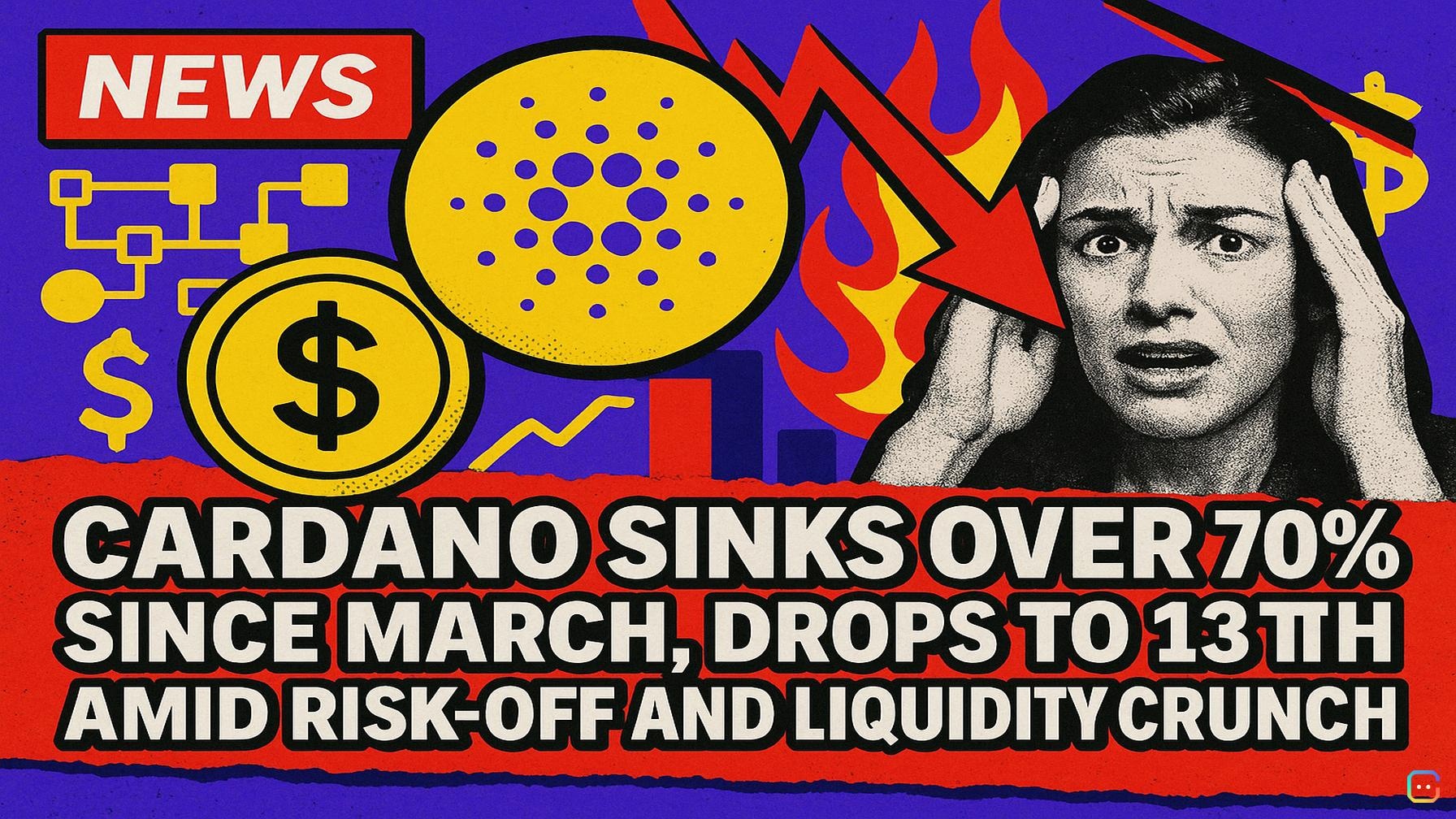
- Since March 2025 the token has fallen by more than 70%, and its market-cap rank has slipped to 13th among top crypto projects.
Longer-term context
- Cardano remains one of the most developmentally active blockchain projects since its launch, but price action has lagged fundamentals. ADA’s all-time high was $3.09 in September 2021; the token is now down by more than 91% from that peak.
- A broader market collapse in October 2025 intensified selling pressure and added to the downside momentum.
What’s driving the weakness
- Analysts point to a risk-off environment among investors, heightened macroeconomic uncertainty and geopolitical tensions that have dented appetite for risk assets. A liquidity crunch has also been cited as a headwind keeping capital out of cryptocurrencies like Cardano.
Near-term outlook and forecasts
- Some forecasters remain cautiously optimistic on potential rallies, but do not expect a quick return to $1. For example, CoinCodex’s price-prediction tool projects ADA could reach $0.41 by May 10, 2026 — roughly a 64% move from current levels — while stopping short of a $1 forecast.
- That projection suggests upside potential, but the prevailing macro and market conditions mean upside is uncertain and likely volatile.
Bottom line
- Cardano’s development progress contrasts with a challenging market environment that has pressured ADA’s price and ranking. Short-term recovery hinges on broader market sentiment, liquidity conditions and whether buyers re-enter risk assets. As always, investors should do their own research and weigh risks carefully before making positions.
Read more AI-generated news on: undefined/news