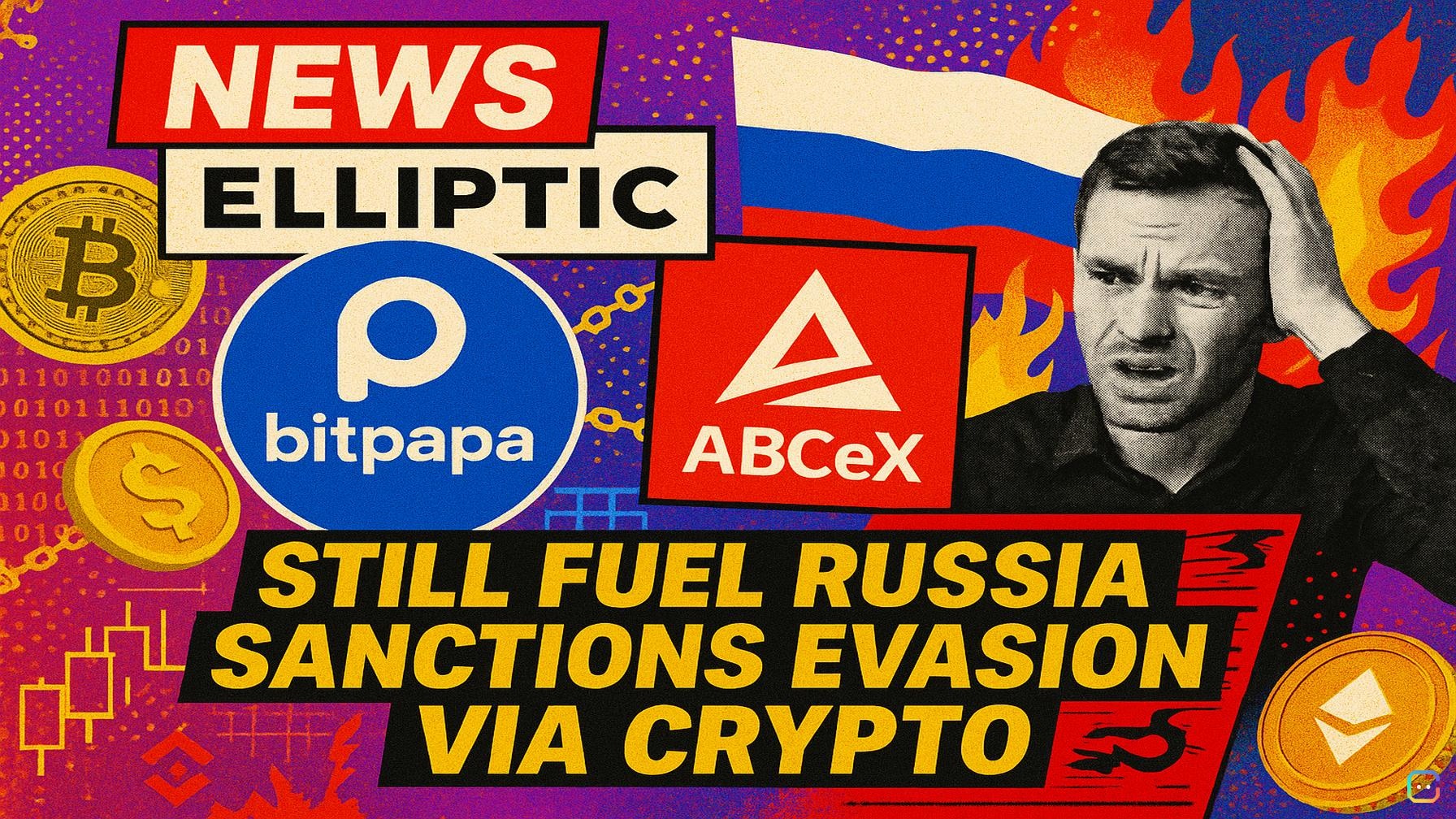
Headline: Elliptic warns Russia-linked crypto platforms still enable sanctions evasion — names exchanges, quantifies flows
Blockchain analytics firm Elliptic says several crypto platforms tied to Russia continue to facilitate transactions connected to sanctioned actors, according to a report published Friday. The findings map out how rubles are being converted into crypto, moved across borders outside traditional banking rails, and cashed out via overseas brokers and exchanges — paths that can blunt the impact of Western sanctions and complicate enforcement.
What the report shows
- These platforms offer user routes that reduce dependence on the conventional financial system: on-ramps converting rubles to crypto, cross-border transfers via blockchains, and off-ramps through foreign brokers and exchanges.
- Elliptic says those flows help sanctioned entities access liquidity and move funds internationally while avoiding regulated banking networks.
Context and related research
- Elliptic’s release follows a separate firm report last month showing Tether’s USDT has become a core tool in sanctions evasion, while transactions in the ruble‑pegged stablecoin A7A5 topped $100 billion.
- Western governments have imposed broad sanctions since Russia’s full-scale invasion of Ukraine in 2022; the EU has frozen roughly $250 billion in assets and the U.K. about $35 billion.
- A TRM Labs report published last week found illicit entities received $141 billion in stablecoins in 2025 — the highest level in five years — and said more than half of that volume was linked to A7A5. TRM reported that 86% of illicit crypto flows were related to sanctions activity, with bad actors concentrating on stablecoin platforms. Russian executives linked to A7A5 dispute allegations that their operations are illegal.
Exchanges singled out by Elliptic
- Bitpapa: A UAE-registered peer-to-peer platform serving mainly Russian users. OFAC sanctioned Bitpapa in March 2024. Elliptic estimates about 9.7% of Bitpapa’s outgoing crypto flows went to sanctioned entities, including roughly 5% to Russia-linked exchange Garantex. The firm also alleges Bitpapa rotates wallet addresses in ways that hinder tracing.
- ABCeX: Operating from Moscow’s Federation Tower, Elliptic says ABCeX has processed at least $11 billion in crypto transactions, including flows to sanctioned exchanges like Garantex and Aifory Pro.
- Rapira: Reported to have processed more than $72 million in transactions with the sanctioned exchange Grinex.
- Aifory Pro: A cash-to-crypto service with operations in Moscow, Dubai and Türkiye that appears in the flow analysis.
Implications
Elliptic’s report underscores how crypto infrastructure — particularly peer-to-peer platforms and stablecoins — can be repurposed to move funds for sanctioned actors even as regulators intensify scrutiny. The findings add to mounting evidence used by authorities and compliance teams to target risky rails in the crypto ecosystem, but they also highlight the practical challenges of policing decentralized and cross-border digital-asset flows.
(All findings and figures are drawn from the Elliptic report and related industry research cited in the analysis.)
Read more AI-generated news on: undefined/news